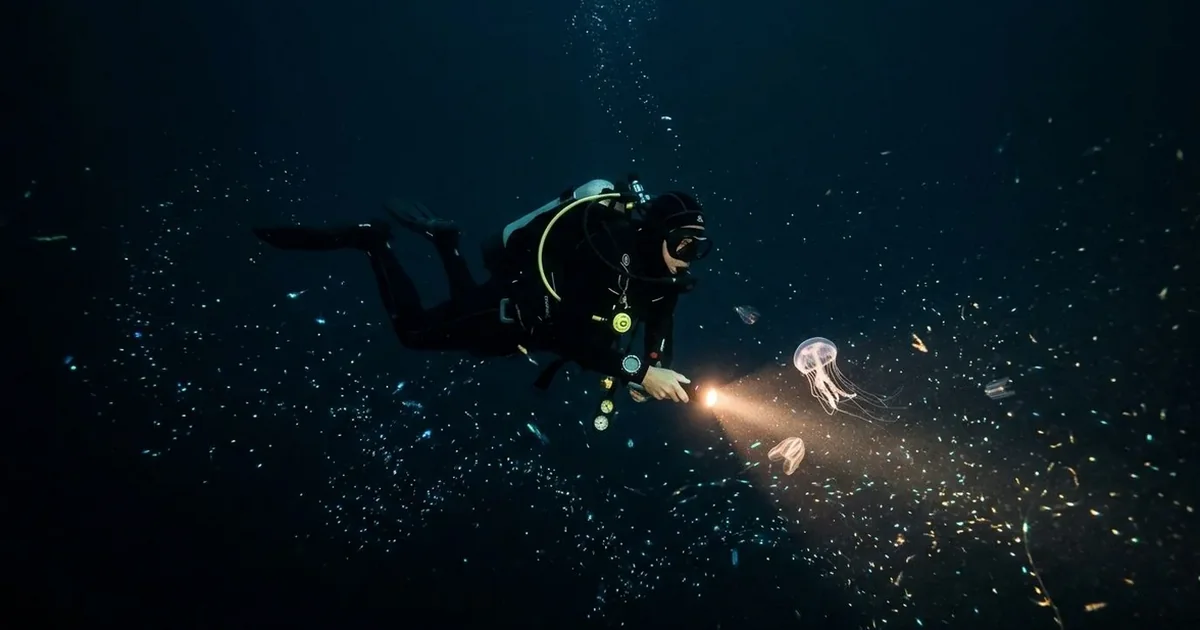
Watches and the Ocean: Pioneers of the Abyss
By CharlemagneUpdated on 11 min read
Picture a steel sphere less than five feet across. Nearly two and a half tonnes hanging from a cable, off Bermuda, in a blue that turns black as the light fades. Inside, two men wedged side by side. No comfort. No screen. No robot to read the terrain. Only two quartz portholes eight inches thick, air recycled until it grows heavy, a telephone linked to the surface, and immense trust in a machine that pressure could condemn at the smallest flaw.
The year is 1934. The modern dive watch does not exist yet. The phrase tool watch does not yet carry the meaning we give it today. And yet this is precisely where our story begins. Not on a diver's wrist, but in the belly of a tiny sphere, suspended above a world nobody had yet seen with their own eyes.
The bathysphere, or the first look into the abyss
William Beebe is not the kind of diver we imagine today. He is a naturalist, a patient observer, a man fascinated by birds, fish and the forms of life one approaches for a long time before understanding them. Otis Barton is the engineer. He is the one who designs this steel sphere capable of withstanding pressure most men would rather not imagine.
As early as 1930, off Bermuda, the two men descend to 400 metres. At the time, this is already an almost unbelievable feat. Then comes 15 August 1934. The bathysphere sinks further. Slowly. Metre by metre. The cable pays out, the light retreats, the sea closes over. At 923 metres below the surface, more than 3,000 feet, Beebe and Barton set a world record.
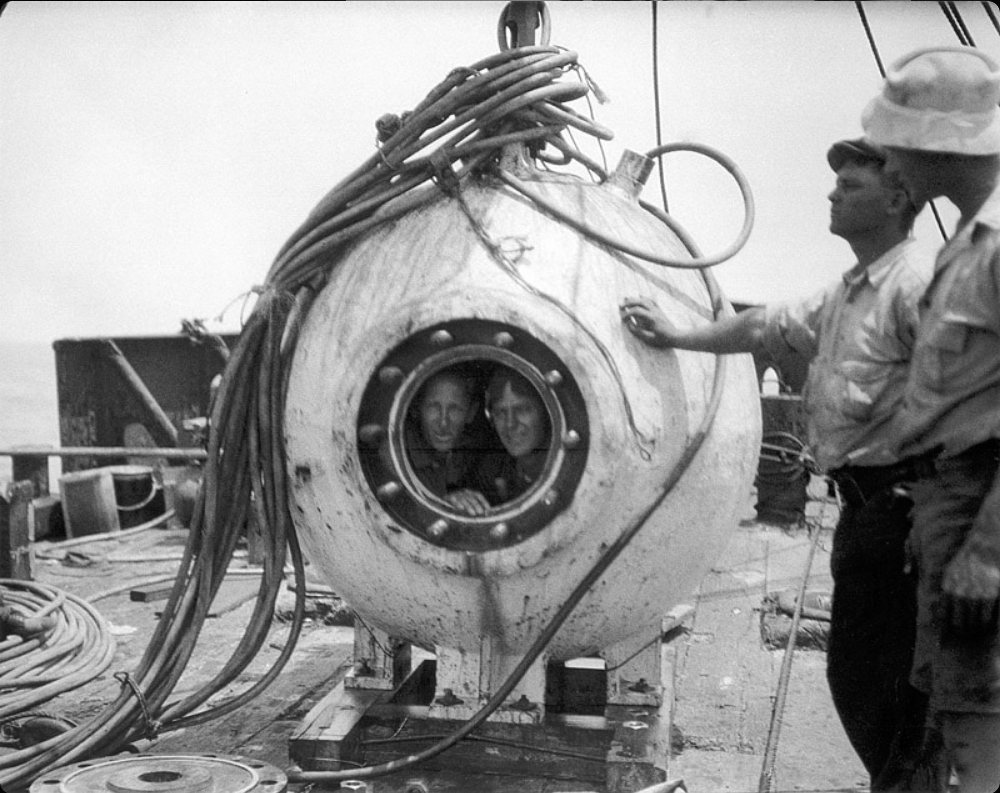
Beebe would describe the experience as a journey into another universe. His phrase has stayed famous because it still carries the vertigo of that descent today: "The only place comparable to these marvellous regions must be naked space itself, out far beyond atmosphere, between the stars."
This parallel between the abyss and space is no writer's flourish. In both cases, man leaves his natural environment. He carries his air, his light, his instruments, his bearings with him. He depends on a hull, a link, a measurement. And in both cases, the smallest error can become final.
Through the portholes, Beebe observes creatures nobody had ever seen alive in their own world. Not specimens deformed by nets, hauled up damaged to the surface, but living presences in motion. Glimmers. Silhouettes. Flashes that appear and vanish in the dark. He sometimes identifies the animals not by their shape, but by the light they give off. A cutlassfish, deep-sea eels, bioluminescent organisms that seem to belong to another logic of life altogether.
On board, there is no Fifty Fathoms, no Submariner, no wrist-worn depth gauge. The equipment still belongs to another era. A hand-painted spectroscope measures how colours vanish one by one with depth. The telephone lets observations be dictated live to the surface. And the cable, always that cable, remains the only physical link to the breathable world.
Every descent is a gamble. A leak, the start of a fire, seasickness in the dark, condensation, fatigue, heat, fear confined within a few cubic metres. Anything can turn serious very quickly. Yet Beebe and Barton complete 35 dives in four years, 16 of them beyond 160 metres, a depth considered extreme at the time.
Theirs is not a horological feat. It is scientific, almost raw in its determination. But it clears the ground. Because as soon as man descends, he must measure. Depth, air, duration. And sooner or later, the watch ceases to be a mere personal object. It becomes an instrument of survival.
Cousteau, Gagnan and the freedom to breathe underwater
Twenty years later, the setting changes. The ocean is no longer only observed from a suspended sphere. Men begin to move through it. The relationship with the underwater world shifts. Man no longer descends solely as a passenger in a machine. He wants to swim, explore, film, work.
In 1943, Jacques-Yves Cousteau and Émile Gagnan perfect the Aqua-Lung. Self-contained diving already existed in various forms, but their regulator gives the whole apparatus a new reliability and ease of use. For the first time, a diver can truly move underwater with a freedom that changes everything.
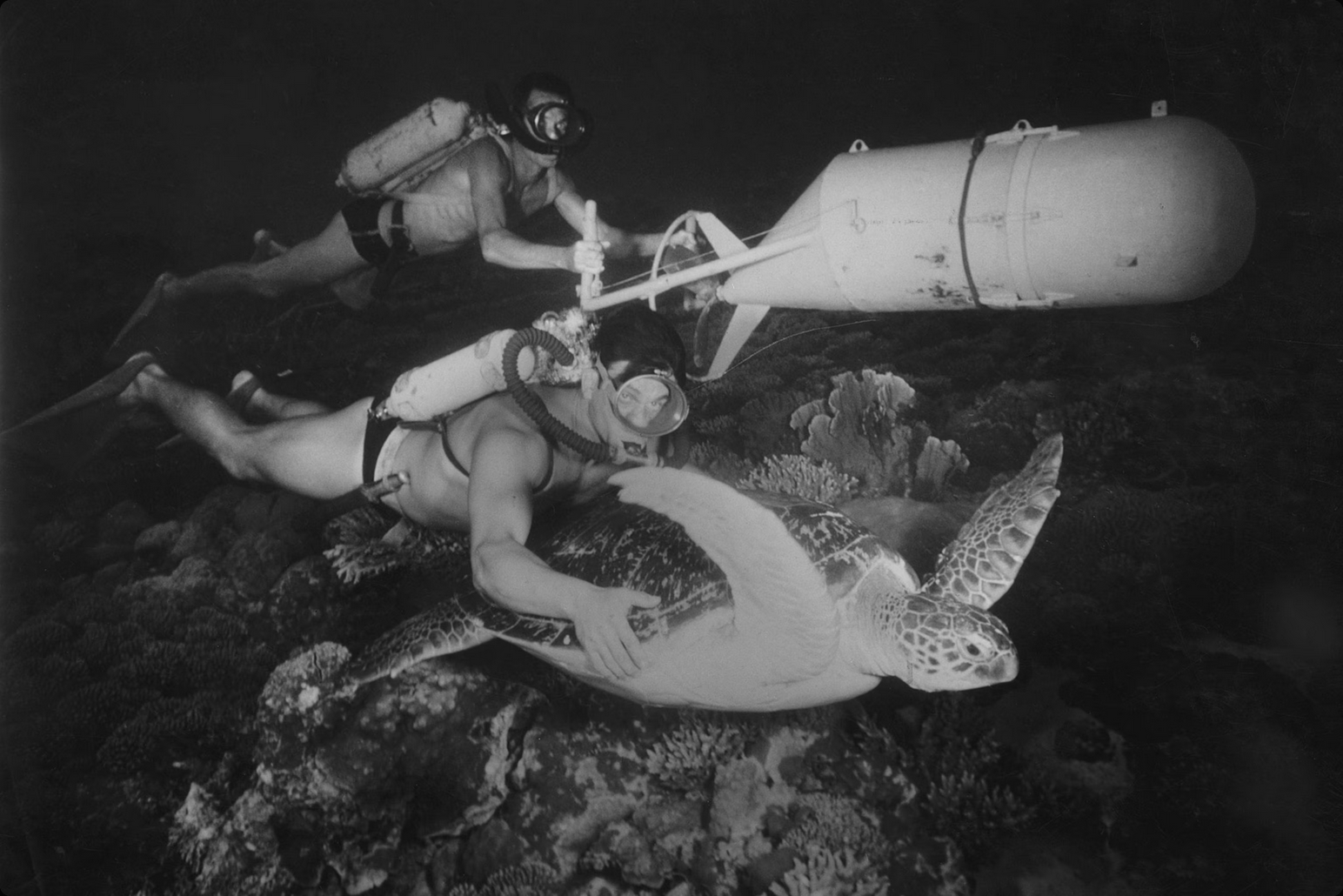
This technical advance opens an immense door. Diving is no longer solely a matter for laboratories or exceptional expeditions. It becomes a military, scientific, cinematic, then civilian tool. French combat swimmers need robust equipment, built for real action. Mask, fins, tank, regulator. And on the wrist, an instrument we sometimes forget today, so iconic has it become: a watch able to say how much time is left before the adventure turns bad.
Underwater, losing track of time is not a distraction. It is a mortal risk. One minute too many can change an ascent, an air reserve, a decision. Time is no longer abstract. It becomes something almost breathed.
Jean-Jacques Fiechter and the birth of the Fifty Fathoms
Jean-Jacques Fiechter knows this better than most. Head of Blancpain, he is also a diver. On one outing, he narrowly avoids an accident after misjudging the time spent underwater. That kind of fright does not fade. It leaves a concrete mark. It turns instinct into a specification sheet.
In 1953, Blancpain presents the Fifty Fathoms. Its name evokes a depth of around 91 metres, already considerable for military use at the time. But the point is not merely the stated depth. It lies in the way the watch itself is conceived.
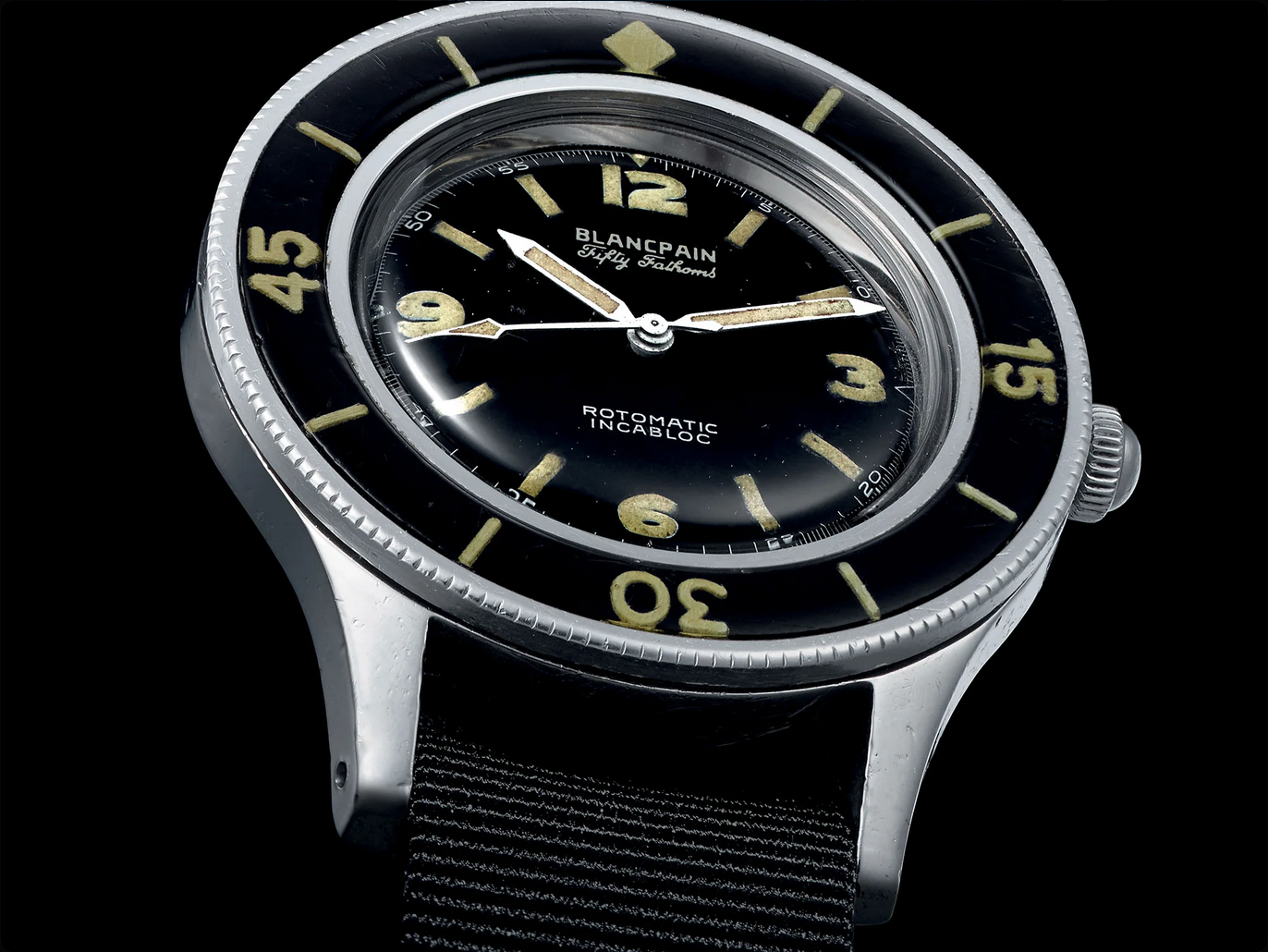
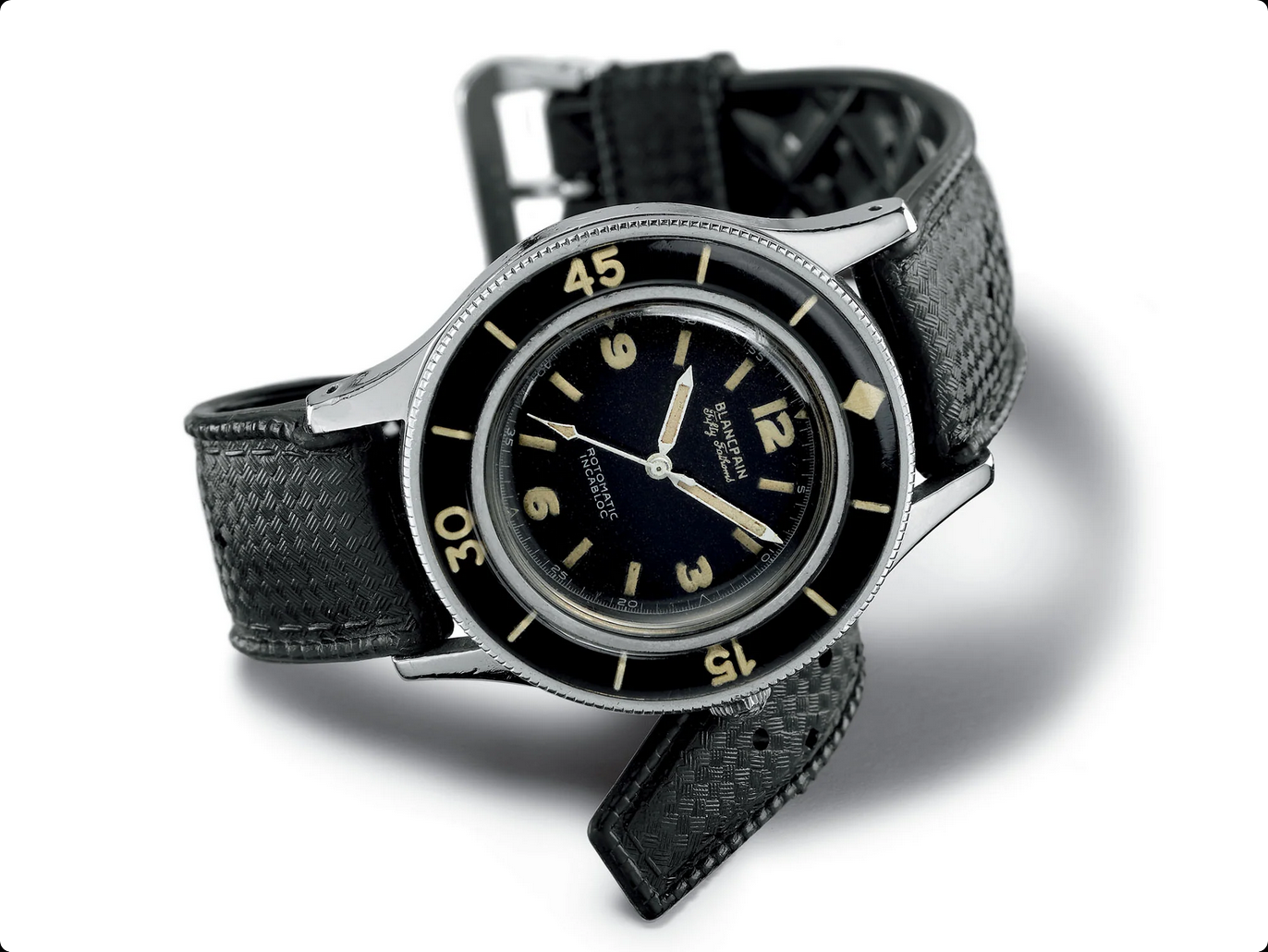
The rotating bezel tracks immersion time. It is designed to prevent the most dangerous mistake: believing more air remains than actually does. The black dial, the large clear indices and legible hands favour immediate information. The crown receives particular attention, since water most often gets in through it. The case has to withstand pressure, salt, knocks, the rough life of operational divers.
Today, all this seems obvious. At the time, it is not. Water-resistant watches already exist, but a true dive watch, conceived as a professional tool, is something else entirely. The tests run for the French combat swimmers are merciless. Off-the-shelf watches leak, fog up, show their limits. The Fifty Fathoms holds.
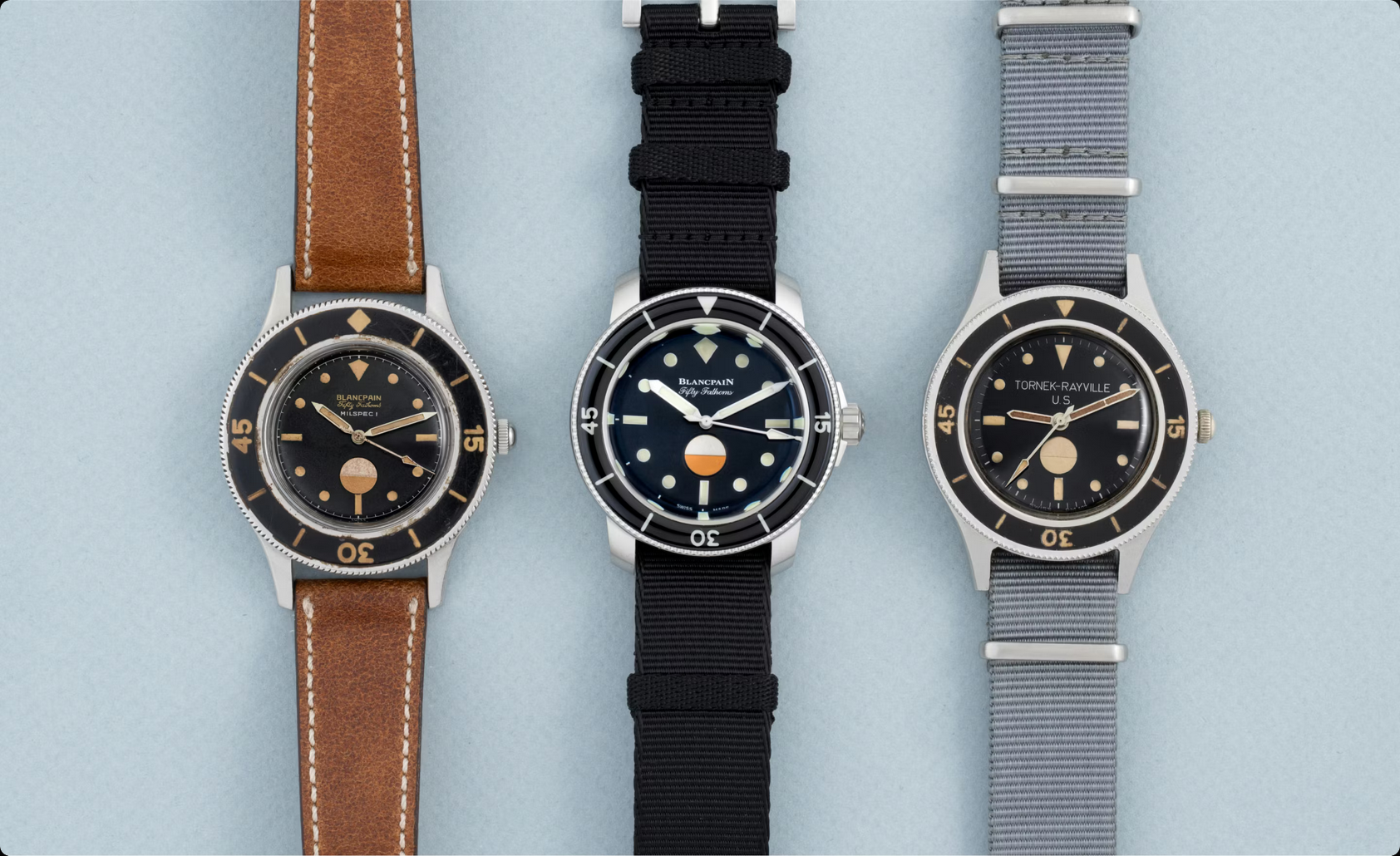
Robert Maloubier and Claude Riffaud, combat-swimmer officers, validate the need and the specification. The watch soon equips elite divers. Cousteau himself adopts it for his team. It appears in The Silent World, filmed with Louis Malle, winner of the Palme d'Or at Cannes and an Oscar in Hollywood in 1956.
It is worth understanding what this represents. The Fifty Fathoms is not simply a beautiful watch that later became collectible. It is one of the first modern horological objects designed alongside users who risk their lives. It does not merely resist water. It organises time underwater. It turns the rugged watch into a true dive watch.
The distinction is immense.
Before the abyss, the heroic age of divers
In the 1950s, the ocean becomes a territory of images. Cousteau films, narrates, popularises. The military test. Scientists sample, observe, classify. The public discovers a world that had until then seemed the preserve of expedition accounts. And the watch brands gradually understand that the sports watch is no longer a drawing-room accessory. It can become a companion on a mission.
Blancpain is of course not alone in this story. Rolex has long been working on water resistance with the Oyster and will develop its own dive watches. Other houses will follow. But the Fifty Fathoms holds a particular place because it crystallises real use very early on: legibility, safety, immersion time, resilience.
For a watchmaker, this is fascinating. A successful dive watch is not a complicated watch in the traditional sense. No perpetual calendar, no minute repeater, no visible virtuosity to charm a drawing room. Its sophistication lies elsewhere. In a well-designed gasket. In a bezel that does not fail. In a hand that stays legible when the light disappears. In a case that does not give way as pressure increases.
This is horology built on trust, not display.
And yet, despite this progress, we remain far from the true abyss. Self-contained diving opens the underwater world to men, but the great depths demand another scale, other machines, another form of courage.
The Trieste and the great leap into the Mariana Trench
In 1960, the bathyscaphe Trieste takes ocean exploration into another dimension altogether. The craft was designed by Auguste Piccard, a Swiss scientist accustomed to extremes, as at ease with the idea of the stratosphere as with that of the deep. His son Jacques Piccard pilots the descent alongside the American lieutenant Don Walsh.
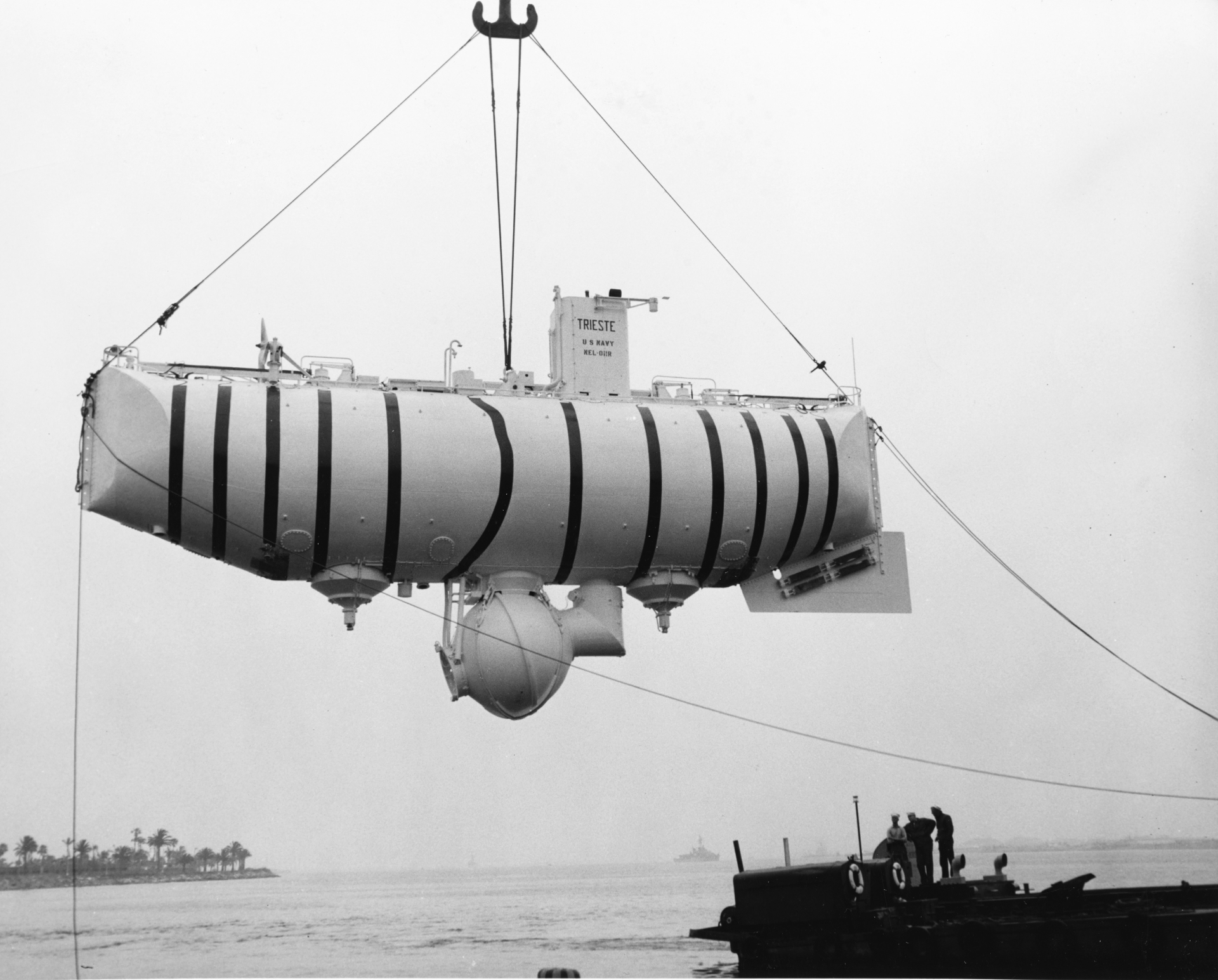
On 23 January 1960, they tackle the Mariana Trench. The Trieste descends slowly, almost solemnly. Nine hours to reach the bottom. The craft resembles less a conventional submarine than an underwater airship: a large float, a pressurised sphere for the men, ballast to descend, a mechanism simple in principle and wild in ambition.
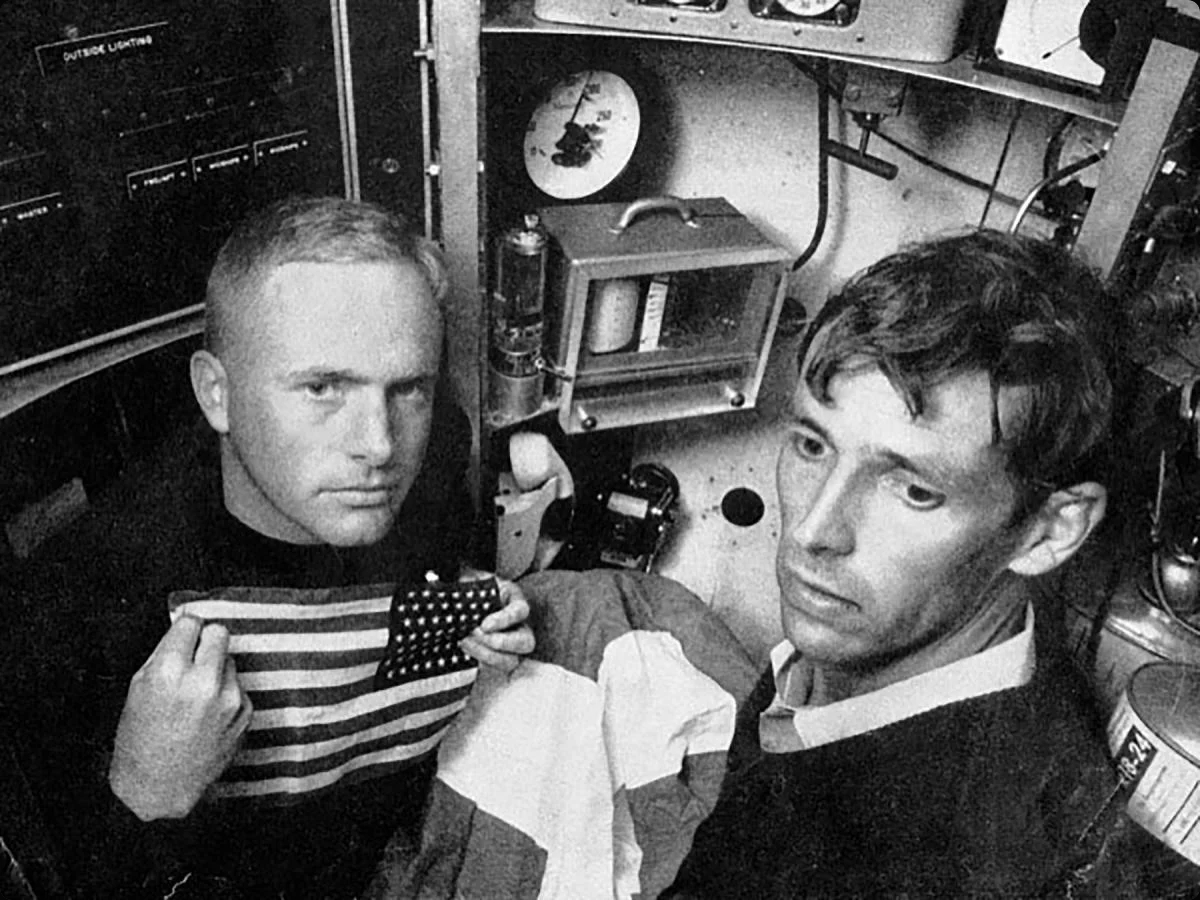
At around 10,916 metres, they reach the deepest point of the oceans known at the time. Where pressure exceeds the imagination. Where sunlight no longer has any reality. Where one no longer really speaks of diving, but of technical survival.
Fixed to the outside of the sphere, a watch accompanies the feat. Not on a man's wrist, protected by his body and his suit. No. Exposed directly to a hell of pressure: the prototype Rolex Deep Sea Special.
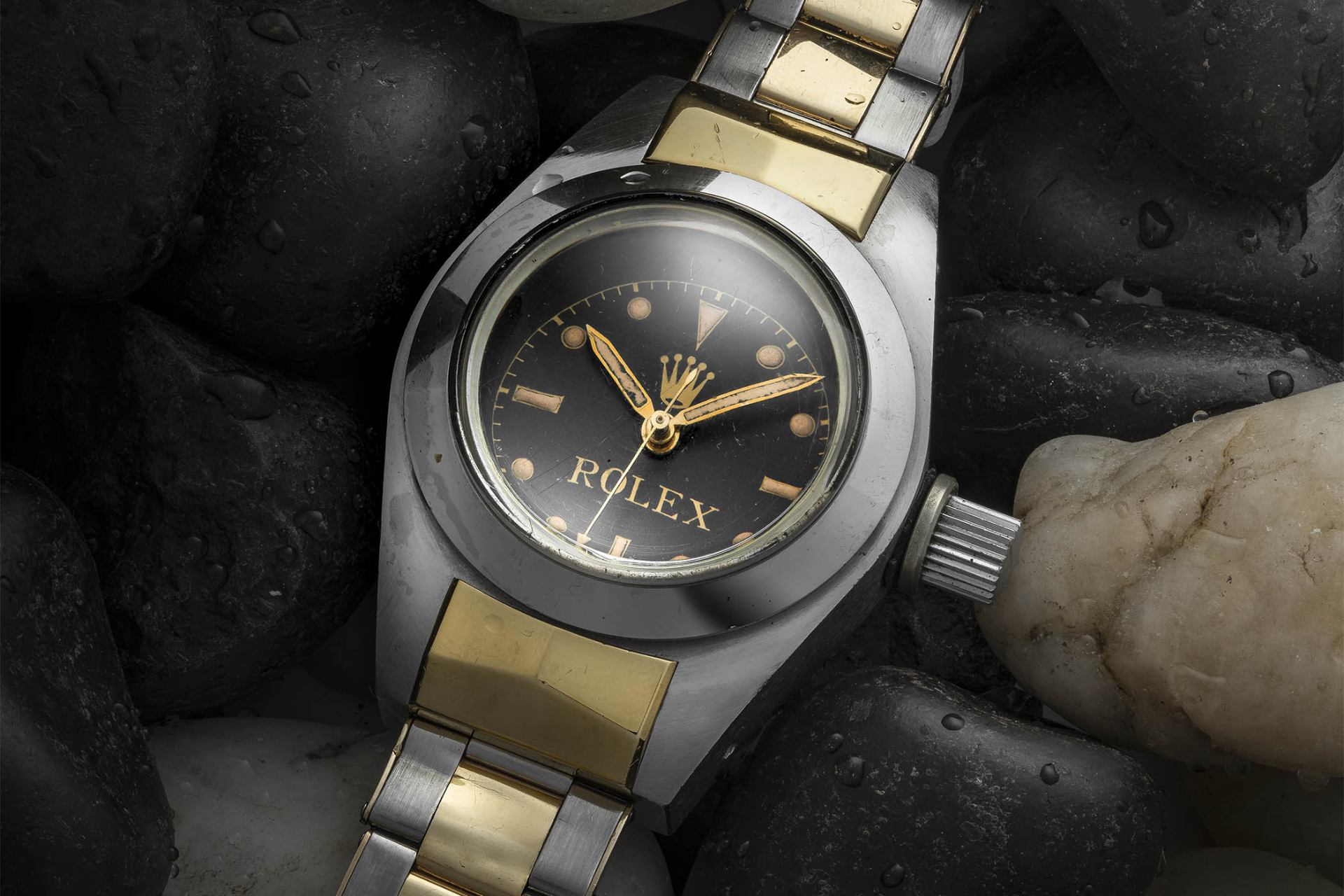
This experimental watch is nothing discreet. Its crystal is massive, domed, almost outsized. Everything about it seems to answer a single question: can a watch be made to work where almost nothing can survive?
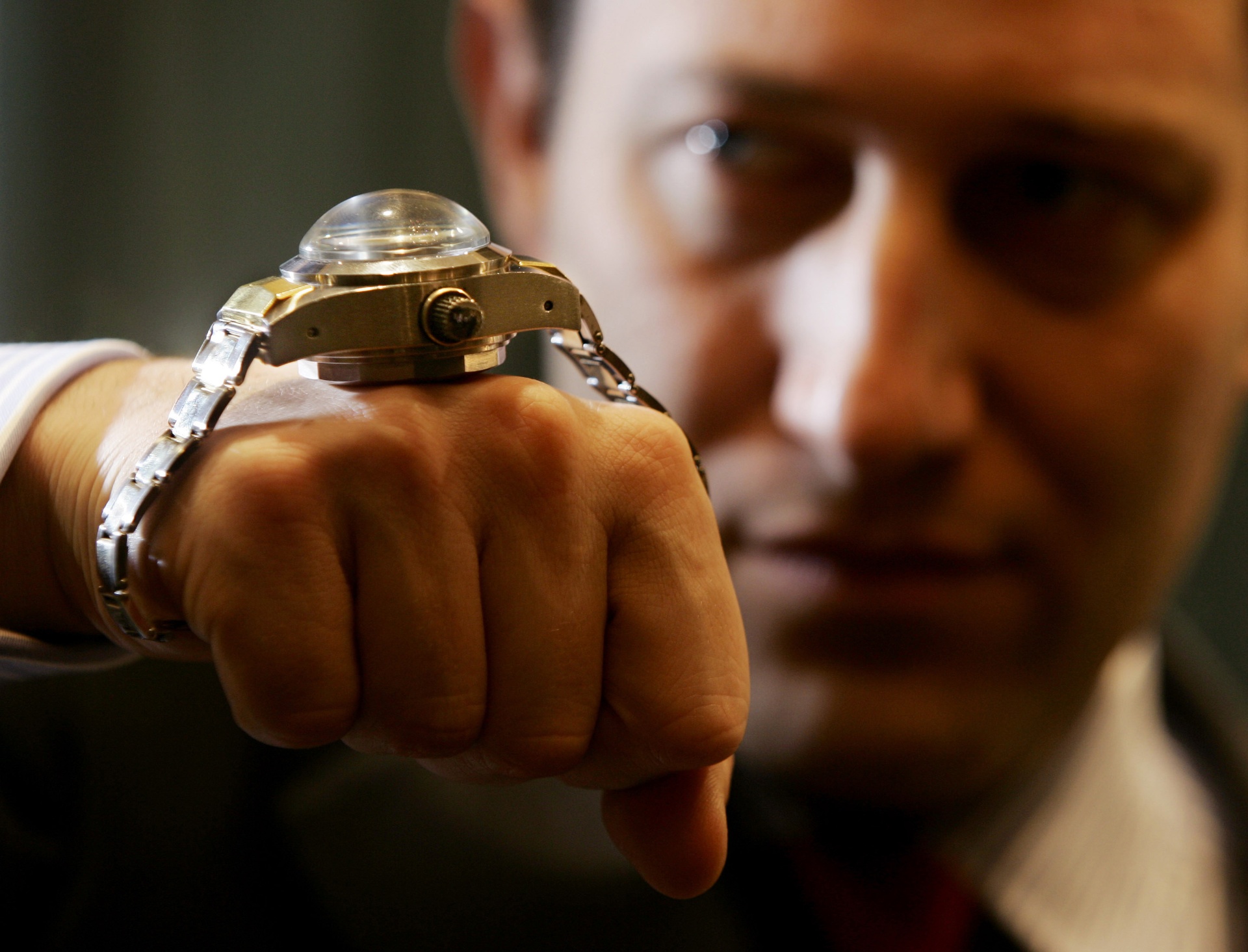
On their return, Jacques Piccard sent Rolex a telegram that has become legendary: "Your watch works as well at 11,000 metres as it does at the surface."
The line is simple. It is perfect. The record will stand for more than fifty years. And for Rolex, this test becomes absolute proof. Not a catalogue promise, but a full-scale demonstration, at the most hostile point on the planet.
Science, cinema, horology and the pioneers' truth
What is so moving about this period is that it cannot be reduced to a story of brands. Beebe and Barton did not need a dive watch to enter legend. Their adventure belongs to pure science, to that human curiosity that drives certain men to look where nobody looks yet.
Cousteau would wear different watches over the years, Rolex as well as Blancpain, but the Fifty Fathoms remains tied to his most foundational images. It belongs to that precise moment when diving becomes visible, almost popular, without losing its danger.
Piccard and Walsh, for their part, offer Rolex the ultimate test. But their first motivation is not publicity. They want to reach the bottom. To understand. To prove that man can descend that far and come back up.
It is this truth that gives the watches of this era such force. They are not yet fixed symbols behind glass cases, nor objects of desire spun from slogans. They are tools. Sometimes imperfect, often rudimentary by our standards, but born of a real need.
They accompany men who move forward before the vocabulary of marketing has had time to catch up with them.
Why these pioneers still matter
The pioneers of the abyss opened the way to modern submersibles, remotely operated robots, record dives, and the scientific expeditions that today map a world still largely unknown. Horology, for its part, followed in its own way. It learned to withstand pressure, to make time legible in darkness, to turn a few millimetres of metal, crystal and gaskets into silent assurance.
Beebe and Barton's bathysphere reminds us that exploration often begins before the horological object does. The Fifty Fathoms marks the moment the watch becomes a modern dive instrument. The Rolex Deep Sea Special proves that a watch can become the mechanical witness of an almost unreal record.
These three milestones tell the same progression. First, looking into the abyss. Then moving through it. Finally, touching the bottom of the known world. At each stage, measurement becomes more precise, more necessary, more vital.
The rest of this story will take us to the great series-produced dive watches, the commercial records, the helium-saturated watches, the military icons and the modern descendants of these first pioneers. But Part 1 had to begin here, in a steel ball suspended above the marine void, with two men looking into the abyss the way others look at the stars.
Related articles
- From Mechanical Watch to Smartwatch: The Evolution of TimeDiscover the fascinating story of watchmaking. From the Quartz Crisis to Garmin and Apple connected watches, see how technology has transformed sport, safety and our relationship with time.
- Quartz Crisis 1969: Seiko Astron and the Swiss Watch ShockThe Quartz Crisis: how Seiko's 1969 Astron upended Swiss watchmaking and triggered its rebirth. The full story, calibres and key dates.
- Watches and the Ocean: From the Mariana Trench to Modern RecordsPart 2 – From the Mariana Trench to modern records