From Mechanical Watch to Smartwatch: The Evolution of Time
By Journaliste HorlogerUpdated on 10 min read
🕰️ Key Takeaways
- The mechanical watch was born of a quest for independence: taking time from the collective bell tower to the individual wrist.
- 1969: the Seiko Quartz Astron 35SQ triggers the Quartz Crisis and precipitates the collapse, then the rebirth, of Swiss watchmaking.
- Casio, G-Shock and Tissot T-Touch turn the watch, from the 1980s-90s onwards, into an environmental dashboard.
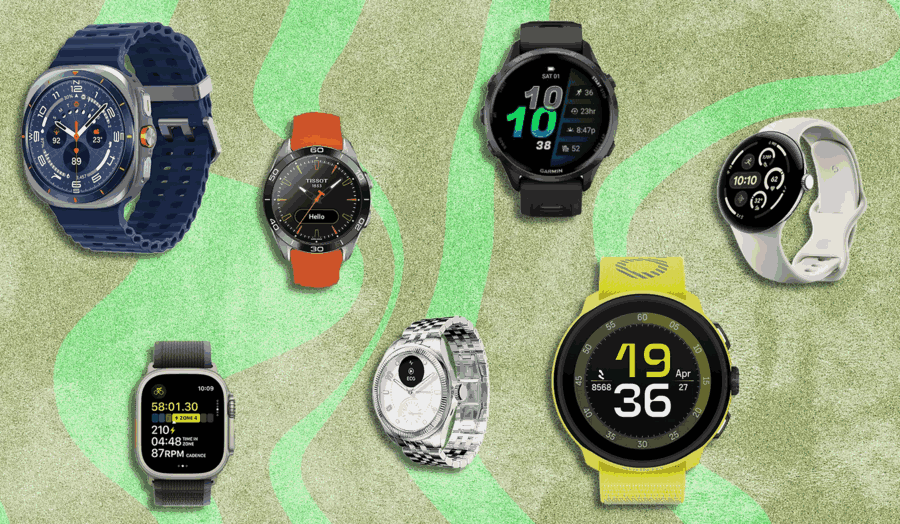
- Garmin, Apple Watch Ultra, Suunto, Polar: the connected watch becomes a guardian angel and an athletic laboratory on the wrist.
- Far from killing off mechanics, the pixel lives alongside it: two complementary times, the useful and the poetic.
1. The Mechanical Golden Age: Taming Time Through the Infinitely Small
Wearing a watch is never a trivial gesture. It means agreeing to tie a pact with time to your wrist. But while the ticking has remained the heartbeat of our daily lives, the inner workings of our relationship with time have changed profoundly.
It all begins with a quest for independence and freedom. For centuries, mankind lived to the rhythm of a collective time, dictated by church bells and belfry clocks. The arrival of the pocket watch, then its move to the wrist at the start of the twentieth century, brought about an intimate revolution: time became individual, portable and secret.
Behind the dial of a mechanical watch lies a microcosm of absolute complexity. Generations of craftsmen have managed to capture energy and release it in a linear fashion. It all starts with the mainspring, wound either by hand or by the movements of the wrist (via an oscillating rotor). This raw force is then channelled through the gear train to the escapement, the true guardian of the temple. It is the escapement, working with the balance and hairspring (which oscillate several times a second), that releases the energy drop by drop. That familiar "tick-tock" is the cry of the escapement holding back and releasing time.
Iconic models forged this epic
- The Cartier Santos (1904): designed by Louis Cartier for his friend the aviator Alberto Santos-Dumont, so he would not have to let go of the controls of his aircraft mid-flight to pull out his pocket watch. It became one of the first men's wristwatches and a tool of aeronautical exploration.
- The Rolex Submariner (1953): more than an accessory, it was born as a true diving instrument for professionals, fitted with a unidirectional rotating bezel to calculate decompression times.
- The Omega Speedmaster (1957): originally designed for motor racing, it passed NASA's gruelling tests to become, in 1969, the Moonwatch, the first watch worn on the Moon, by Buzz Aldrin.
2. The Quartz Earthquake: Absolute Precision and the Watchmaking Crisis
On 25 December 1969, a technological earthquake shook Switzerland from Tokyo. Seiko launched the Seiko Quartz Astron 35SQ. By replacing the mechanical escapement with a tuning-fork-shaped quartz crystal, watchmaking entered the age of ultra-precision.
Driven by an electrical impulse from a battery (the piezoelectric effect), the quartz vibrates at the phenomenal frequency of 32,768 Hz (against just 3 to 4 Hz for a classic mechanical balance wheel). An integrated circuit divides this frequency to send a single pulse per second to a stepper motor, which advances the seconds hand in small jumps.
The 1969 Astron offered a precision of +/- 5 seconds a month, which is what an excellent mechanical watch of the time might lose or gain… in a single day. This innovation triggered what Switzerland would call the "Quartz Crisis". In under a decade, two-thirds of Swiss watchmaking jobs disappeared.
In the 1980s, the rescue of the Swiss industry came, paradoxically, from plastic, with the launch of Swatch (1983). By cutting the number of components from 91 to 51, Swatch turned the watch into a colourful, pop, affordable fashion accessory. Time lost its solemnity and became a playground.
3. The Rise of Sensors: When the Watch Reads the Environment
Well before the arrival of touchscreens and modern processors, the electronic watchmaking of the 1980s and 1990s sought to turn the watch into a true environmental dashboard. The aim? No longer simply to tell the time, but to measure space.
The Japanese giant Casio led this charge of mass-market innovation. After building in calculators, Casio caused a stir with the Casio BM-100WJ (1989). This model featured a barometric sensor able to measure atmospheric pressure and, from it, calculate altitude and weather trends. It is the ancestor of today's mountaineering watches. A few years later, the G-Shock range pushed this logic of weather sensors and absolute toughness to its extreme.
In Switzerland, resistance organised itself with ingenuity. In 1999, Tissot landed a major blow with the Tissot T-Touch. It was a major ergonomic revolution, well before the advent of smartphones: the watch's crystal is touch-sensitive sapphire. By pressing different zones of the dial, the user activates analogue-digital functions. The watch's hands then break free of their timekeeping role to become a compass needle or an altitude indicator.
4. The Connected Revolution: An Athletic Laboratory on the Wrist
Today, the landscape has shifted again. The watch no longer merely looks outward, at the world or the altitude of a mountain; it has turned its sensors inward to scan the human body, sparking a genuine revolution for athletes, whether professional or amateur.
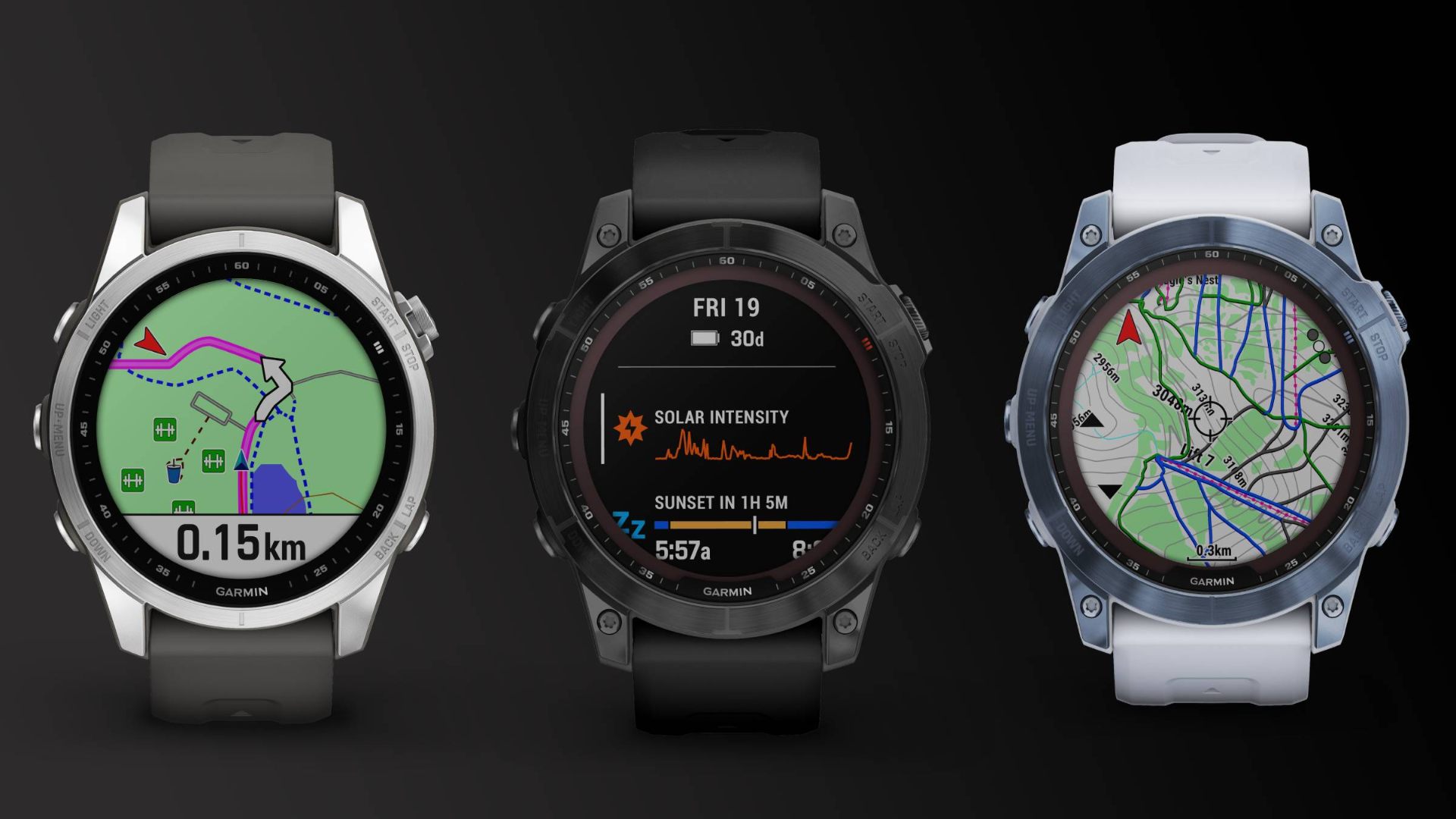
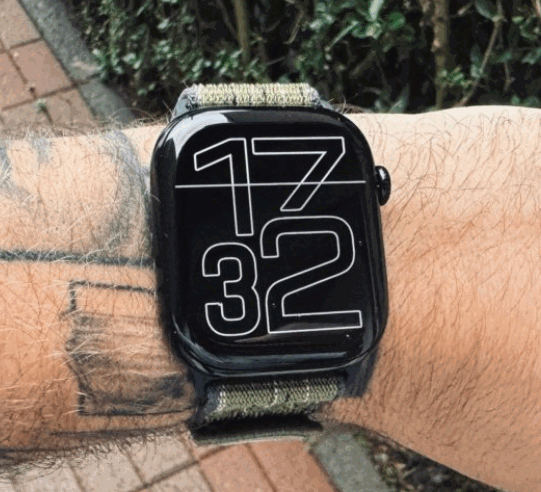
In this field, the trajectory of Garmin (with its Forerunner and Fēnix ranges) or the evolution of sports watches such as the Apple Watch Ultra and the Suunto or Polar models have redefined physical exercise.
Absolute safety in hostile terrain
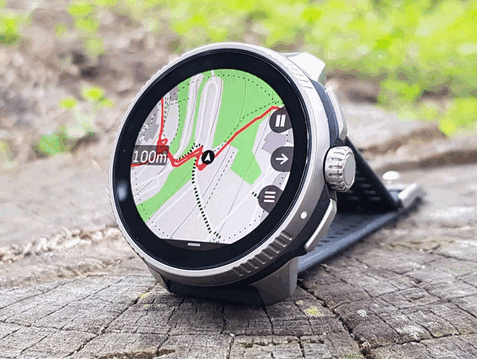
For outdoor enthusiasts (high-mountain trail running, ultra-marathons, wild hiking, ski touring), the connected watch has become a guardian angel. Thanks to the integration of ultra-precise multi-band GPS chips, athletes now carry onboard mapping directly on their wrist. The days of risking getting lost in fog are fading, replaced by features like TrackBack, which lets you retrace your steps by scrupulously following the reverse route.
Even more reassuring: safety is now active. Incident and fall detection features automatically alert loved ones or emergency services by sending exact GPS coordinates in the event of impact or prolonged immobility. Real-time activity sharing (LiveTrack) lets a family follow a long-distance runner on the trails, reassured to know they are on the move.
The science of data in the service of performance
But the greatest upheaval lies in the fine-grained analysis of biological data, once reserved for sports-science laboratories or Olympic training centres.
Thanks to optical sensors that measure Heart Rate Variability (HRV) and blood oxygen saturation (SpO2), the watch can precisely quantify training load. It banishes the athlete's most feared spectre: overtraining and injury biomechanics. The watch calculates the recovery time needed after an effort and reports, every morning, the state of training readiness.
The external sensor ecosystem: the watch becomes a hub
The modern connected watch is no longer an island. It acts as a genuine ANT+ / Bluetooth Smart hub, able to talk to a constellation of specialised sensors that multiply its precision. Where the wrist reaches its physiological limits, movement, sweat, stray vibrations, remote sensors take over and turn the watch into a true data-acquisition centre.
Running: reading every stride
The wrist's optical sensor may be ingenious, but it remains at the mercy of impacts and light. For demanding runners, the chest heart-rate strap (Garmin HRM-Pro, Polar H10, Wahoo TICKR) remains the benchmark: placed directly on the sternum, it captures the heart's electrical activity with near-medical precision. Essential for interval sessions, calculating heart-rate zones, and finely measuring HRV (Heart Rate Variability) on waking, a key indicator of recovery.
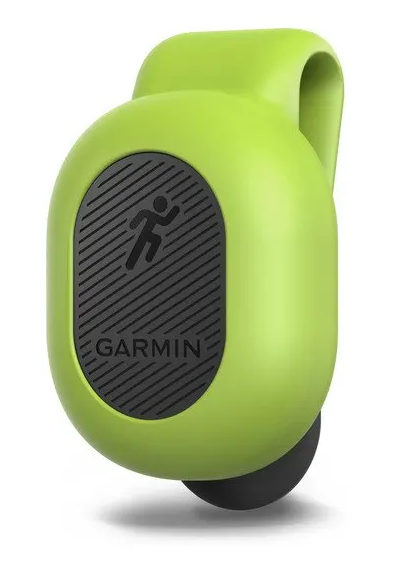
The foot pod goes further: fixed to the laces or built into the sole (Garmin Running Dynamics Pod, Stryd), it houses a 3D accelerometer that breaks down every footstrike. It reports cadence in steps per minute, stride length, vertical oscillation, ground contact time, and even estimates running power in watts. The benefit? Working on technique to gain efficiency, training on a treadmill without GPS, or making an economical, sustainable stride objective rather than an energy-costly one.
Cycling: making effort objective
On a bike, the wrist is too far from the action; everything happens at the crankset and the wheels. The cadence sensor, mounted on the crank, counts pedal revolutions per minute (RPM). An essential benchmark: below 80 RPM you're "grinding" on the knees, above 100 you're working pure spin. The speed sensor, meanwhile, is fitted to the hub and measures wheel revolutions: knowing the diameter, it derives an actual speed independent of GPS, invaluable in dense forest, in a tunnel or on a velodrome.
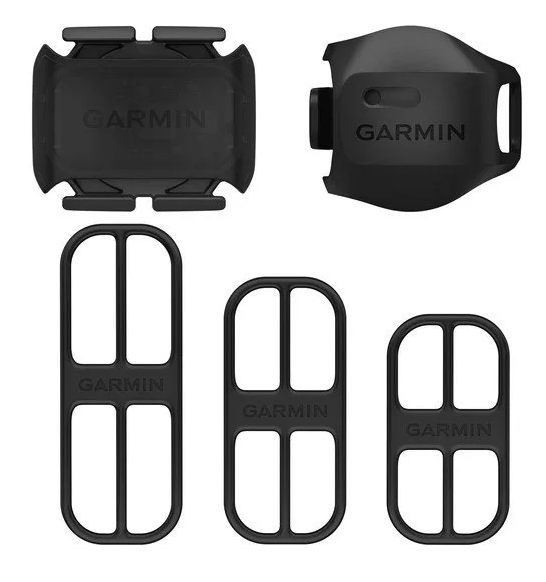
But the true grail of modern cycling remains the power meter. Built into the crankset (Stages, Shimano), the crank arm (Quarq, SRM) or directly into the pedals (Garmin Rally, Favero Assioma), it measures the force applied in watts via strain gauges. It's the only objective measure of effort: unaffected by wind, gradient or subjective fatigue. It has spawned a whole training vocabulary, FTP (Functional Threshold Power), TSS (Training Stress Score), power zones, which has democratised the methods of professional teams.
Environment and safety: opening the watch to the world
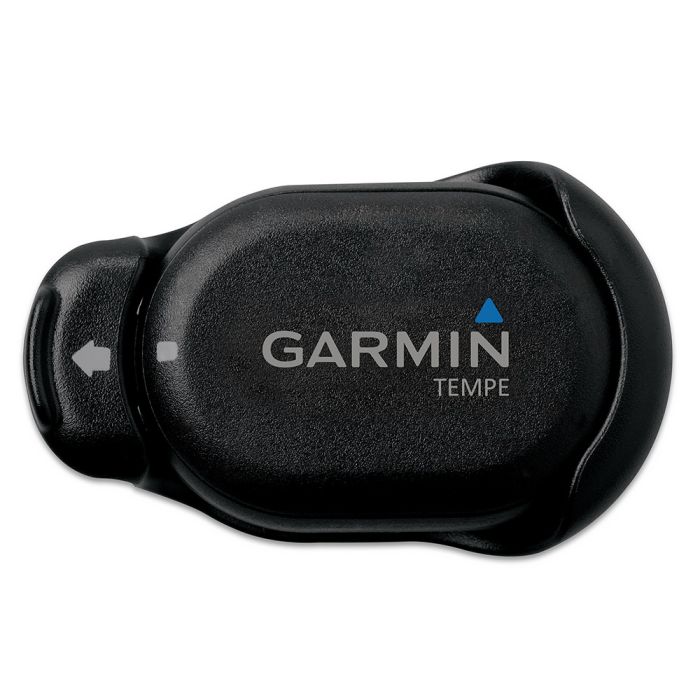
The wrist is always warm. To measure real ambient temperature, in mountaineering, in a bivouac, when sailing, the sensor has to be taken off the body. That's the role of the tiny Garmin Tempe, a remote puck clipped to a rucksack or bike handlebar, which transmits outdoor temperature via ANT+ without contamination from body heat.
Around this core orbits a whole satellite ecosystem: a connected bioimpedance scale (weight, body fat, water mass), a blood-pressure monitor, a connected trainer such as Zwift for immersive indoor cycling, or even a rear bike radar (Garmin Varia) that detects approaching vehicles up to 140 metres away and alerts the cyclist before they can be heard.
All this data converges on the watch, which aggregates it, time-stamps it and syncs it to platforms such as Garmin Connect, Strava or TrainingPeaks. The watch then becomes the conductor of a genuine portable laboratory, a role no mechanical watch, however refined, could ever have imagined taking on.
Performance within reach of the "ordinary mortal"
Here lies the true human magic of our age: accessibility. What once required a private coach, complex clinical exercise tests and indigestible spreadsheets is now simplified, translated into clear, colourful graphs on a smartphone screen.
Sunday runners now have access to their VO2 max (the index of their cardio-respiratory capacity), to their stride analysis (ground contact time, vertical oscillation) and to dynamic training plans that automatically adapt to their state of fatigue. This simplification of data drives self-improvement: it motivates, sets clear goals and lets you watch, week after week, your progress take shape. Sport is no longer an empirical activity based on sometimes misleading sensations; it has become guided, supportive and optimised for everyone.
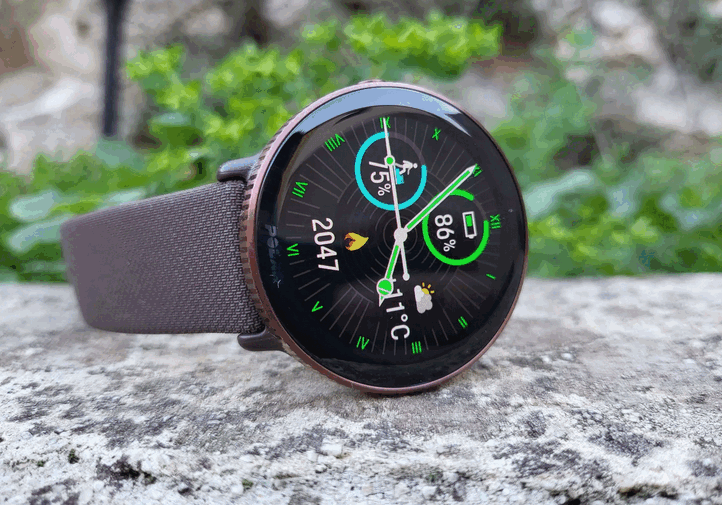
Symbiosis: What Is Your Relationship With Time?
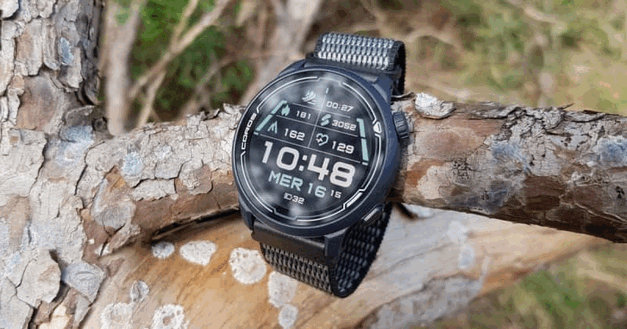
We might have thought the pixel would finally kill off the cog, that the connected watch would relegate the mechanical watch to the status of technological fossil. The exact opposite has happened. We are today witnessing a fascinating coexistence and symbiosis.
The modern collector is a hybrid being. It is no longer rare to see a watch enthusiast wearing a Garmin or an Apple Watch Ultra on their wrist to push their limits, optimise their stride and stay safe on a mountain outing in the morning, before strapping on a prestigious Swiss mechanical watch for their working day.
These two worlds answer two profoundly human and complementary needs:
- The technological tool helps us optimise our present, monitor our health, secure our adventures and democratise athletic performance. It is quantified, useful time, but perishable time (subject to obsolescence).
- The mechanical object, meanwhile, offers us an anchor. Facing a cold screen, the workings of an automatic movement offer a kinetic poetry and a welcome disconnection. It is suspended, artistic time, which escapes the constant flow of notifications.
So, looking at your wrist, I invite you to reflect: what do you expect from your watch at this precise moment? For it to calculate the calories of your next effort while watching over your safety, or for it to invite you, through the silent, continuous sweep of its seconds hand, simply to savour the beauty of the second passing by?
✉️ Passionate about watchmaking and innovation?
Join the Charlemagne newsletter and receive our next articles, new arrivals and vintage favourites straight to your inbox.
Related articles
- Quartz Crisis 1969: Seiko Astron and the Swiss Watch ShockThe Quartz Crisis: how Seiko's 1969 Astron upended Swiss watchmaking and triggered its rebirth. The full story, calibres and key dates.
- Watches and the Ocean: From the Mariana Trench to Modern RecordsPart 2 – From the Mariana Trench to modern records
- Watches and the Ocean: Pioneers of the AbyssPart 1 – From the first descents to extreme records