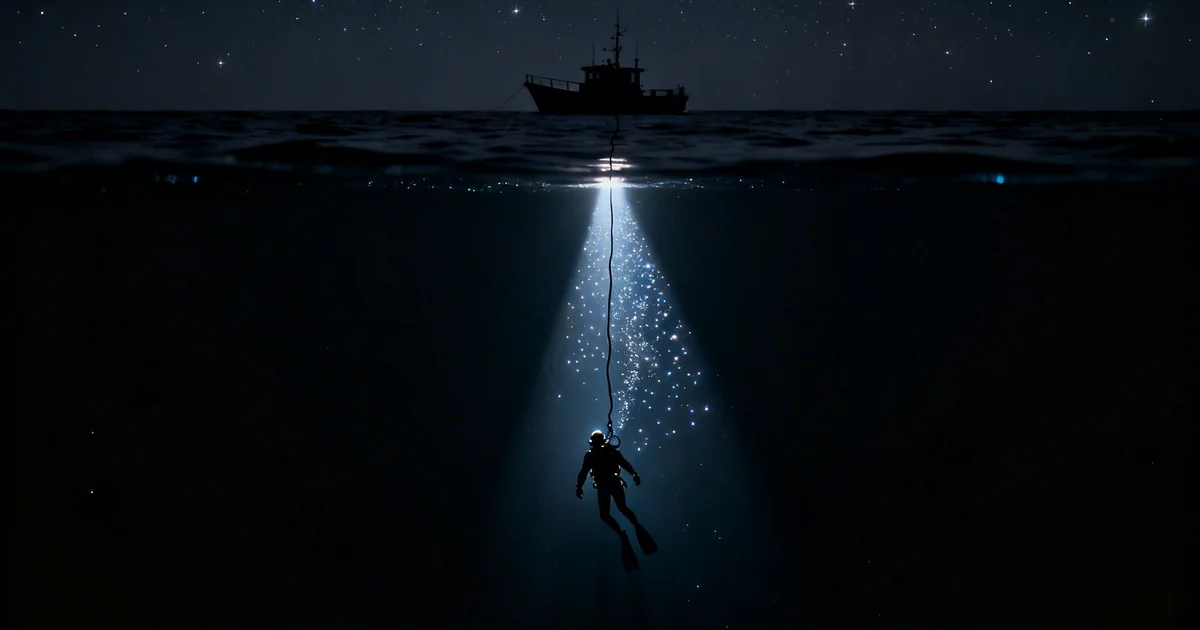
Watches and the Ocean: From the Mariana Trench to Modern Records
By CharlemagneUpdated on 10 min read
Volume 2 – From the Mariana Trench to Modern Records
After the Trieste's triumph in 1960, the abyss is no longer quite a mystery. Man has touched the bottom of the world. He has seen, or rather sensed, what no one had yet come this close to. But the story does not end with this victory suspended in the black silence of the Mariana Trench.
From there, a new era begins. The great depths are no longer solely the territory of bathyscaphes and heroic records. They also become a laboratory, a testing ground, a workplace. Man descends there to understand, to film, to live, sometimes to push the limits of the human body still further. And gradually, watchmaking follows suit. The dive watch is no longer merely a promise of water resistance. It becomes the discreet witness to this slow, patient, dangerous conquest.
From the 1960s, Jacques Cousteau pursued his underwater-living experiments with Conshelf. The idea is almost mad, yet profoundly modern. It is no longer simply a matter of diving for a few minutes, then surfacing. It is about inhabiting the sea, working underwater, turning the seabed into a genuine scientific base. His teams test several watches in real conditions, including the Rolex Submariner and the Blancpain Fifty Fathoms. These instruments accompany divers into a world where duration, pressure and legibility forgive nothing.
Yet while Rolex and Blancpain already occupy an important place in the diver's imagination, another Swiss house begins to make its mark with a very different discretion. Omega advances quietly, but in earnest. Its Seamaster, sober, robust, designed to withstand water without seeking showmanship, accompanies several scientific expeditions. It gradually earns the trust of professional divers, not through myth alone, but through use. In this world, a watch only becomes legitimate through being worn where it can fail.
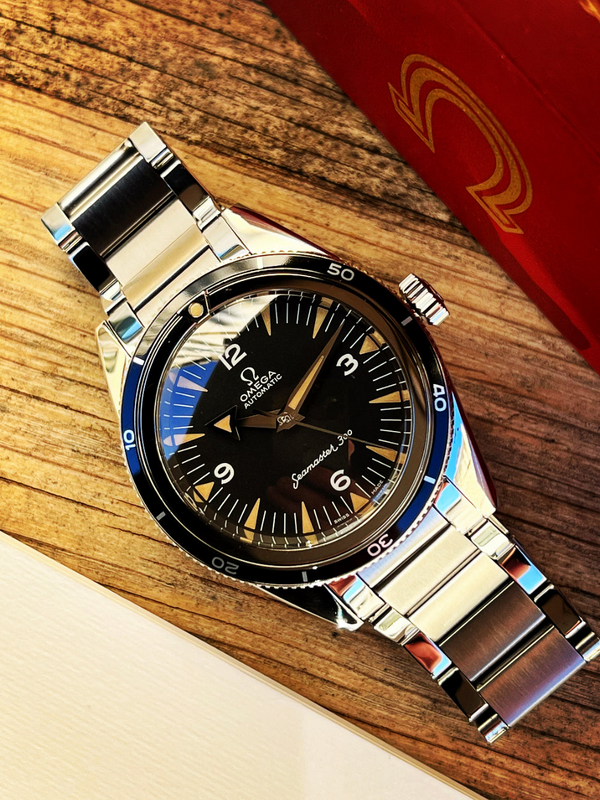
Omega Seamaster 300 from 1957, one of the watches that lastingly established Omega in the world of professional diving.
Then comes 1968, and with it a visual rupture. A Swiss watch in vivid colours emerges into a world still dominated by black dials. The Doxa Sub 300 does not seek restraint. Its fluorescent orange dial catches the eye at once. This choice is no aesthetic whim. It answers a simple, almost brutal necessity. Underwater, especially when visibility deteriorates, you have to read fast. You have to recognise the time and the dive time without hesitation.
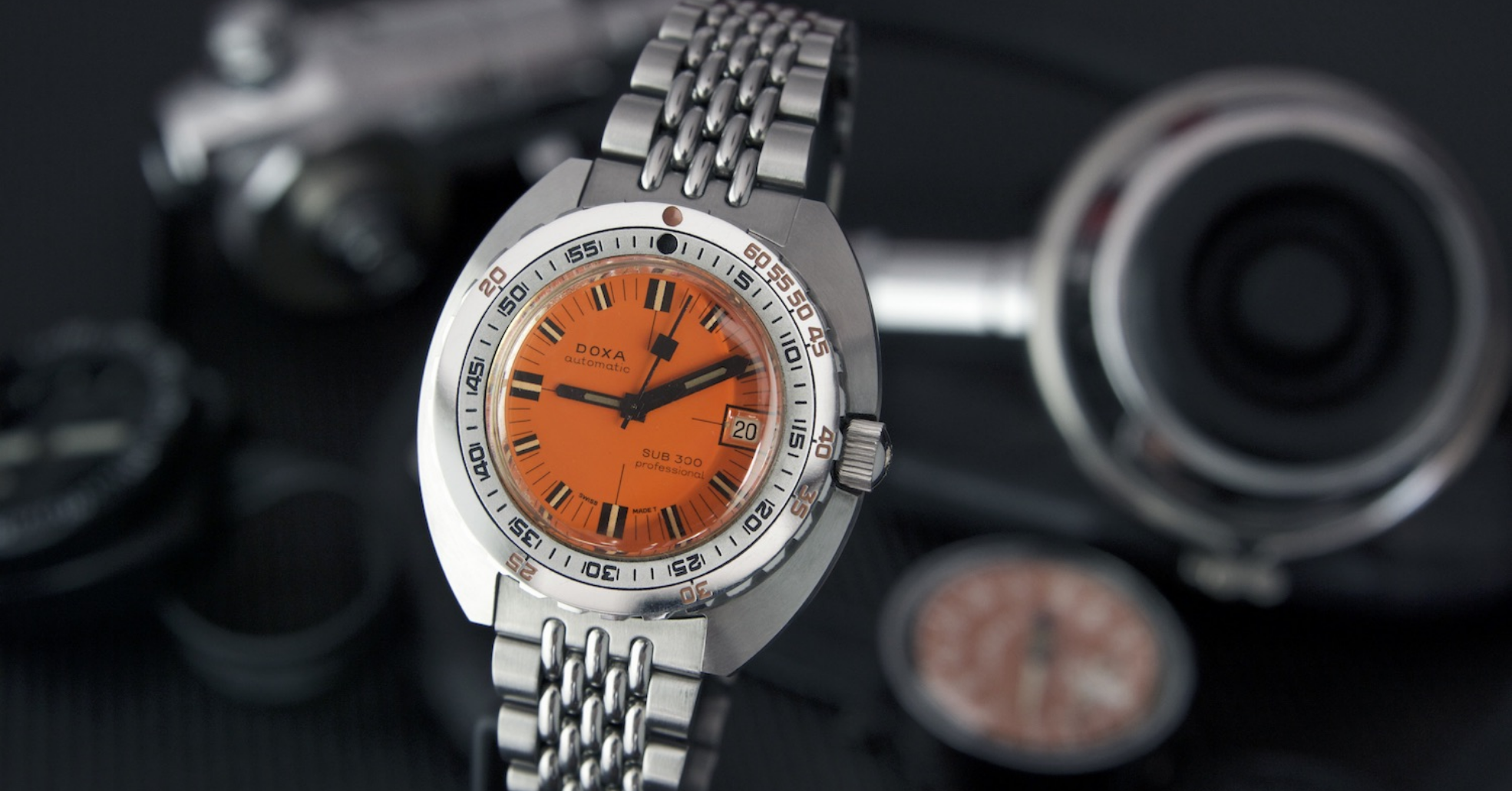
Doxa Sub 300 from 1968, recognisable by its orange dial, which became a signature in the history of dive watches.
This beacon colour quickly becomes a reference point. In murky waters, on the wrists of professionals and demanding amateurs alike, the Sub 300 imposes a new way of thinking about the tool watch. It is not merely solid. It is visible. It commits to its function to the very end. Doxa then understands something essential. A dive watch is not made to shine in a display case. It is made to be understood in a split second, where light is lacking and error is costly.
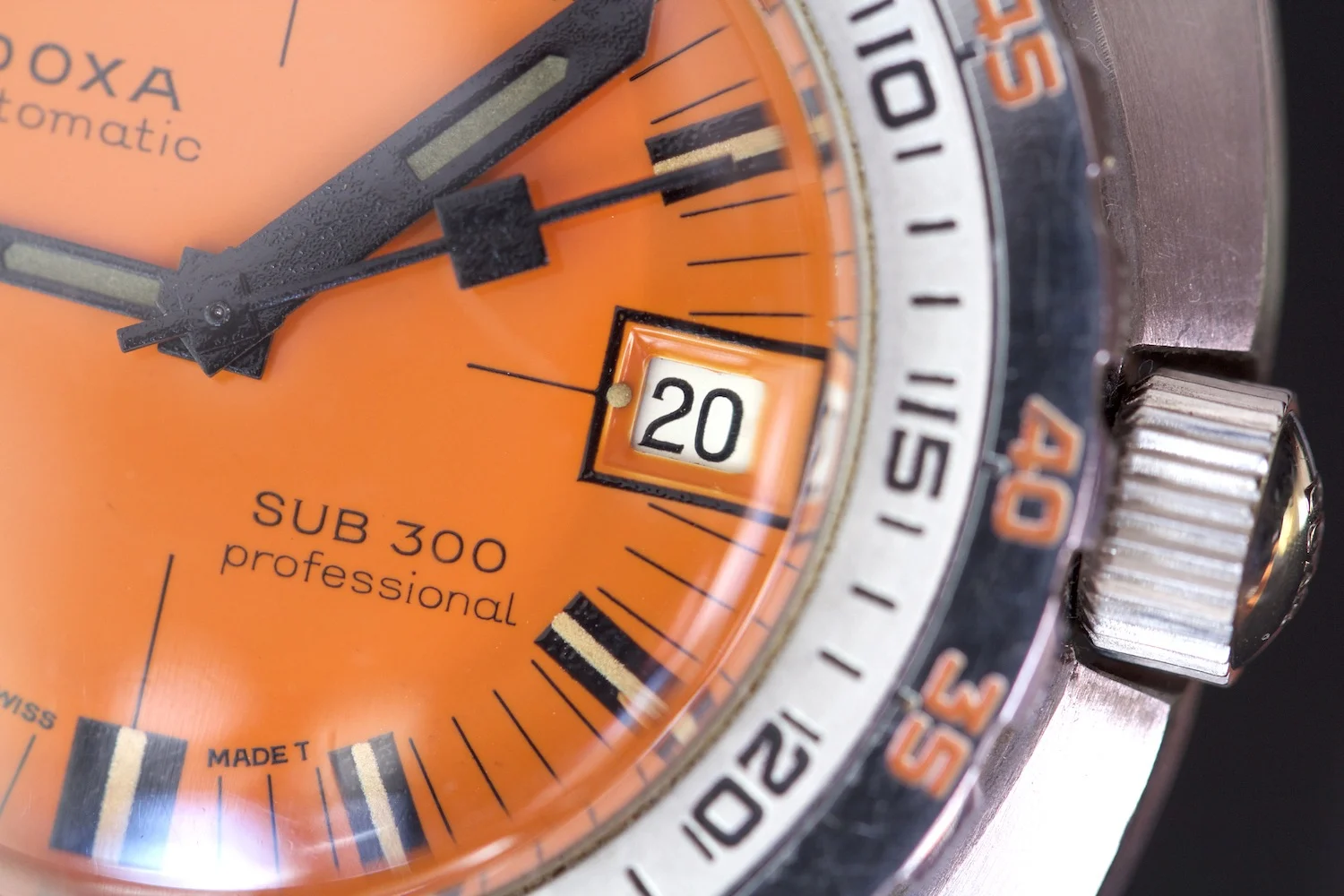
Close-up of the Doxa Sub 300's orange dial, designed for instant legibility underwater.
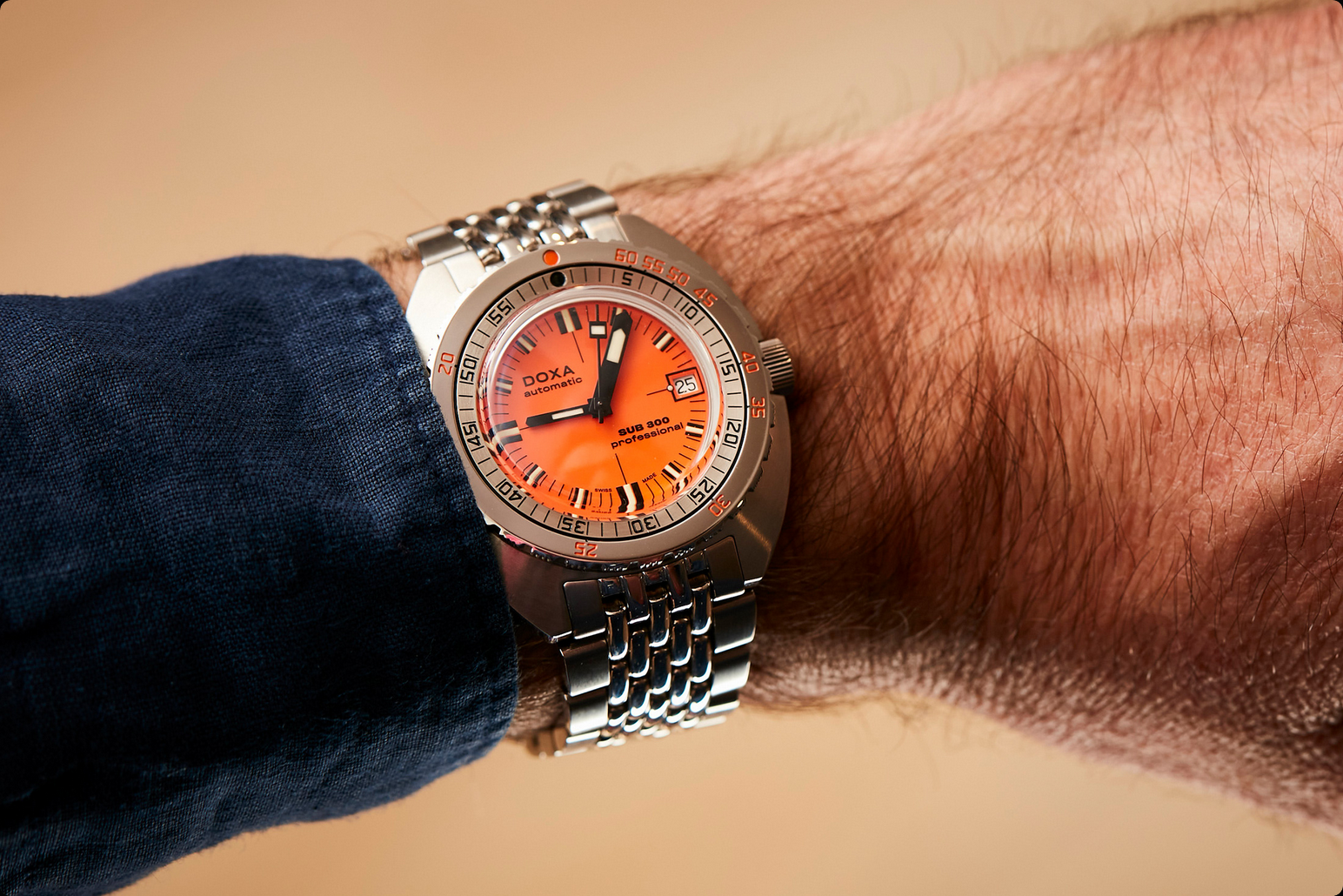
Orange Doxa Sub 300 on the wrist, proof that the tool watch also imposed an immediately recognisable presence out of the water.
At the same moment, on the other side of the globe, the Japanese enter the fray with characteristic discretion. In 1966, Seiko launches the 62MAS, its first serious dive watch. The design is simple, almost restrained, but the intent is clear. Japan too wants to produce a genuine sea watch, reliable, legible, capable of accompanying divers in demanding conditions.
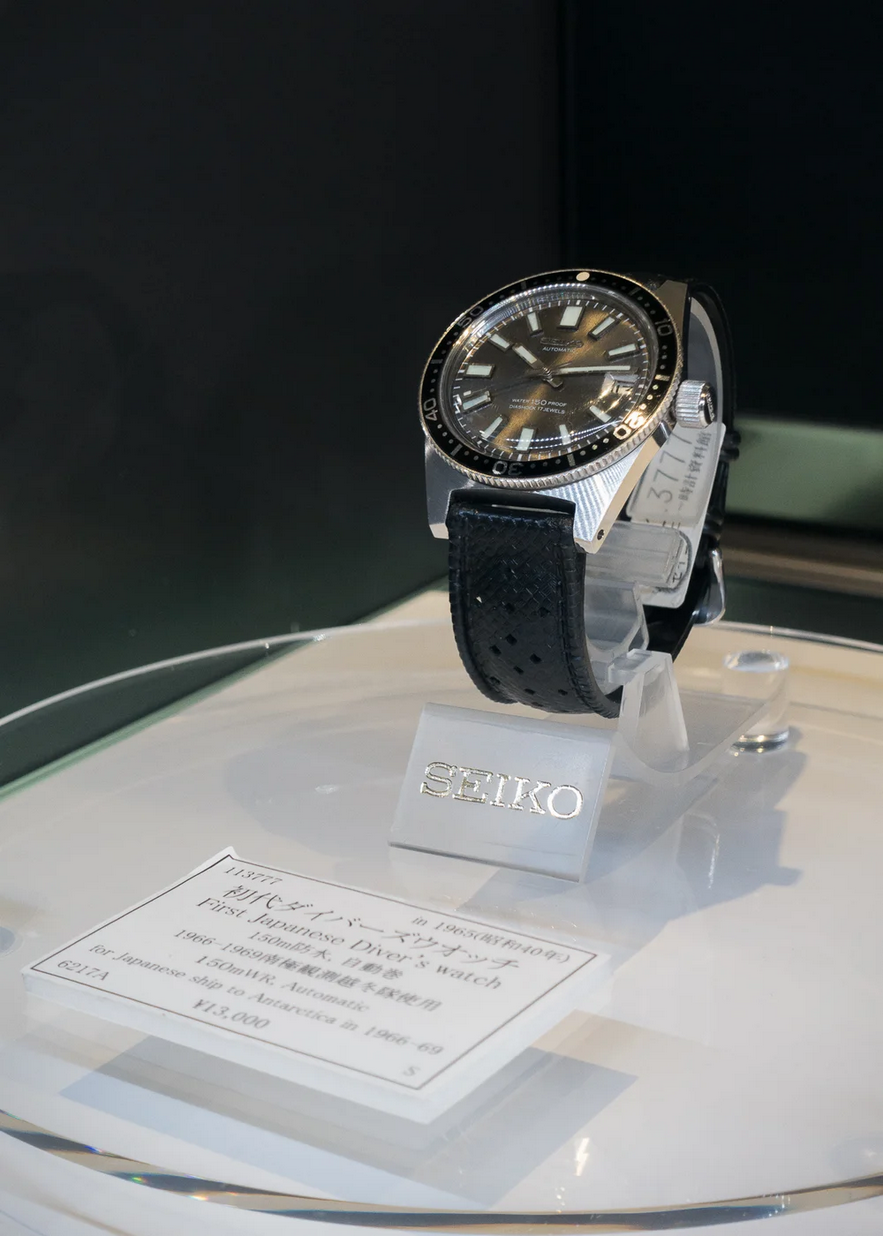
Seiko 62MAS 6217-8000, the Japanese manufacture's first true dive watch.
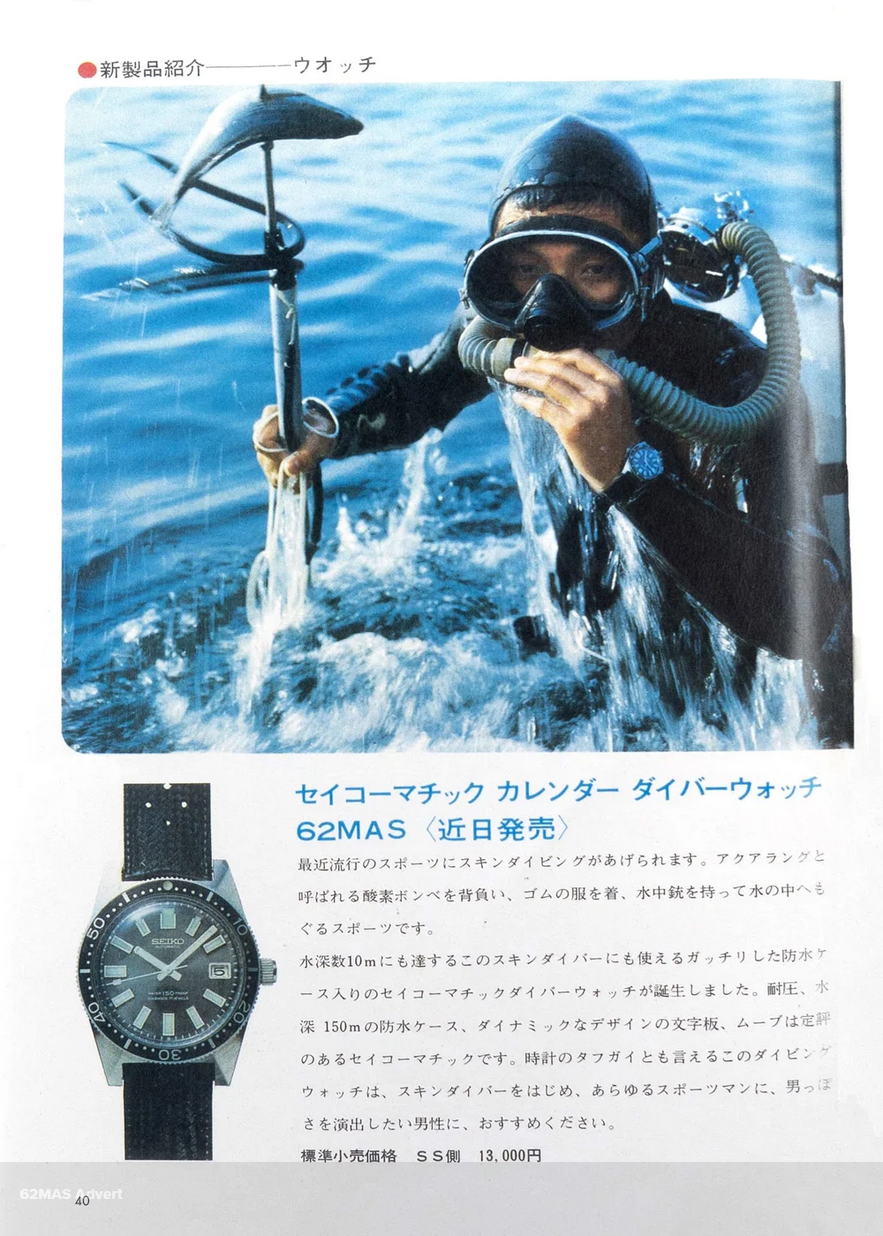
Vintage Japanese advertisement for the Seiko 62MAS, in which the watch already appears as a genuine diving instrument.
Nine years later, in 1975, Seiko strikes much harder. The Professional Diver's 600m arrives as a direct response to the constraints of extreme diving. It withstands six hundred metres of depth, but above all, it embodies another philosophy. Massive case, construction built to last, reinforced protection, instant legibility. This watch built for extremes quickly becomes a benchmark within Japan's special forces and among technical divers. With it, Seiko proves that toughness can become an entire culture in itself.
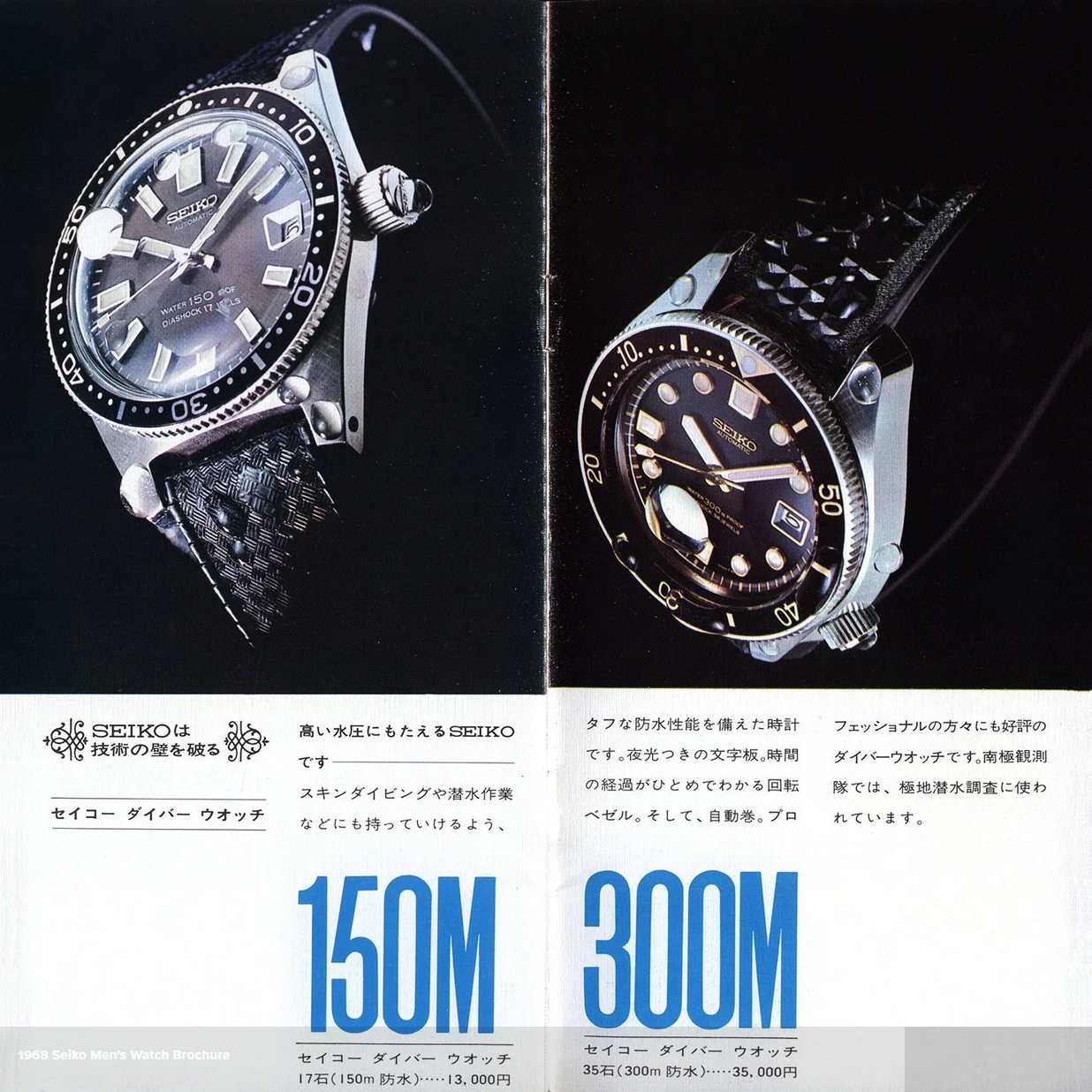
Seiko brochure from 1968 presenting the 150m and 300m dive watches, evidence of Japanese technical ambition.
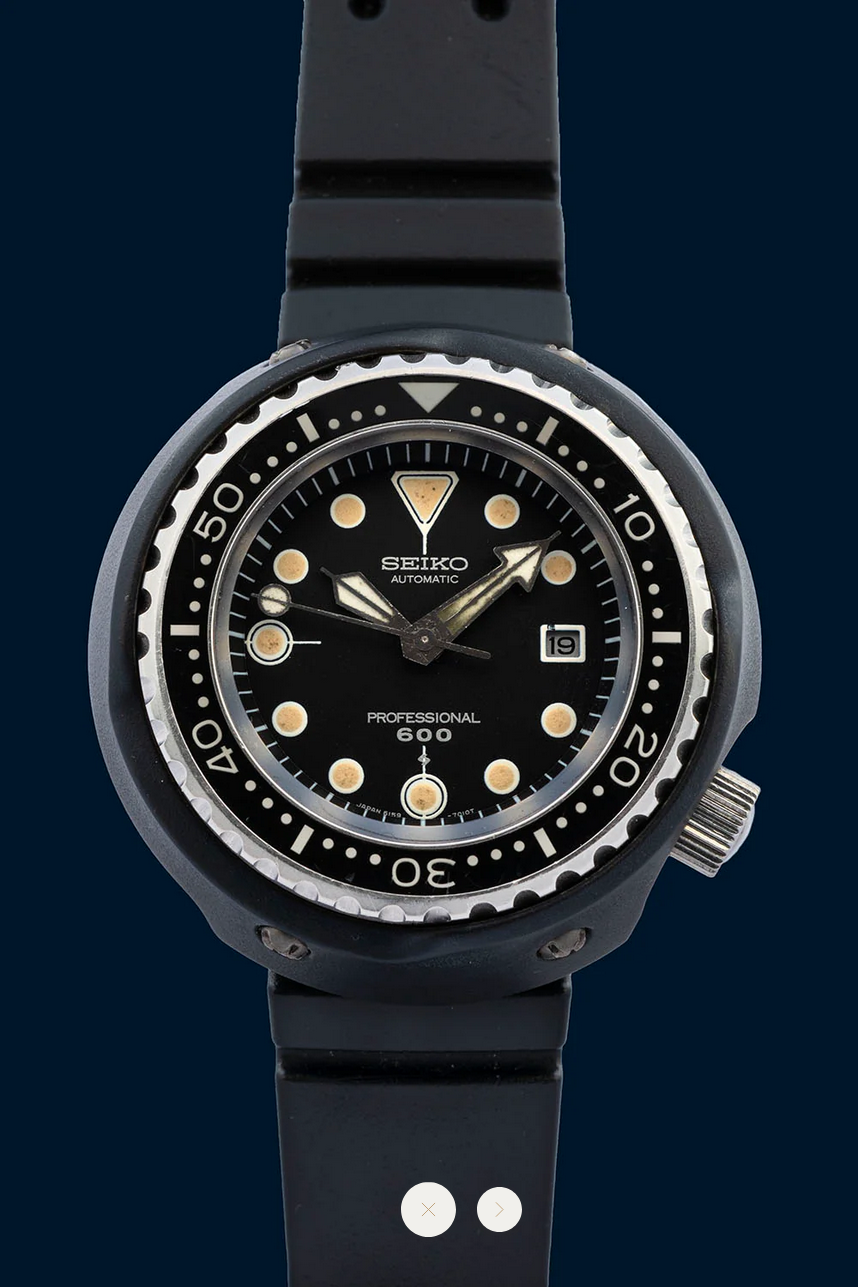
Seiko Professional Diver's 600m from 1975, future icon of extreme Japanese diving.
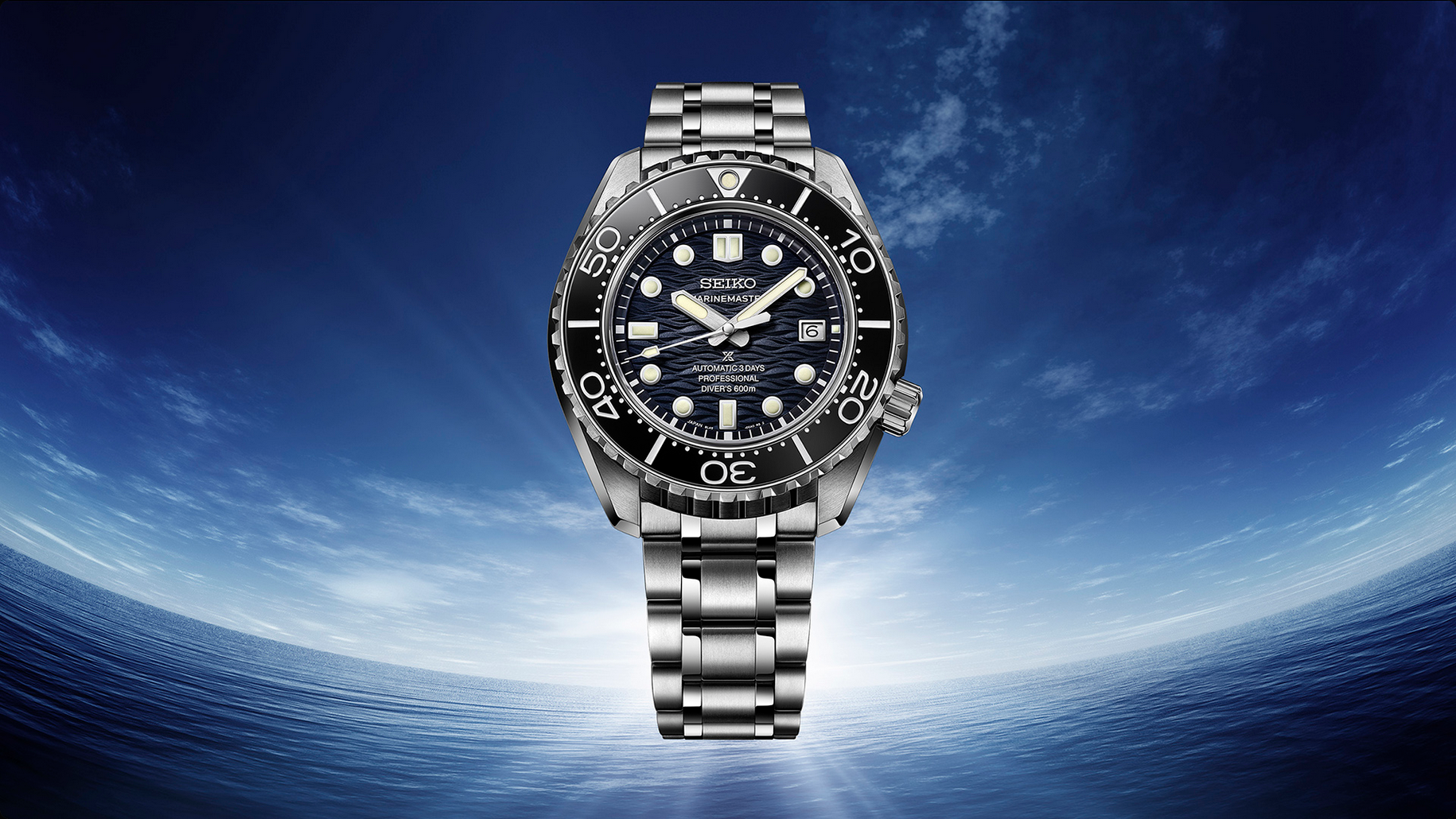
Seiko Prospex Diver's 600m, the modern heir to this Japanese culture of toughness and legibility.
Time passes, instruments change, submersibles grow more precise, but the fascination with the deepest point of the oceans remains intact. In 2012, history swings back to the Mariana Trench. James Cameron, director of Titanic, chooses to descend alone where Piccard and Walsh had gone together more than half a century earlier. Aboard the Deepsea Challenger, he reaches 10,908 metres. This time, the expedition is as much scientific as it is media spectacle. The world looks down once more.
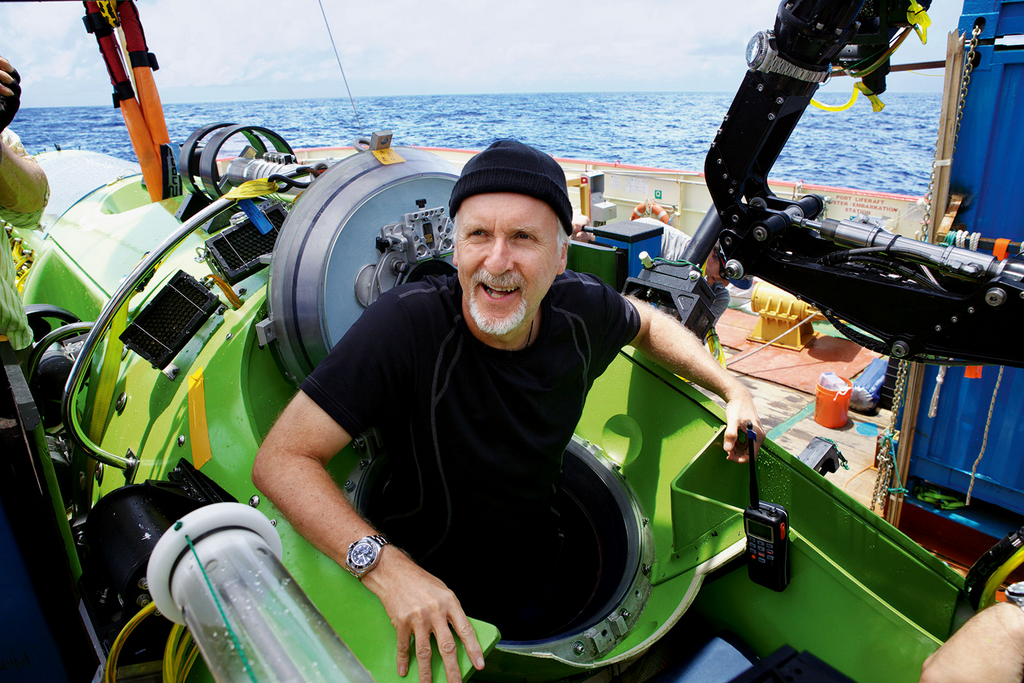
James Cameron aboard the Deepsea Challenger, moments before writing his name into the modern history of the abyss.
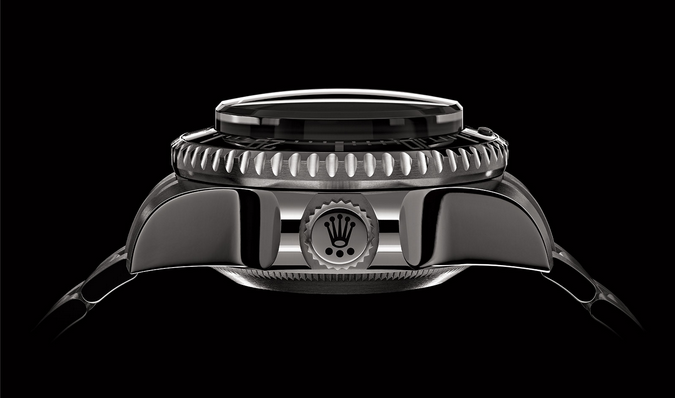
Rolex Deepsea Challenge, designed to withstand the extreme pressure of the deepest point of the oceans.
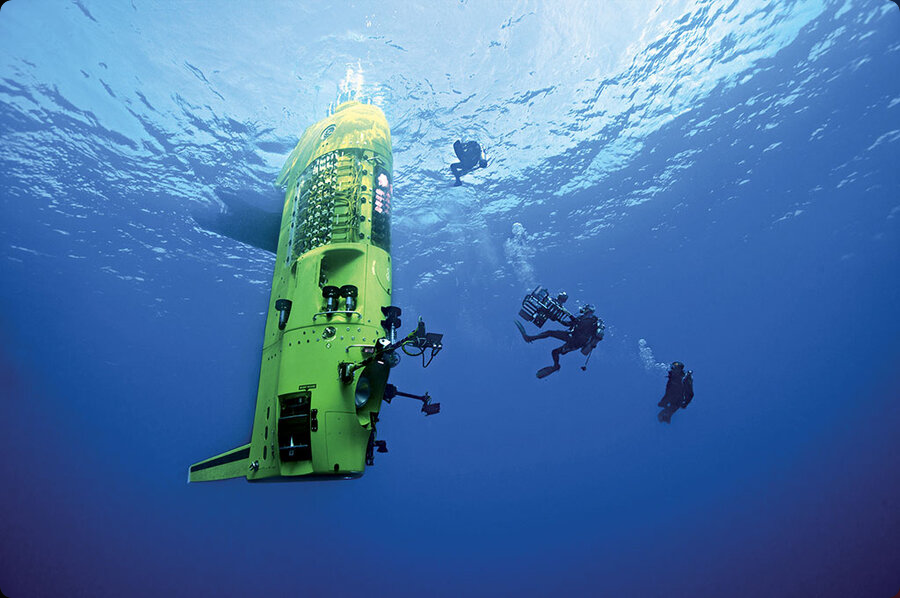
James Cameron's Deepsea Challenger in the blue, a spectacular image of an expedition aimed at the deepest point on the globe.
Fixed to the outside of the submersible, a specially built Rolex Deepsea Challenge withstands a pressure of over a thousand atmospheres. It is not protected inside the cabin. It is outside, directly exposed to the absolute crushing force of the abyss. The symbol is powerful. As in 1960 with the Trieste's Deep Sea Special, Rolex seeks the ultimate test. But this time, the era has changed. The footage comes back with Cameron. The dive becomes narrative, proof, spectacle and scientific record all at once.
Cameron resurfaces with unprecedented footage, and the watch returns intact. In watchmaking history, this kind of feat does not serve merely to announce a technical performance. It is a reminder that the dive watch remains tied to an almost primitive idea of trust. Even when computers, sensors and modern submersibles take over, a mechanical timekeeper continues to carry something essential. A form of continuity between the pioneers and today's explorers.
Alongside these spectacular descents, a woman is also writing the history of the deep with admirable constancy. Sylvia Earle, oceanographer, biologist and explorer, spends more than seven thousand hours underwater over the course of her career. For her, the feat is never an end in itself. It serves a larger cause. Understanding the oceans, protecting them, reminding us that this vast world is not a silent reserve but a living, fragile, threatened organism.
Sylvia Earle regularly chooses the Omega Seamaster Planet Ocean, a watch that accompanies her on her scientific missions and in her fight to preserve the oceans. Here too, the symbol goes beyond the object. The Seamaster is no longer associated solely with depth or performance. It also becomes a mark of commitment. Descending is no longer enough. One must also bear witness, explain, defend.
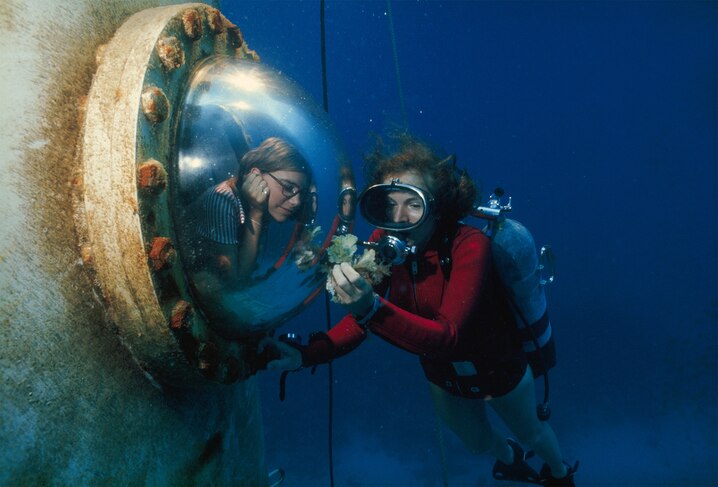
Sylvia Earle underwater, a leading figure in oceanographic exploration and the protection of the deep sea.
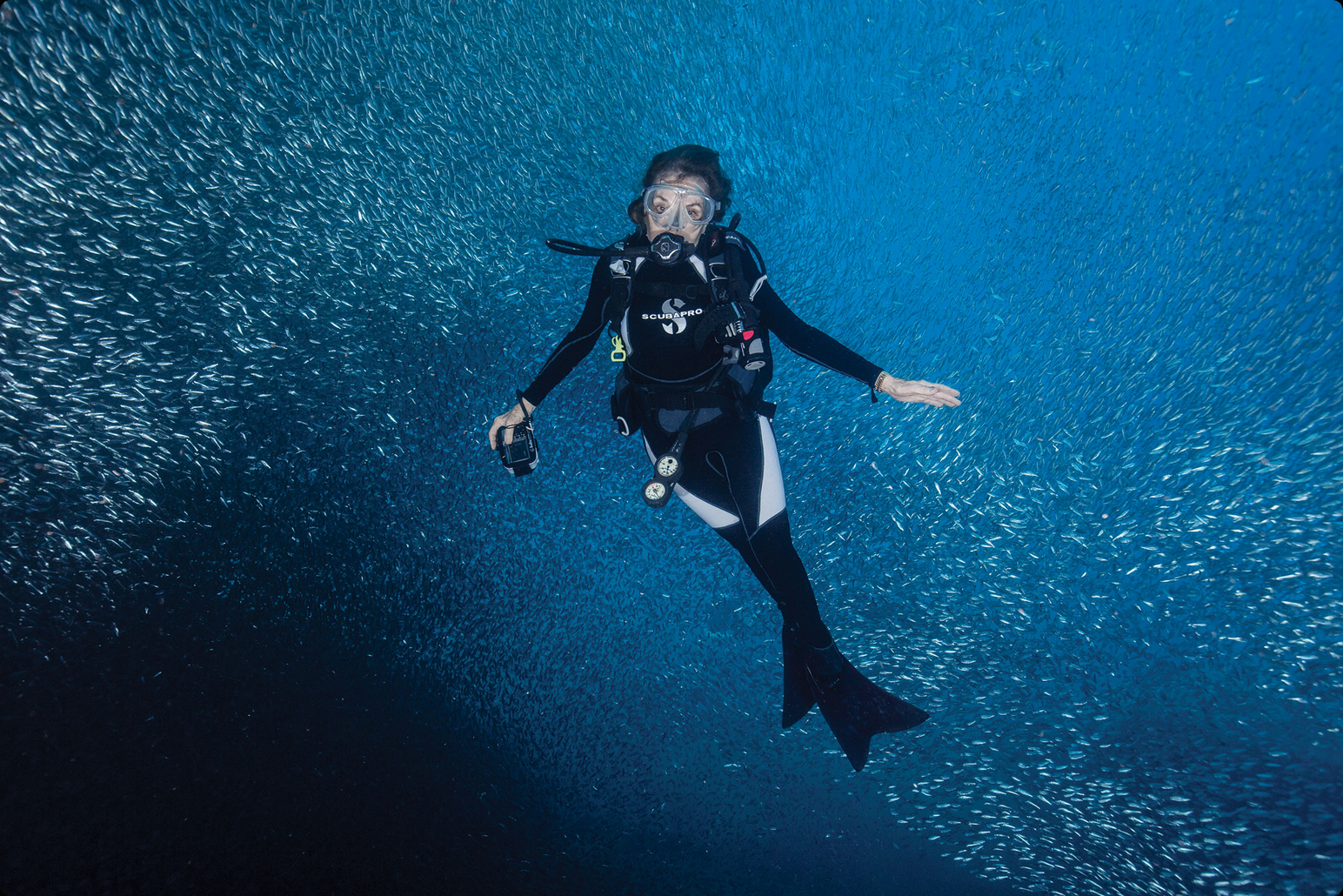
Sylvia Earle in mid-dive, surrounded by the marine life she has never stopped defending throughout her career.
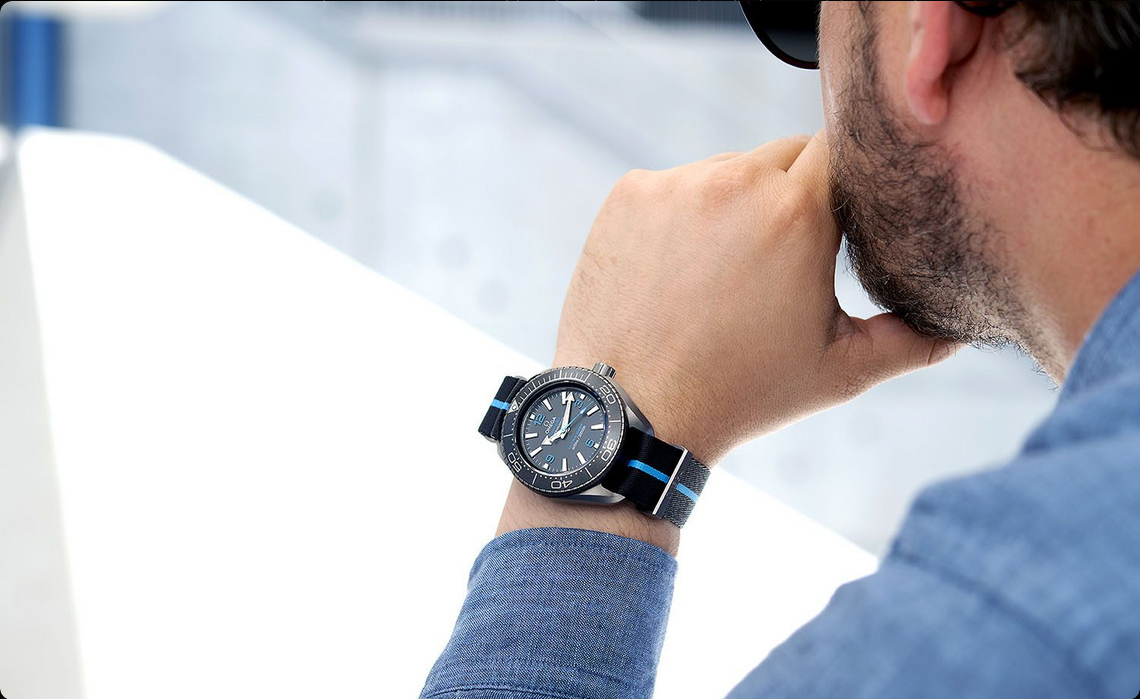
Omega Seamaster Planet Ocean on the wrist, a modern diver's watch associated as much with exploration as with the defence of the oceans.
On the side of pure human performance, freediving records also draw attention. Here, no hull, no submersible, no engine. All that remains is the body, the breath and the will to descend beyond the reasonable. Herbert Nitsch, considered the greatest freediver of all time, wears an Omega Seamaster during several of his extreme attempts. In this context, the watch accompanies an even more stripped-down form of exploration. Time is no longer merely a technical measurement. It becomes an inner frontier.
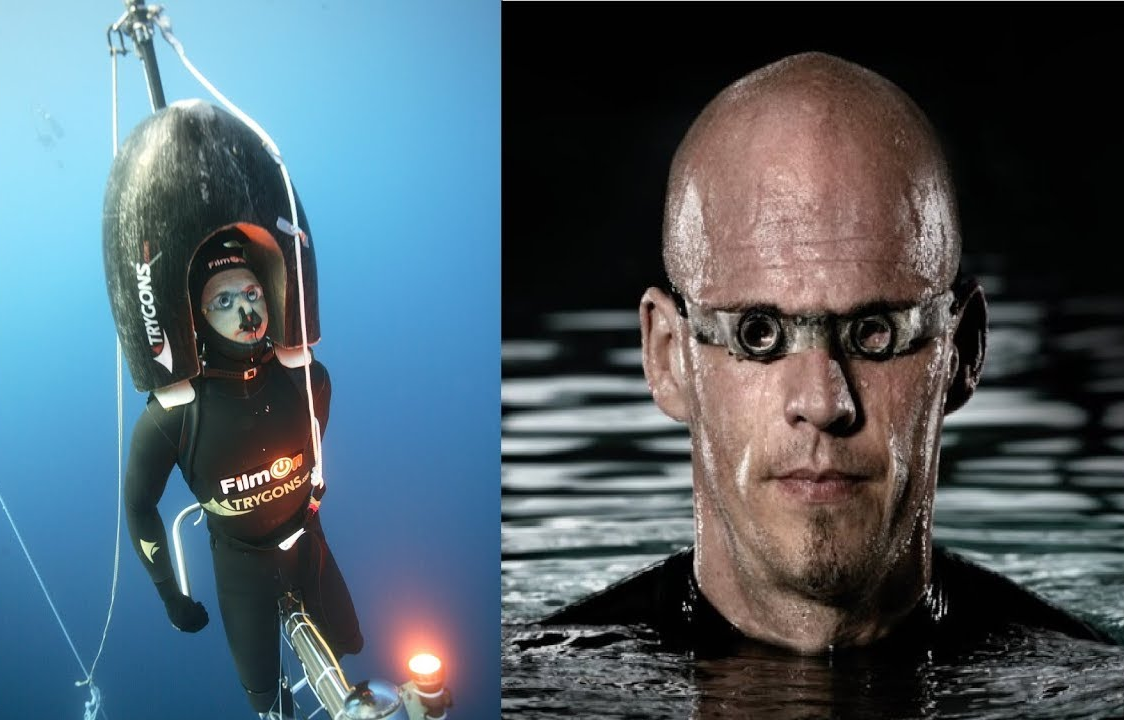
Herbert Nitsch diving, the embodiment of an exploration in which the body itself becomes the primary instrument.
In 2014, another name enters the great chronology of modern diving. Egyptian Ahmed Gabr sets a still-unmatched record in scuba diving with a descent to 332 metres in the Red Sea. The depth is dizzying. At this level, every stage must be calculated, every minute counts, every ascent becomes a test of patience and mastery. For this legendary dive, he places his trust in a specially adapted Rolex Sea-Dweller Deepsea.
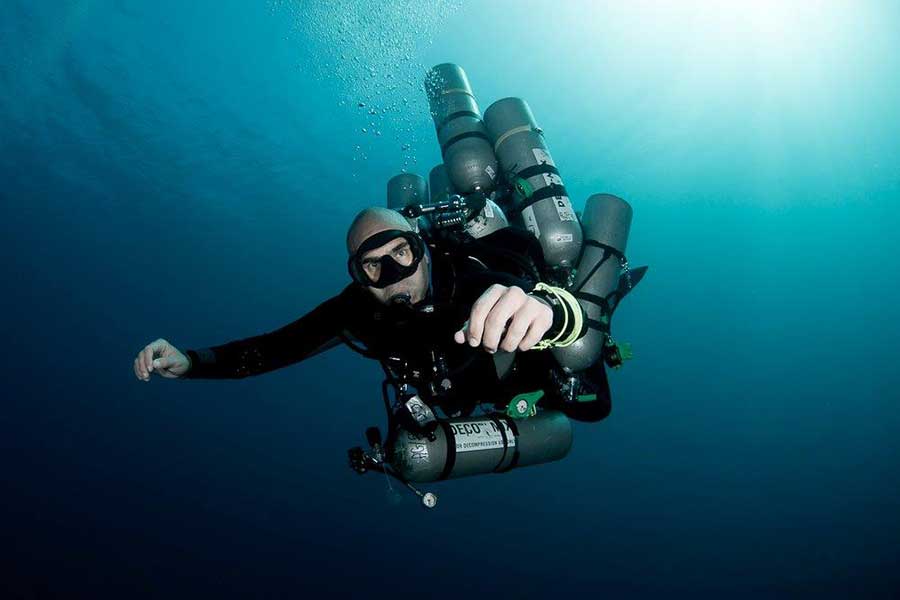
Ahmed Gabr on a technical dive, a symbol of a modern record where preparation counts as much as daring.
This record reminds us that the abyss does not begin only at ten thousand metres. For the human body, a few hundred metres are already enough to enter a zone where everything becomes extreme. Pressure, gases, cold, duration, solitude. Here again, the watch is not a prestige accessory. It belongs to the diver's mental equipment. It reassures because it measures. It accompanies because it remains legible when the rest of the world shrinks to a few repeated gestures.
Even today, these brands continue to write the next chapter of this great adventure. Omega with its Seamaster, Rolex with its Deepsea, Doxa and its legendary orange, Seiko and its indestructible Prospex, Blancpain and its Fifty Fathoms faithful to its origins. Each pursues the same quest in its own language. Some speak through records. Others through loyalty to the field. Others still through legibility, resistance, memory.
But at heart, they all tell the same story. That of a watchmaking industry that agreed to leave the drawing rooms, the offices and the quiet wrists, to confront cold water, darkness and pressure. Every new dive watch carries something of the men and women who dared to descend where light never reaches. It inherits from Beebe and Barton, from Cousteau, from Piccard and Walsh, from Cameron, from Sylvia Earle, from Nitsch, from Gabr, and from all those whose names did not always survive, but whose actions moved exploration forward.
The abyss is no longer quite unknown. Yet it has lost none of its power. It continues to draw engineers, scientists, divers, watchmakers and dreamers. And for as long as man wishes to go deeper, understand more, stay longer beneath the surface, there will always be a watch somewhere to remind us of one simple thing. In the ocean, time is never abstract. It is vital.
Related articles
- From Mechanical Watch to Smartwatch: The Evolution of TimeDiscover the fascinating story of watchmaking. From the Quartz Crisis to Garmin and Apple connected watches, see how technology has transformed sport, safety and our relationship with time.
- Quartz Crisis 1969: Seiko Astron and the Swiss Watch ShockThe Quartz Crisis: how Seiko's 1969 Astron upended Swiss watchmaking and triggered its rebirth. The full story, calibres and key dates.
- Watches and the Ocean: Pioneers of the AbyssPart 1 – From the first descents to extreme records