Quartz Crisis 1969: Seiko Astron and the Swiss Watch Shock
By CharlemagneUpdated on 22 min read
Historical Investigation · The Quartz Crisis · Seiko & Swiss Watchmaking
On 25 December 1969, Seiko launched the Astron, the first commercial quartz watch in history. A move that would trigger one of the most devastating industrial crises of the twentieth century. And, paradoxically, sow the seeds of a renaissance.
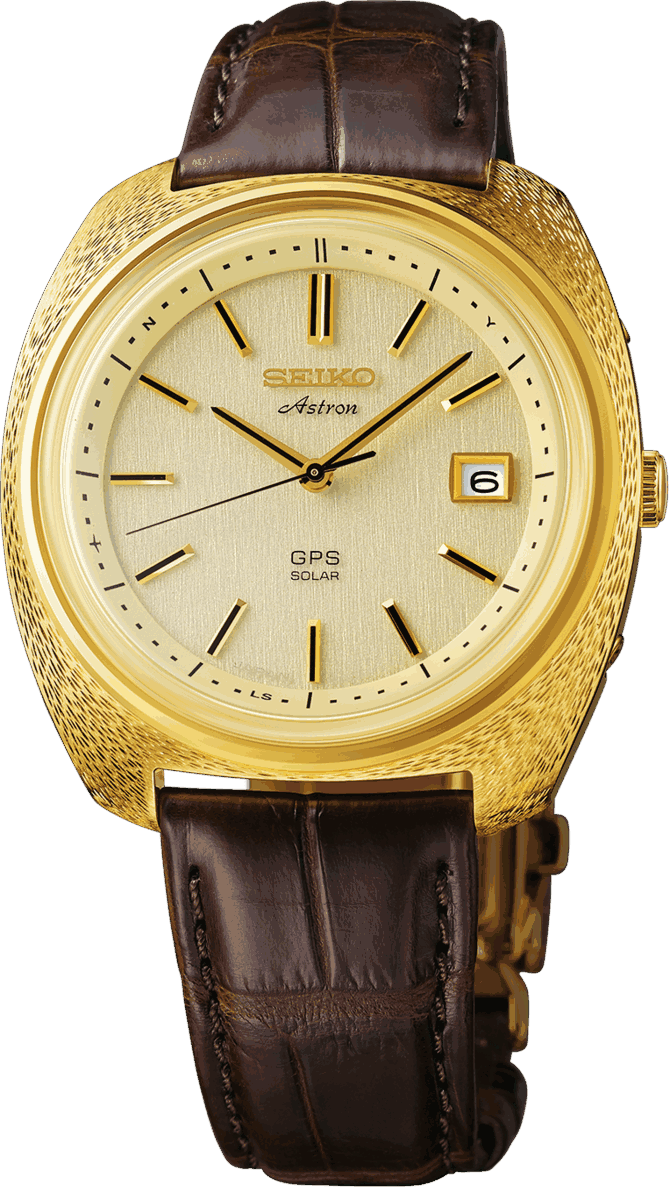
There are objects that change the world without looking the part. A gold case that fits in the palm of a hand. A crystal that vibrates 32,768 times a second. A decision taken one morning in a meeting in Tokyo, whose scale nobody in Geneva yet grasped. On 25 December 1969, Seiko slipped onto the wrist of a wealthy Japanese customer the world's first commercial quartz watch. The Astron 35SQ. 450,000 yen. The price of a Toyota. It was a revolution. It was also the start of a nightmare for thousands of Swiss watchmakers who never saw it coming.
This article is the story that isn't told often enough. Or that's told badly. The story of a very discreet horological empire that loaded the gun, pulled the trigger, then handed cartridges to the man staggering back to his feet. The quartz crisis, Swiss arrogance, a turnaround worthy of a film, and an industrial lesson still studied today.
25 December 1969: the day Seiko changed everything
To grasp the violence of the earthquake, you have to measure what watchmaking was before the Astron. In 1969, Switzerland manufactured between 82 and 84 million watches a year. Over 50% of world exports by value. An even more crushing share by volume. A near-monopolistic industry, sitting quietly in its Jura valleys, convinced it was eternal. The Americans bought Swiss. The Japanese bought Swiss. The whole world bought Swiss.
Seiko, at the time, was no novice. The brand, founded in 1881 by Kintaro Hattori, had already proved itself. Official timekeeper of the 1964 Tokyo Olympic Games. Watches exported to Europe. Reliable, affordable movements. But all of that stayed filed under "honourable Asian competitor". The Swiss smiled. A condescending smile. That smile was about to cost them a fortune.
The Astron 35SQ: a gold case worth billions
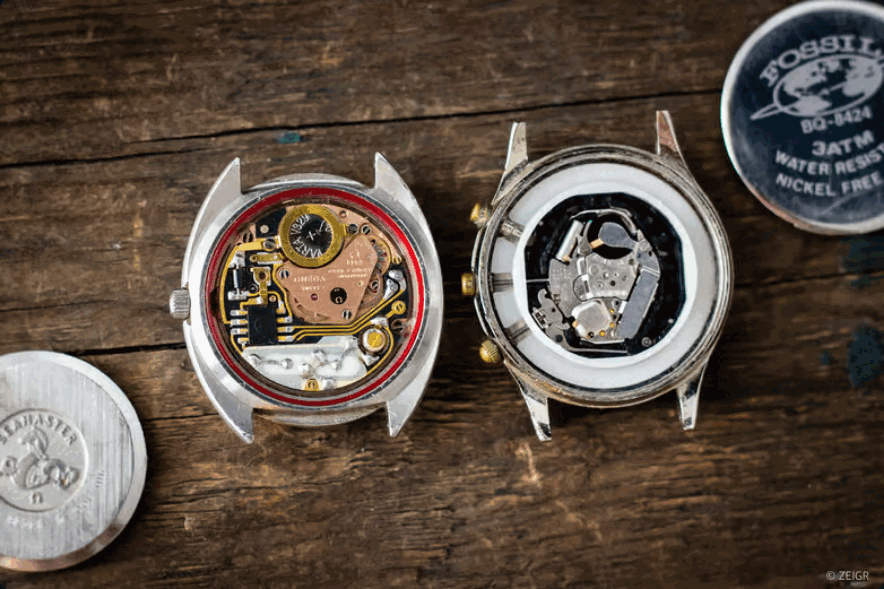
Technically, the Astron is a small miracle of miniaturisation. A quartz oscillator, a photoelectric cell to measure the frequency, a stepper motor to drive the hands. Announced precision: 0.2 seconds a day. Five times better than the best COSC-certified mechanical chronometer. The technology hadn't come from nowhere, though. Similar research had existed in Switzerland, the United States and Japan since the mid-1960s. The Centre Électronique Horloger in Neuchâtel, founded in 1962, had even developed its own quartz movement: the Beta 21, presented at the Basel Fair in January 1970. The Swiss had opted for a collective, cautious, staggered market launch. Seiko had chosen to strike hard. Fast. And alone.
What Seiko had understood, and what Switzerland refused to see, fits into one sentence. Precision, that three-centuries-old Holy Grail, was becoming reproducible on an industrial scale for a few pence' worth of components. The Geneva watchmaker's craft of spending years regulating a hairspring? Finished. Made obsolete by a synthetic crystal and a printed circuit. Brutal. But true.

The quartz crisis in numbers: the Swiss bloodbath
Historians often use the word "crisis" with a certain academic composure. Let's be honest for a moment. The quartz crisis was a first-order industrial and human catastrophe for Switzerland. The figures don't lie.
These raw figures hide the essential. They say nothing of whole Jura villages whose economy rested on a single manufacture. Nothing of the specialised subcontractors, dial makers, strap makers, ébauche suppliers, hand makers, who fell one after another like dominoes. Nothing of families uprooted, of know-how lost forever. Nothing of entire streets of La Chaux-de-Fonds emptied of their purpose.
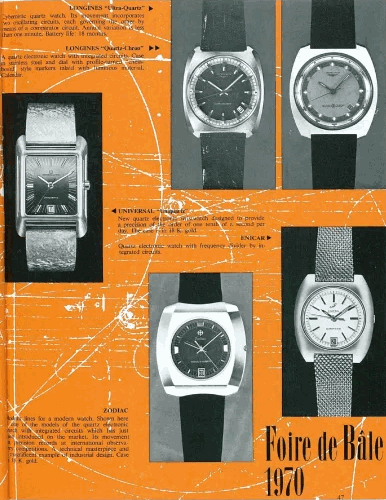
What this timeline doesn't show is Switzerland's intellectual responsibility for its own downfall. The Swiss industry wasn't the victim of a surprise attack. It had been warned. Engineers, economists and consultants sounded the alarm from the early 1970s. Nobody wanted to listen. The watchmaking establishment remained convinced that mechanical precision would stay an unassailable marker of prestige. That no customer would ever want an "electronic" watch. That it was a passing fad.
It was not a fad.
How Seiko nearly killed Swiss watchmaking: anatomy of a debacle
To understand why Switzerland suffered so much while Seiko prospered, you need to look closely at the industrial structure of both countries. It's all there.
The Swiss model: a house of cards
Switzerland's watch industry of the 1960s–70s was organised along near-feudal lines. At the top, the great finishing houses: Longines, Omega, IWC, Patek Philippe. Below them, hundreds of makers of ébauches, hairsprings, balance wheels, dials, cases. Every link in the chain was hyper-specialised. One workshop made nothing but hands. Another only escapement wheels. This division of labour, inherited from the eighteenth century, was formidably efficient at producing complex mechanical watches. It proved catastrophic when it came to absorbing a technological rupture.
When demand for mechanical ébauches collapsed, the whole chain buckled at once. The subcontractors had no flexibility whatsoever. They had been making watch wheels for three generations. That was all they knew how to do. All of it.
The Seiko model: integration and an engineering culture
Seiko, by contrast, had been a vertically integrated company since its beginnings. The brand made its own movements, its own cases, its own straps, its own crystals. The Hattori group controlled the entire chain. When management decided to switch to quartz, it didn't have to negotiate with two hundred independent subcontractors. It simply redirected its own factories. Full stop.
This industrial agility, married to a corporate culture that venerated engineering, allowed Seiko to drive down the cost of quartz at a speed nobody had anticipated. In 1972, a Seiko quartz watch still cost several hundred dollars. By 1977, it was selling for under 50 dollars. By 1980, it had become a commodity at under 30. Ten years. Ten short years to turn a luxury into a mass-market product.
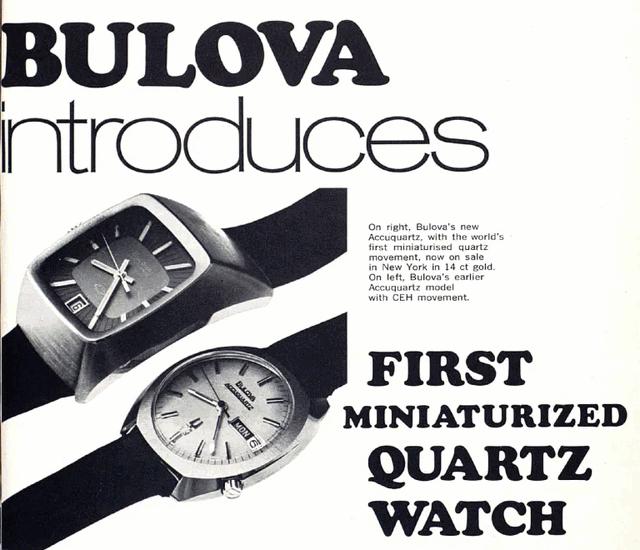
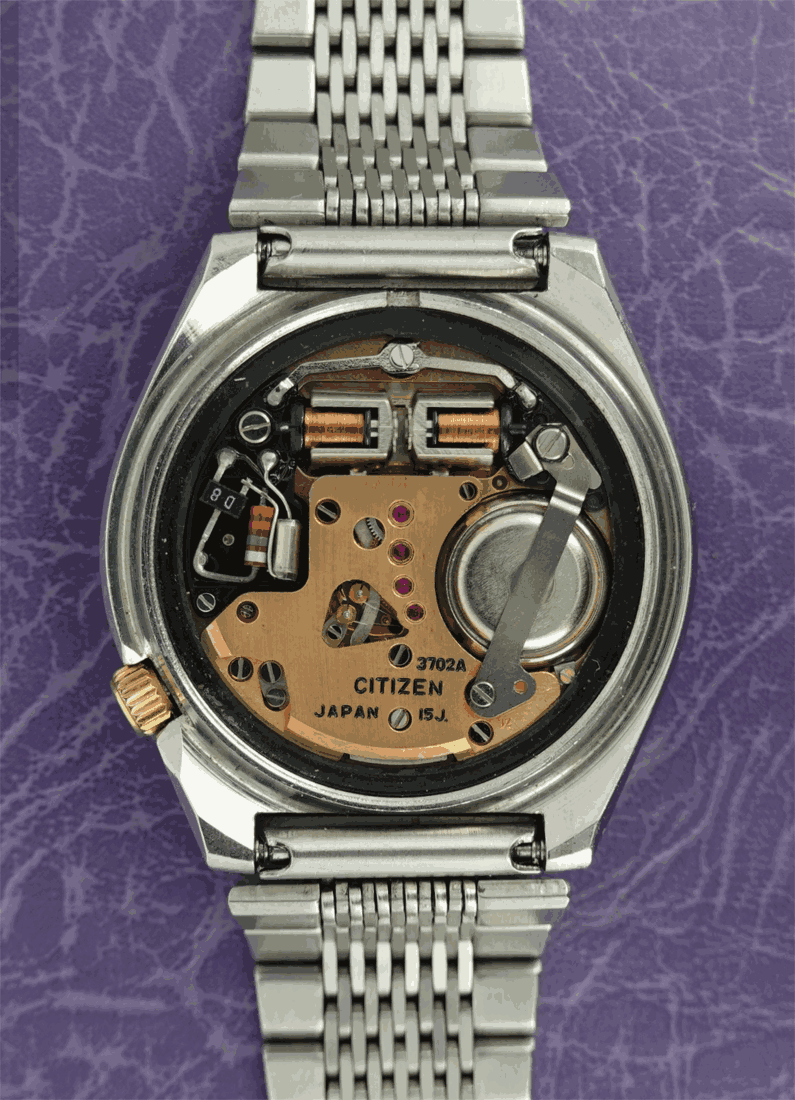
Between 1970 and 1983, the number of Swiss watchmaking companies fell from around 1,600 to fewer than 600. Jobs fell from 90,000 to 30,000. Two-thirds of the workforce wiped out in a single generation. And Seiko alone wasn't the only one striking. Citizen arrived with its own quartz movements. Casio turned the watch into a gadget. Texas Instruments tried selling LED watches in supermarkets. A tsunami, not a wave.
The Swiss narrative: what if the story we're told is incomplete?
Here comes the uncomfortable part for fans of the Swiss legend. The dominant narrative of the quartz crisis systematically downplays Seiko's role. And Japan's more broadly. In most Swiss documentaries, books and commemorative articles, the story runs roughly like this: "Switzerland went through a hard time, but thanks to geniuses like Thomke and Hayek, it came out stronger." Full stop.
That's not false. It's just very incomplete.
This version omits to mention that Seiko was the finest watchmaker in the world for a good part of the 1970s and 1980s. It omits to mention that Seiko won the Neuchâtel Observatory's Observatory Timing Competition in 1967 with a quartz chronometer so precise that the organisers decided to change the rules the following year to exclude quartz from the contest. You read that correctly. The rules were changed so the Japanese would stop winning. If that isn't the perfect metaphor for the Swiss mindset of the time, I'll eat my hairspring.
- Seiko won the Neuchâtel chronometry competition in 1967, forcing a rule change the following year.
- The CEH had developed a working quartz movement before the Astron, but the Swiss industry collectively chose not to industrialise it quickly.
- Several engineers who had worked on Swiss quartz projects shared their knowledge with Japanese firms during the 1960s.
- The ETA 2824 movement, later the workhorse of affordable Swiss watchmaking, owes part of its success to the competitive pressure exerted by Seiko.
- Grand Seiko used Zaratsu finishing and quality levels rivalling top-tier Swiss manufactures, decades before the Swiss publicly acknowledged it.
This partial rewriting of history had real consequences. It long prevented European collectors from seeing Seiko's intrinsic worth. Grand Seiko? Regarded as a "nice piece of Japan", appreciated by connoisseurs, never fully admitted into the pantheon of great brands. It took roughly a decade, vintage culture and online communities, for Seiko finally to receive the recognition it deserves. Sixty years late. But then, better late than never.
The turnaround: Thomke, Hayek and the genius of the counter-attack
Let's give credit where it's due. Switzerland's response to the quartz crisis remains one of the most spectacular industrial turnarounds in modern economic history. It comes down to two men. And one brilliant idea.
Ernst Thomke: the engineer who broke the mould
Ernst Thomke is the most fascinating character in the whole saga. Also the least known to the general public. An engineer by training, former technical director of ETA, he understood before anyone else that Switzerland would never win the price war. Faced with Seiko, Citizen and Casio churning out millions of quartz movements at rock-bottom cost, it was absurd to fight on the same ground.
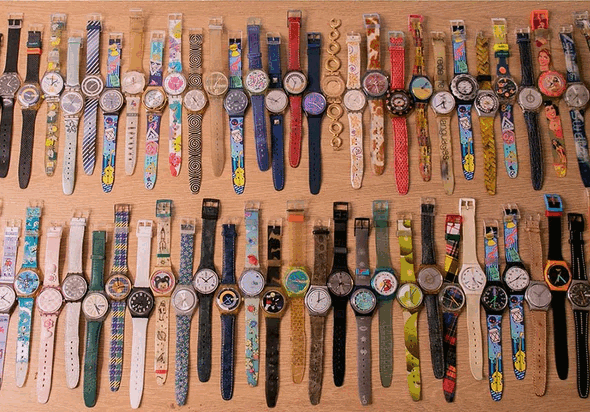
His solution had a brutal elegance: completely reinvent what a watch was supposed to be. The Swatch, launched in 1983, isn't just a cheap watch. It's a philosophical statement. It says this: "The watch is no longer an instrument for measuring time. It's a fashion accessory, an expression of identity, a pop object." 51 parts instead of the usual 91. Ultrasonically welded injected plastic, impossible to repair. 50 Swiss francs. And it worked. My word, it worked.
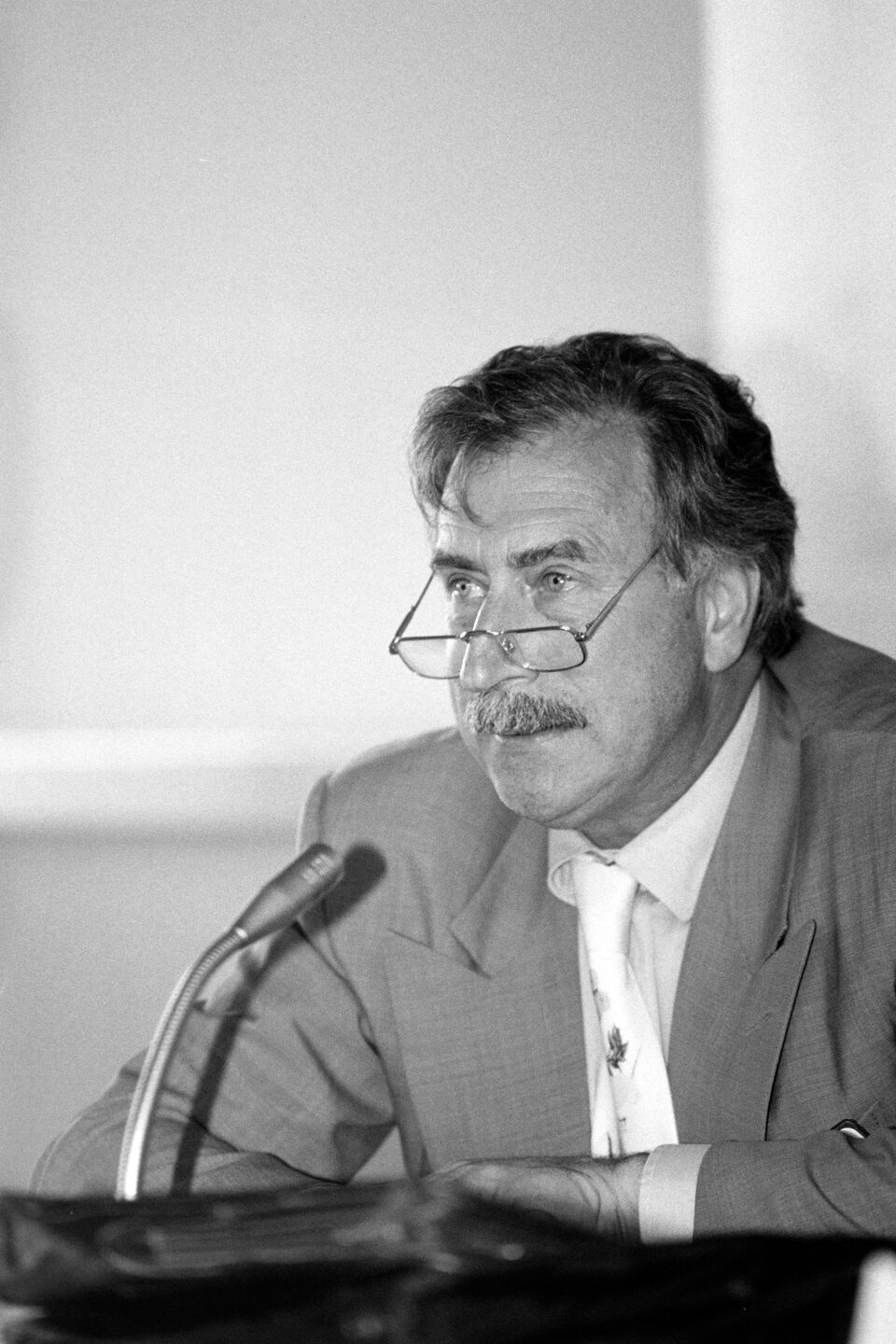
Nicolas Hayek: the strategist and the myth
If Thomke was the engineer, Hayek was the visionary. Founder of the Hayek Engineering consultancy, he had been commissioned by the banks to assess the situation of the two failing federations, ASUAG and SSIH. His conclusion, delivered in 1982, was unequivocal: don't liquidate, merge and counter-attack. Hayek then bought a significant stake in the new entity, the future Swatch Group, in 1985.
His two-speed strategy is now studied in business schools around the world. On one side, the Swatch as a popular flagship to regain volume and fund the industrial structure. On the other, a radical repositioning of the top-tier brands, Omega, Longines, Rado, Blancpain, around luxury, emotion, heritage. Mechanical movement would no longer be sold as technology, but as philosophy.
Hayek had a line, quoted a thousand times since, that sums it all up: "If you really believe you can build a cheap mass-market product with quality, and if you have a child's enthusiasm for what you're doing, you can beat the Japanese." Coming from a man whose entire strategy consisted precisely of not doing what the Japanese did, it's rather delicious.
Seiko and mechanical watchmaking: the paradox of loyalty
Here's where the story gets truly interesting. While Switzerland was floundering in the quartz crisis, while Casio and Citizen were fighting over the bottom of the market, Seiko did something unexpected: the brand never really abandoned mechanical watchmaking. It industrialised quartz on a huge scale, yes. It helped make it accessible to everyone, yes. But its engineers never stopped developing, refining and producing mechanical movements of remarkable quality.
Grand Seiko: mechanics as art
The Grand Seiko division, founded in 1960, maintained a standard of mechanical and aesthetic rigour that had nothing to envy in the great Swiss manufactures. The 9SA5 calibre. The 36,000-beat column-wheel movement. The legendary Spring Drive. Three horological achievements that rank among the most sophisticated ever produced. The Spring Drive, patented in 1977 and launched commercially in 1999, is a mechanical-electronic hybrid of absolute originality: a spring-driven movement regulated by an electromagnetic quartz brake. Announced precision: 1 second a day, without a battery. Pure engineering at the height of its art.
Zaratsu polishing, the Japanese technique of polishing surfaces flat on rotating discs to achieve sharp edges free of stray reflections, has influenced entire generations of Swiss watch designers who, today, sometimes claim the technique as though it were born in the Jura. Genuinely amusing.
Seiko calibres: the unexpected lifeline for the global industry
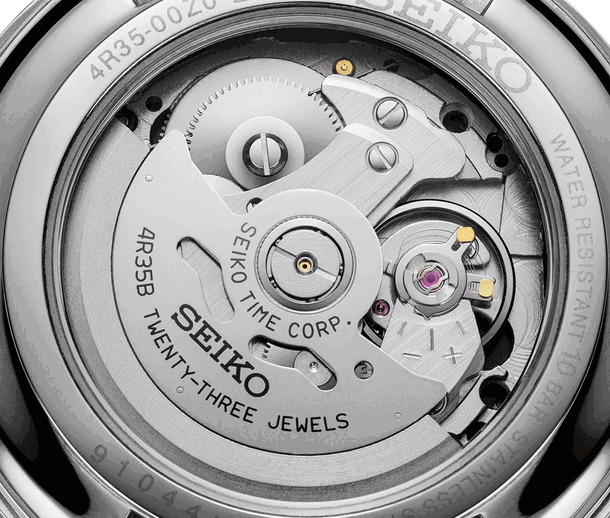
Seiko's most practical, and least acknowledged, contribution to the survival of affordable mechanical watchmaking is more prosaic. In the 1980s and 90s, when ETA held a near-monopolistic position as a movement supplier, several independent brands unable to rely on the Swatch Group turned to Seiko calibres. The 7S26, 4R36, NH35 and NH36 movements became the standard for hundreds of watches from small players with limited budgets.
This availability of reliable, cheap movements allowed a whole generation of micro-brands to offer affordable mechanical watches. Without Seiko's NH35, how many small independent houses would never have seen the light of day? The question is worth asking. Genuinely asking.
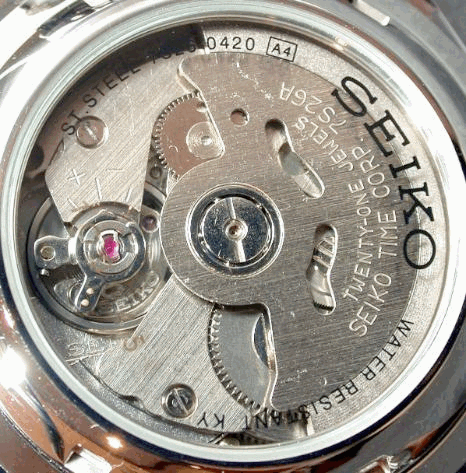
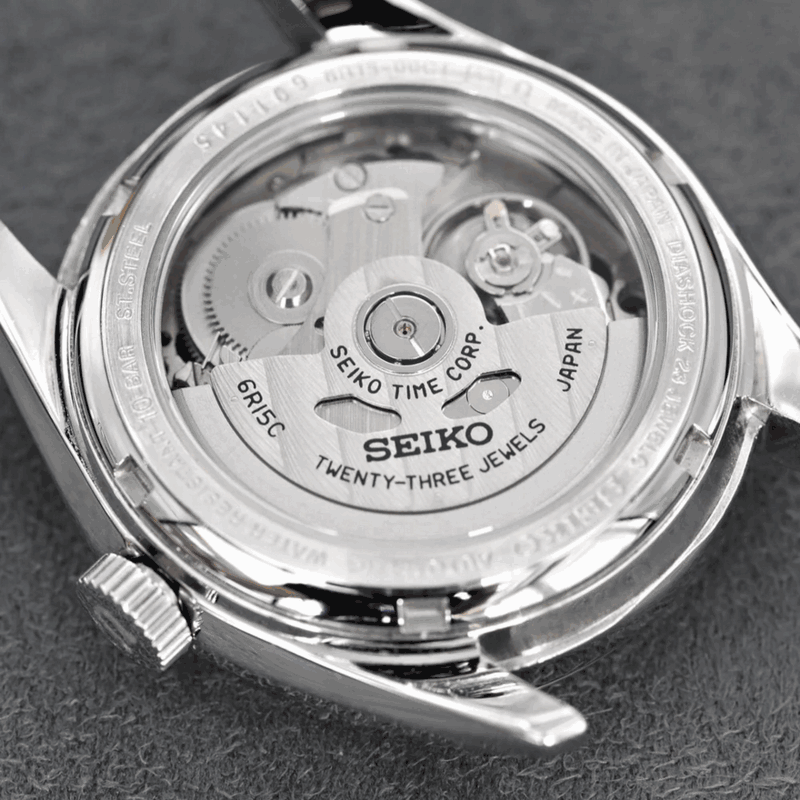
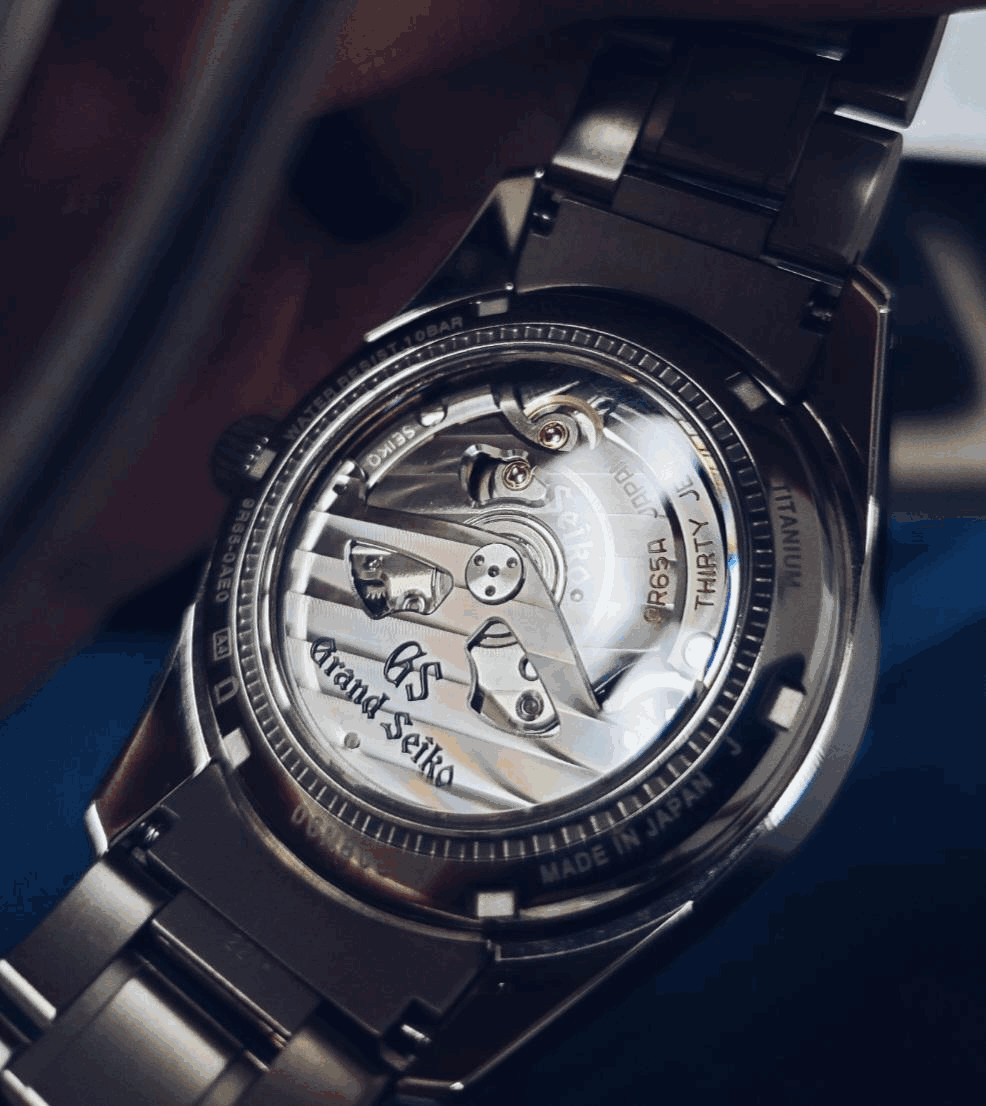
- 7S26 / 7S36, Robust automatic, ±20 sec/day, base of the Seiko 5 Classic. Millions of units produced.
- 4R35 / 4R36, Evolution of the 7S with hacking and hand-winding. Fitted in the SKX SRPD and their derivatives.
- NH35 / NH36, Modern successors, base of hundreds of third-party watches via TMI (Time Module Inc.).
- 6R15 / 6R35, Mid-range, 50–70h power reserve, superior finishing.
- Spring Drive 9R65 / 9R96, High-end mechanical-electronic, ±1 sec/day. Unique in the world.
Why Seiko is the great forgotten figure of this story
There's a kind of collective ingratitude in the way the watch industry tells the story of the quartz crisis. Seiko often appears as the villain. The one who broke the toy. It's readily credited with the Astron's technical innovation, sometimes given a nod for Grand Seiko, but it's almost never given credit for the more nuanced role it truly played: that of an actor who simultaneously destroyed and rebuilt.
Because it was indeed Seiko, through the competitive pressure it exerted, that forced Switzerland to reinvent itself. Without the existential Japanese threat, there would have been no urgency to create the Swatch. Without quartz being democratised by Seiko, mechanical watchmaking could never have been repositioned as a luxury object: it would have remained what it was, the best available means of measuring time. It's precisely because quartz rendered it functionally useless that it became emotionally precious.
The renaissance of Swiss watchmaking: a lesson in adaptation
Let's give Switzerland its due, because this turnaround deserves to be celebrated. Not as a victory over Japan. As a victory over itself. Over resistance to change, over denial, over the temptation to protect what already existed.
The repositioning of Swiss mechanical watchmaking as an object of cultural luxury remains one of the most brilliant marketing pivots of the twentieth century. Turning a technical handicap (mechanical movements are less precise, more expensive, more fragile than quartz) into an emotional argument, an asset of transmission, a living object. Switzerland invented the "luxury watch" category as a cultural exception. Out of nothing. Or almost.
ETA, the Swatch Group and the arm-wrestle with the industry
Hayek's decision to keep ETA as a movement supplier for the whole industry, while reserving the right to progressively reduce deliveries to third parties, was a masterstroke as much geopolitical as industrial. For twenty years, ETA supplied movements to practically every brand that couldn't afford its own manufacture. TAG Heuer. Breitling. Dozens of mid-tier brands. Everyone depended on ETA.
When Hayek announced in 2002 the progressive reduction of deliveries, it triggered panic across the industry. Panic that, in turn, generated a boom in investment in independent manufactures. Richemont accelerated at IWC, Cartier, Panerai. LVMH invested in Zenith and TAG Heuer. Dozens of small brands developed their own calibres. The threat ended up accelerating diversification. Irony, again.
Vintage, the internet and mechanical watchmaking's revenge
The full renaissance of mechanical watchmaking in the twenty-first century cannot be separated from two phenomena. The emergence of vintage culture first. The advent of the internet second. The watch forums from 2000 onwards, blogs like Hodinkee from 2008, Instagram and Reddit communities created a worldwide conversation about the watch as an object of passion. That conversation rehabilitated brands, references and movements that the official market had abandoned. It recreated value where none remained.
In that conversation, Seiko found its rightful place. The SKX007. The 6105 "Captain Willard". The vintage Grand Seiko references of the 1970s. The Hi-Beat movements. All of it is now recognised, collected, admired by the same enthusiasts who wear Rolex Submariners and Patek Calatravas. The reconciliation happened in forums and subcultures, long before the major watch-media institutions agreed to make it official.
⟶ Conclusion
Seiko, the empire that never asks for forgiveness
Fifty-six years after 25 December 1969, it's time to look at the quartz crisis with clear eyes. Seiko didn't nearly kill Swiss watchmaking out of malice. The brand simply did what great innovative companies do: bring a superior technology to market, at the best possible cost, faster than anyone else. Switzerland could have done the same. It had the intellectual and industrial means. It chose not to. It was that choice, that blindness, that quiet arrogance, that nearly proved fatal.
The Swiss renaissance, real, spectacular, deserved, should not be told as a victory over Japan. It should be told as a victory over itself. And Seiko, in this story, plays a role few actors know how to play: that of the catalyst, the redeeming disruptor, the enemy that forces you to become better.
Today, when you wear a Grand Seiko Spring Drive next to a Blancpain Fifty Fathoms, you're wearing two faces of the same story. An industry that nearly died, that knew how to be reborn, and that owes its survival, however much it will always publicly deny it, to the company founded by Kintaro Hattori in a small Tokyo workshop, in 1881.
The discreet empire never asked for thanks. It carries on making extraordinary watches. And that, in a way, is the finest of answers.
Related articles
- From Mechanical Watch to Smartwatch: The Evolution of TimeDiscover the fascinating story of watchmaking. From the Quartz Crisis to Garmin and Apple connected watches, see how technology has transformed sport, safety and our relationship with time.
- Watches and the Ocean: From the Mariana Trench to Modern RecordsPart 2 – From the Mariana Trench to modern records
- Watches and the Ocean: Pioneers of the AbyssPart 1 – From the first descents to extreme records