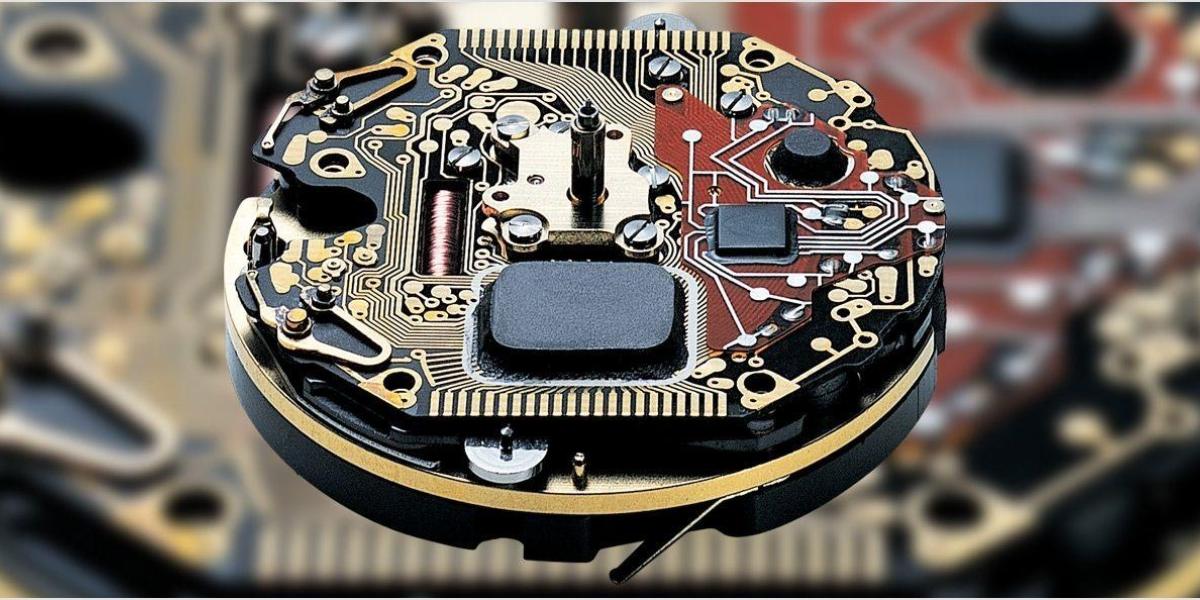
From the Abyss to the Summit: How the Quartz Crisis Gave Birth to Modern Mechanical Luxury
By CharlemagneUpdated on 14 min read
In brief
The quartz crisis and the renaissance of Swiss mechanical watchmaking
Christmas 1969. Switzerland unwraps its presents. In Tokyo, Seiko unwraps something else: the Astron 35SQ, the very first commercial quartz watch. A hundred times more accurate than any Swiss mechanical movement. One can picture the watchmakers of La Chaux-de-Fonds hearing the news between two slices of Yule log. They must have shrugged. "A fad," they probably told themselves.
They were wrong. Tragically wrong.
What we are about to tell here is the story of an industry that nearly died of its own arrogance, and rose again thanks to a handful of visionaries, plenty of nerve, and a little coloured plastic. It is also the story of Japan, which was never the villain of the piece, whatever is sometimes said in Geneva's drawing rooms.
The Accutron: the first warning nobody heeded
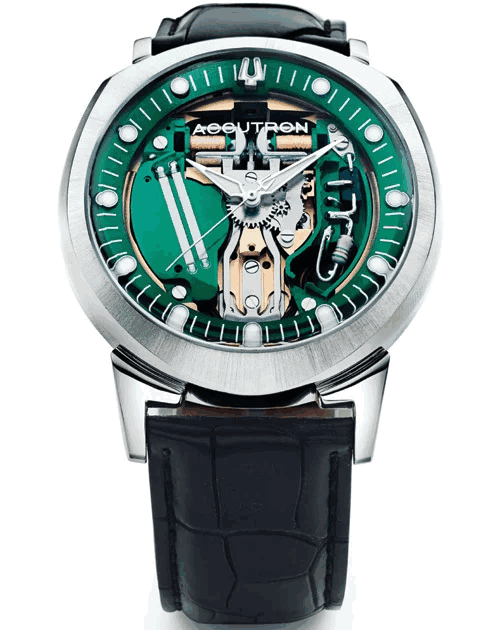
Nine years before the Astron, there had been a sign. A clear sign, loud even. On 25 October 1960, the American house Bulova presents the Accutron. Not a quartz watch, no. Something even stranger for the time: a watch regulated by a tuning fork vibrating at 360 Hz. Held to the ear, it does not tick. It hums. A bee-like sound, discreet, haunting.
Two seconds of drift a day. That sounds trivial put like that, but next to the mechanical movements of the day, it was a chasm. The balance-and-hairspring had reigned unchallenged for centuries, and here was a little American tuning fork telling it its reign was ending.
The irony here is delicious. The Accutron movement was designed by Max Hetzel. A Swiss. NASA adopts the watch for its space programmes, Bulova sells millions of them, and the "Spaceview" dial, open onto its electronic innards, becomes a sixties design classic. Then quartz arrives, even simpler, even cheaper. Bulova stops production in 1977. But the Accutron had planted the seed. The cracks were there. One only had to look.
When Switzerland invents the future… and puts it in a drawer
Here is what fascinates me most in this story. Quartz is not a Japanese invention. It is a Swiss one.
As early as the 1950s, the Centre Électronique Horloger in Neuchâtel is working on the idea of replacing the balance wheel with a quartz crystal. In 1967, the Beta 1 and Beta 2 prototypes work. They are more accurate than anything that has ever existed on a human wrist. Swiss engineers hold the future of watchmaking in their hands.
And they put it in a cupboard.
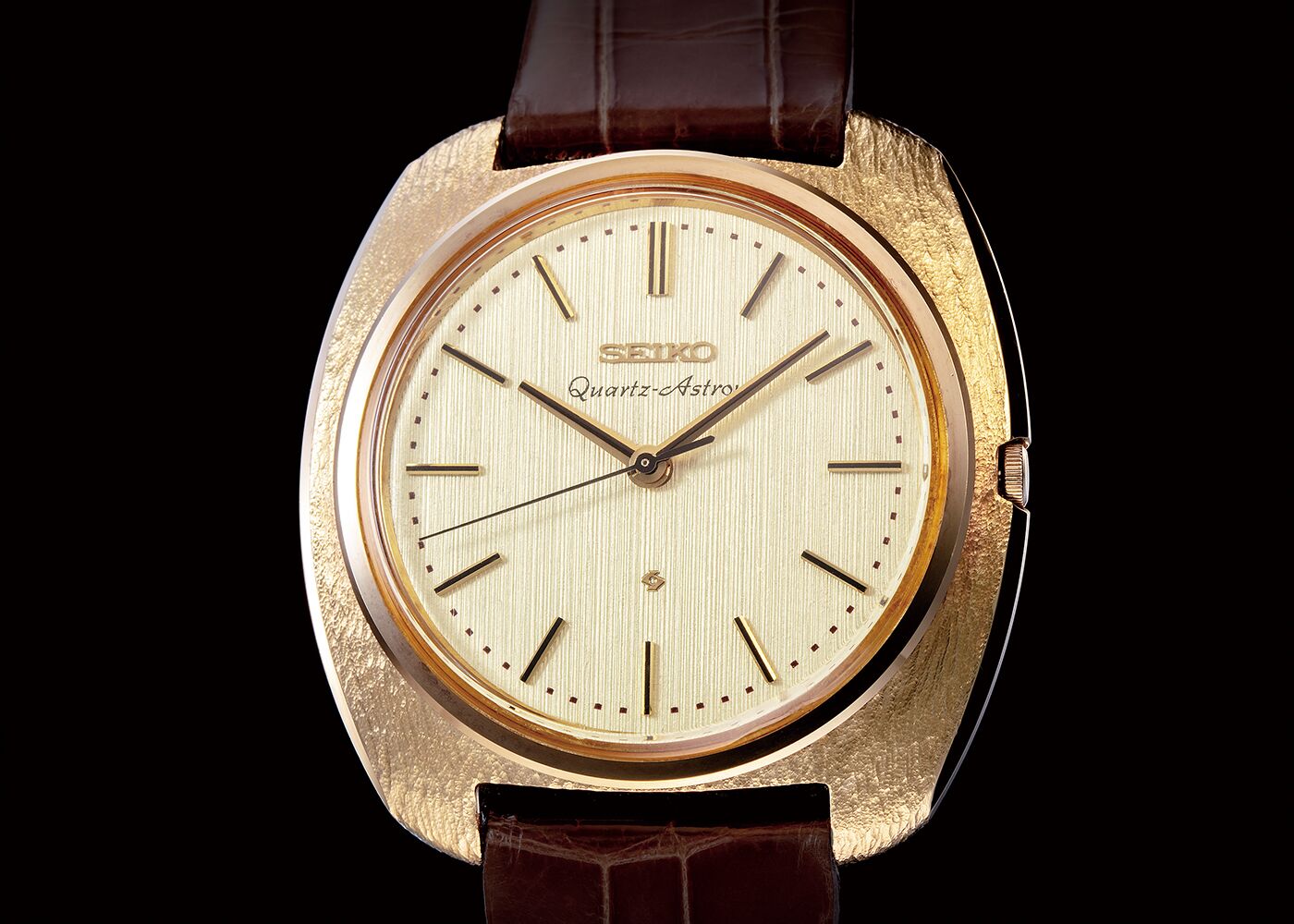
I don't know whether it is pride or laziness, probably a mix of both. Swiss bosses see quartz as nothing more than a laboratory curiosity. Meanwhile, in Japan, an engineer named Tsuneya Nakamura has been working on the same subject since 1959. Nobody tells him it's a curiosity with no future. Ten years of relentless effort later, the Seiko Astron is ready. Solid gold case, priced like a new Toyota, five seconds of drift a month. The world has changed, and Switzerland hasn't even noticed.
The dark decade (1975-1985)
The figures that follow, I know them by heart, and they still send a chill down my spine.
- In 1970, Swiss watchmaking employs 90,000 people. By 1985, only 32,000 remain.
- 1,620 companies before the crisis. 600 afterwards.
- In 1974, Switzerland exports 84 million watches. Ten years later, 31 million.
- The Jura is devastated. Unemployment there exceeds 20%.
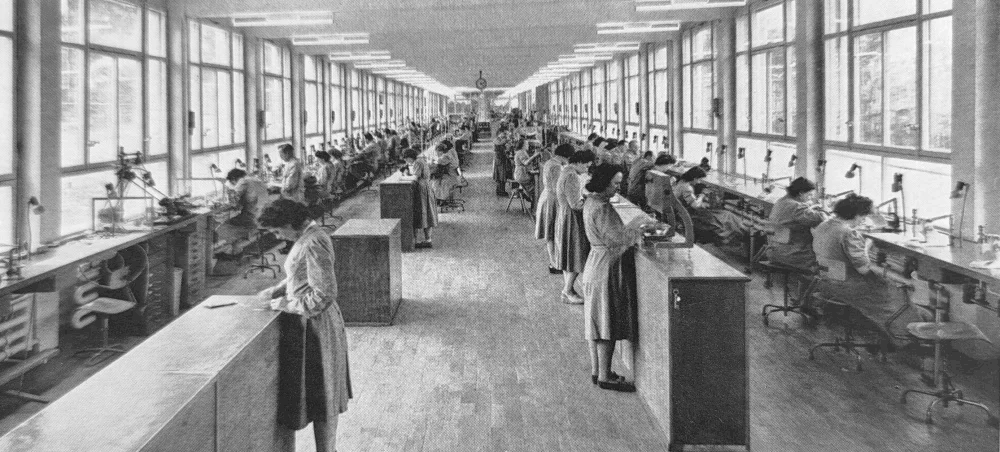
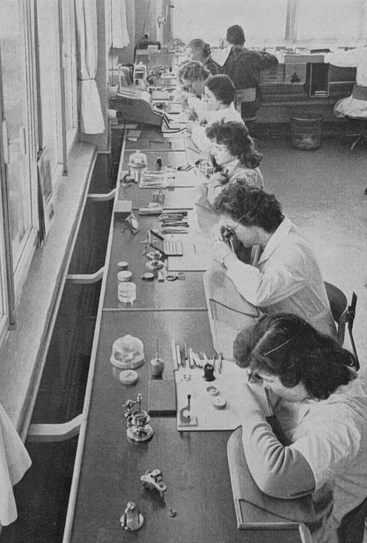
Entire villages empty out. Watchmaking families, whose trade had passed down for three or four generations, find themselves out of work. While Seiko, Citizen and Casio build automated factories churning out millions of watches a year, the Swiss keep hand-polishing blanks, convinced that "it will come back". By 1978, Switzerland holds only 24% of the world market. The oldest watchmaking empire on earth is collapsing.
The Seiko strategy
Seiko is often cast as the villain of this story. That is unfair. Seiko did exactly what any brilliant company would have done: spot an opportunity and exploit it methodically.
First step, costs. By 1978, a Seiko quartz watch sells for under 50 dollars. Second step, volume. Millions of units roll off the lines, each accurate to within ±15 seconds a month, never needing servicing. Third step, and perhaps the most decisive: Seiko opens up its patents. Any Asian manufacturer can now produce quartz. The market is flooded.
Within a few years, the wristwatch stops being a precious object. It becomes an electronic product. As ordinary as a pocket calculator. And the centuries-old Swiss watchmaking know-how everyone was once so proud of? Nobody wants it any more. Not at that price, in any case.
The counter-attack
A Lebanese consultant at Switzerland's bedside
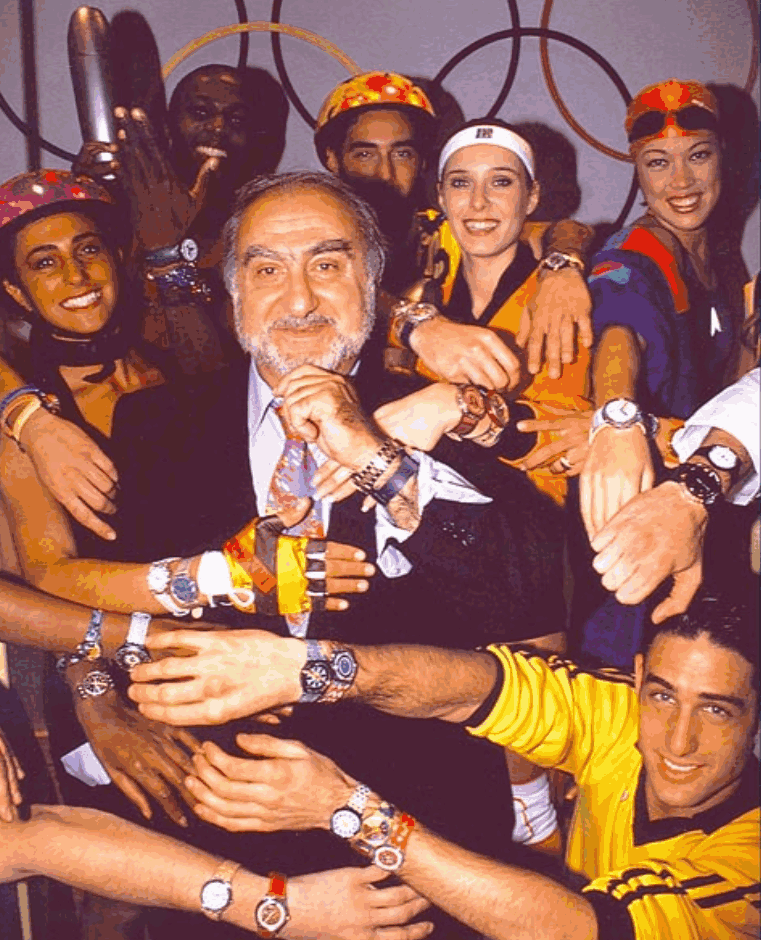
1980. The Swiss banks, watching their watchmaking investments melt away, call in a consultant nobody expected: Nicolas G. Hayek, of Lebanese origin, based in Zurich, head of a consulting firm. Not a watchmaker in the slightest. Perhaps that was exactly what was needed.
Hayek spends months examining the patient. His verdict is brutal. The two groups still standing, ASUAG (Longines, Rado, ETA) and SSIH (Omega, Tissot), must merge immediately or everything disappears. The banks agree. Between 1981 and 1983, they inject 900 million francs. In 1983, Hayek gives birth to SMH, which will become the Swatch Group.
51 components and a stroke of genius
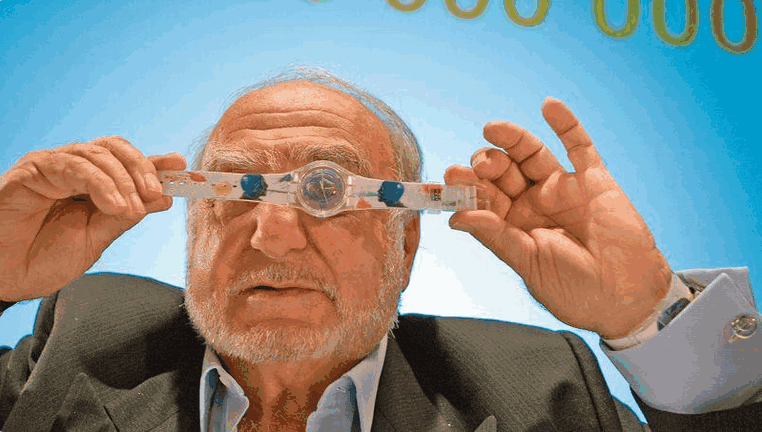
The Swatch idea belongs to Ernst Thomke. Thomke works at ETA, the movement manufacturer. His reasoning is brutally simple: cut a watch down to 51 components instead of 90, and costs fall fivefold. Hayek takes the idea, names it "Swatch" and launches it at 35 dollars on the American market.
But, and this is where the story turns beautiful, the Swatch is not just a cheap watch. Hayek makes it a cultural phenomenon. Hundreds of colours. Collaborations with Keith Haring, Kiki Picasso, museums. Limited editions people collect like stamps. In six years, 65 million Swatch watches sell worldwide.
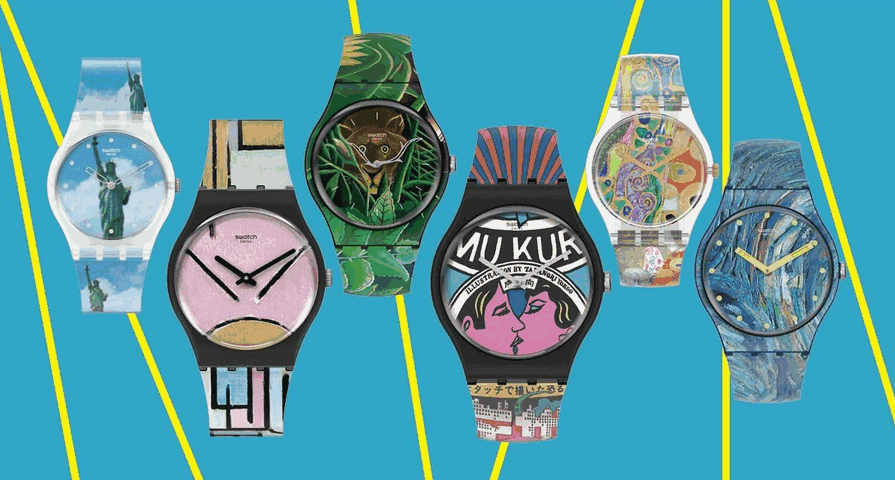
The Swatch fulfils two vital functions. On one side, it restores volumes to Switzerland against Asian competition. On the other, the margins it generates fund the reconstruction of Omega, Blancpain and Breguet. Without this small plastic watch, there would probably be no Swiss watchmaking industry today. We are convinced of it.
The bet on luxury
At the turn of the 1990s, the Swiss make a radical choice. They have lost the price war. They have also lost the precision war, the 20-dollar quartz beats any mechanical chronometer. So they decide to stop competing on that ground. Entirely.
What Japan cannot replicate is craftsmanship. Mechanical complications that take years to develop. The aura of a century-old brand. The grain of a hand-guilloché dial. Noble materials worked with monastic patience. It is on this ground, and this ground alone, that Switzerland will rebuild its empire.
And it works. The share of mechanical exports, which stood at only 41% of value in 1990, climbs to 72% by 2015. The total value of exports rises from 1.5 billion dollars in 1985 to 14.7 billion in 2010. In 2025, despite a strained global backdrop, the figure still reaches 24.4 billion Swiss francs.
The Swiss Made label, strengthened in 2017 by the Swissness law (a minimum 60% of production costs incurred in Switzerland), becomes a formidable selling point. Four letters that, on a dial, are worth their weight in gold.
Gérald Genta and the night that changed everything
Some anecdotes never grow old, and this is one of them.
1971. Audemars Piguet is in a desperate situation. Management calls Gérald Genta, the most sought-after designer in watchmaking, one evening, and asks him to sketch, by the next morning, a steel watch like nothing anyone has ever seen. Sporty. Elegant. Unprecedented. In one night.
The next day, Genta arrives with the sketch of the Royal Oak. Octagonal, screwed down, in stainless steel. Bold to the point of provocation. The price? More than a gold Patek Philippe. In 1972. In the middle of the brewing crisis. The gamble is completely mad, but it saves Audemars Piguet and, in passing, invents an entire genre: sports-chic.
Four years later, the same story repeats. Patek Philippe, in turn, calls on Genta. This time the man sketches the Nautilus, reference 3700/1, inspired by the portholes of transatlantic liners. 3,100 dollars for a steel watch. Signed Patek. The outrage does not last long. The Nautilus proves that true luxury depends neither on gold nor on stones, but on something more intangible. Soul, perhaps. Genius, certainly.
Rolex and the virtue of stubbornness
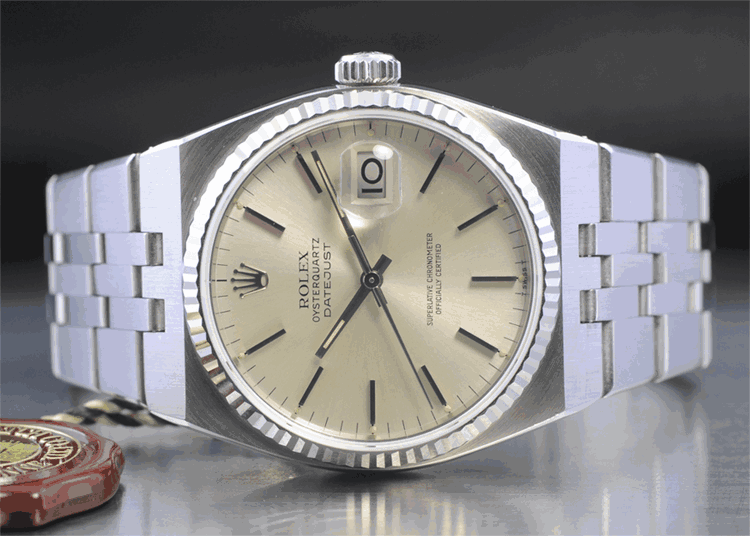
Rolex, for its part, plays the game differently. No panic, no sudden pivot. The brand launches the Oysterquartz in 1977, just to show it can do quartz if it wants to. But its heart isn't in it, and everyone can feel it. Rolex has no intention of becoming an electronic-watch manufacturer.
What Rolex does during the crisis is something else entirely. The brand works on its image with methodical determination. It understands, well before others, that mechanical watches will never again be sold on precision. That battle is over. What remains is the symbol. The status. The story. Rolex attaches itself to explorers, elite athletes, summits, depths. When quartz finally recedes, Rolex has not merely survived. It is stronger than before the crisis. More desirable. More untouchable.
Omega's long crossing
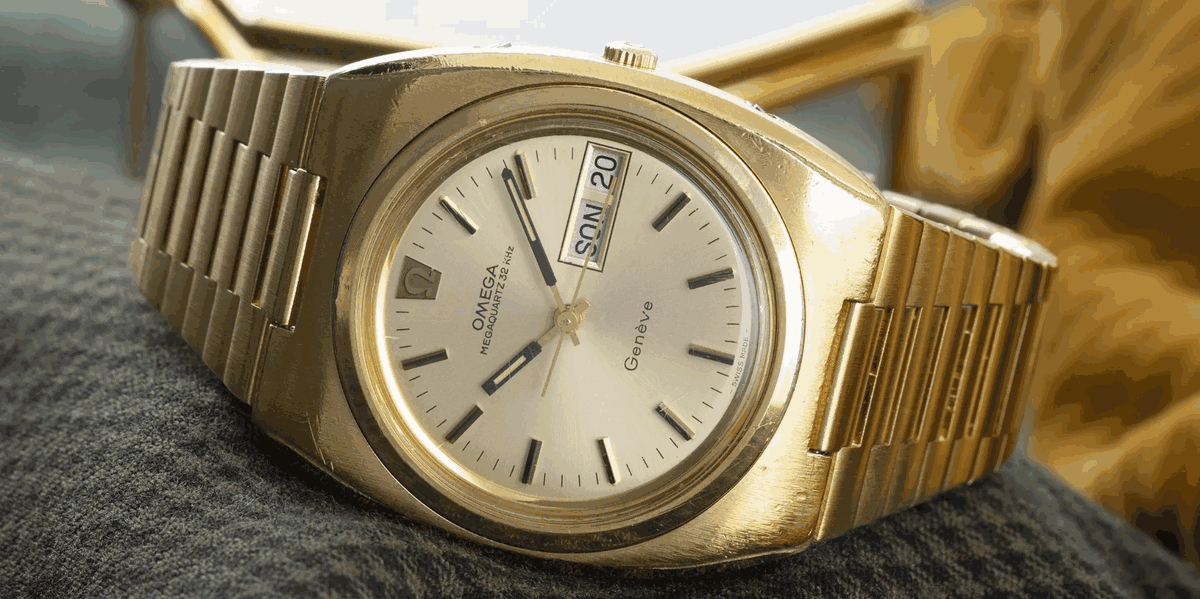
For Omega, the crisis is an ordeal. In the early 1980s, the house is buckling under more than 1,600 different references. A catalogue grown unmanageable, a diluted identity, spiralling costs. Omega produces quartz like everyone else, because bills have to be paid.
But there is one thing Omega refuses to sacrifice, and that is its Speedmaster Professional. The Moonwatch. The one that went to space, for real. The one the Apollo astronauts wore when the onboard systems failed. Nobody touches that watch.
What happens next, we know. In the 1990s, Omega simplifies, refocuses, and plays the storytelling card brilliantly. James Bond wears a Seamaster. The Olympic Games are timed by Omega. The brand wins back its public without denying what made it unique.
The Spring Drive, or when Japan reconciles two worlds
While Switzerland rediscovers mechanical luxury, Japan, for its part, does not sit idle. And a good thing too.
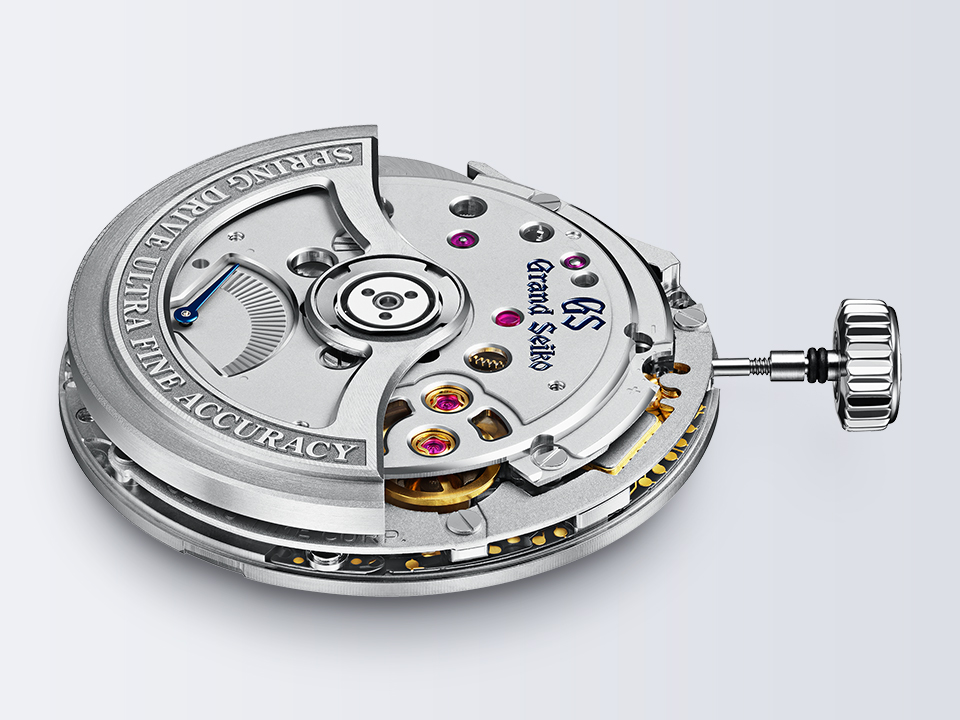
In 1977, an engineer at Suwa Seikosha (Seiko's technical arm) named Yoshikazu Akahane has an idea that will run through his mind for nearly three decades. The idea is simple to state: why not power a watch with a mechanical mainspring, as tradition dictates, but regulate its running with a quartz crystal? The best of both worlds, on paper.
On paper only, because in reality it will take 28 years of research and more than 600 prototypes to get there.
In December 1999, Seiko presents the first Spring Drive, calibre 7R68. The movement winds by hand or automatically, like any mechanical watch. But instead of a balance-and-hairspring, it is a quartz crystal, coupled to an electromagnetic regulator called the Tri-Synchro Regulator, that governs the speed of the gear train. Its accuracy? One second a day. The seconds hand does not tick, it glides, in a continuous motion that mesmerises. Forty-eight hours of power reserve.
In 2004, calibre 9R65 joins the Grand Seiko collection. The Spring Drive fits into no existing category. It is not mechanical. It is not quartz. It is a third way. And we genuinely believe only a house with absolute mastery of both worlds could have invented it.
Grand Seiko 9F, the quartz unlike any other
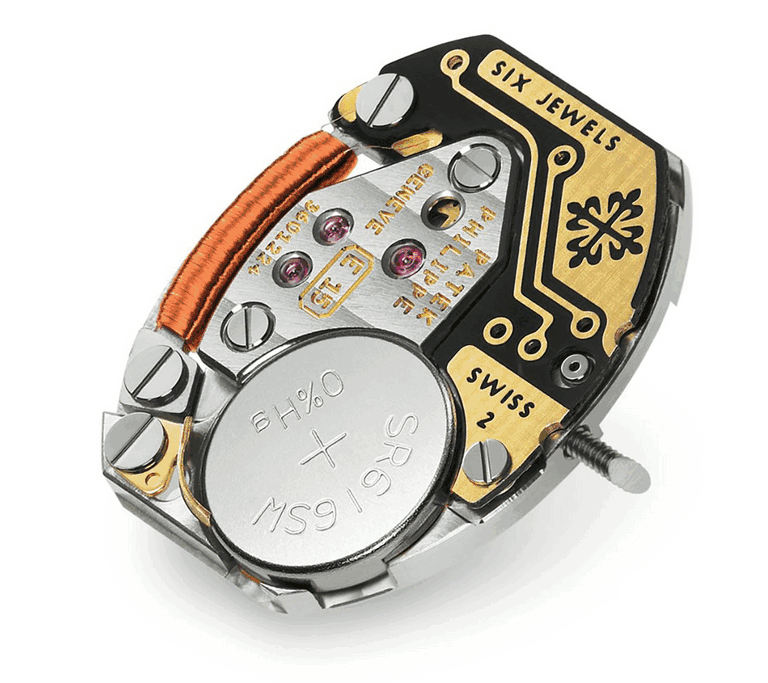
Grand Seiko never let go of "classic" quartz either. In 1988, the house's engineers set themselves a challenge: build a quartz movement worthy of luxury. Not a supermarket quartz. A goldsmith's quartz.
The 9F calibre is released in 1993. It is still produced in 2026. Its accuracy? ±10 seconds a year. Ten seconds. A year. To put that in perspective, most common quartz movements drift by a second a day.
But what makes the 9F truly special is everything else. It is assembled by hand, component by component. Its parts are artificially aged to ensure long-term stability. And above all, an anti-backlash mechanism guarantees that the seconds hand lands exactly on each index, without the slightest tremor. No approximate jump. Every second is marked with the crispness of a chisel strike.
Wearing a Grand Seiko 9F is to have the flawless reliability of quartz and the demands of a luxury mechanical watch. Both at once.
F.P. Journe and the Élégante, quartz reinvented by a lone wolf
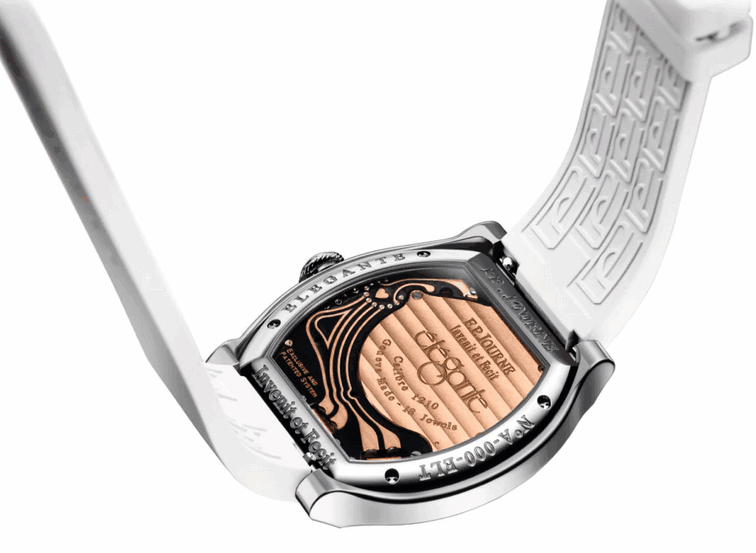
And then there is François-Paul Journe. A case apart in contemporary watchmaking. Independent, Genevan, stubborn as a mule, brilliant. The kind of man who does things his own way or not at all.
In 2014, he releases the Élégante. A quartz watch. Yes, a quartz. From a watchmaker whose mechanical pieces sell for six figures. Except the Élégante has strictly nothing to do with the quartz watches found everywhere.
Journe designed and assembled the movement in his own workshop. Every part is hand-finished. The bridges are in 18-carat gold. The plate protecting the circuits is in galvanised brass. This is quartz treated as haute mécanique. Or perhaps it is haute mécanique finally agreeing to speak quartz.
The Élégante also has a clever trick: when it is not worn, the watch notices after thirty minutes and stops its hands to save power. As soon as it is picked up again, everything resets instantly, to the second. On a single battery, the autonomy stretches to between eight and eighteen years.
And above all, the Élégante is designed to last. To be repaired, serviced, passed down. In a world where most quartz watches end up in the bin when the battery dies, this is a radical stance.
The word "Invenit" that Journe inscribes on all his dials comes from Latin. "He invented." With the Élégante, this is no affectation. Journe did not simply put up with quartz. He took it, turned it inside out, and remade it his own way. The Élégante now trades for several tens of thousands of francs on the secondary market. You would be hard-pressed to find better proof that refinement depends not on the technology used, but on the intention behind it.
Where things stand today
In 2026, Swiss watchmaking is doing better. Not triumphantly, but solidly. The Swatch Group reports revenue of around 6.28 billion francs. Employment hovers around 55,000 people, with productivity per head far higher than it was before the crisis.
But the landscape bears no resemblance to that of the 1970s. Four private houses, Rolex, Patek Philippe, Audemars Piguet and Richard Mille, capture 49% of the market and 76% of the profits. Watches priced above 50,000 francs generate 89% of growth, while representing only 1.4% of pieces shipped. Swiss watchmaking sells far fewer watches than before. But it sells them for far, far more.
What the crisis taught us
- Never turn your back on a technological disruption. Quartz was born in Switzerland. The Swiss ignored it. They paid for that neglect with 60,000 jobs and a thousand companies.
- When you lose the price war, wage the war of emotion. The Royal Oak, the Nautilus, Rolex as a whole: three demonstrations that desire is worth more than function.
- Crises give birth to breakthroughs. No Japanese quartz, no Swatch. No Swatch, no funds to rebuild the high end. No pressure, no Spring Drive. Adversity drives progress.
- Alone, you die. Together, you survive. Without the ASUAG-SSIH merger into the Swatch Group, an entire network of suppliers, know-how and brands would have vanished.
- Invention never stops. The Accutron. Quartz. The Spring Drive. Journe's Élégante. Every generation finds its own way to push the limits further.
Epilogue
Seiko nearly killed Swiss watchmaking. That trauma forced the Swiss to grow up, to abandon their complacency, to become the undisputed masters of luxury watchmaking worldwide. Mechanical watches no longer measure time. They tell stories, carry legacies, embody know-how accumulated across entire generations.
And Japan? Japan never stopped searching, experimenting, pushing forward. From the Accutron's tuning fork to Grand Seiko's Spring Drive, from industrial quartz to the 9F calibre assembled piece by piece, the quest remains the same, always. To capture the passing of time with grace, precision and beauty.
At charlemagne-watches.be, we live this passion every day. Our selection of exceptional timepieces reflects this deep conviction: time always has resources left. One just has to know where to look.
Related articles
- From Mechanical Watch to Smartwatch: The Evolution of TimeDiscover the fascinating story of watchmaking. From the Quartz Crisis to Garmin and Apple connected watches, see how technology has transformed sport, safety and our relationship with time.
- Quartz Crisis 1969: Seiko Astron and the Swiss Watch ShockThe Quartz Crisis: how Seiko's 1969 Astron upended Swiss watchmaking and triggered its rebirth. The full story, calibres and key dates.
- Watches and the Ocean: From the Mariana Trench to Modern RecordsPart 2 – From the Mariana Trench to modern records