Vintage Omega Buying Guide: Seamaster and Constellation
By CharlemagneUpdated on 9 min read
Why vintage Omega, and why now
Omega has a singular pull that touches historians and collectors alike. The brand walked on the Moon with the Speedmaster, equipped the Royal Navy with the Seamaster 300, dressed Elvis Presley's wrist with a yellow-gold Constellation. And yet, on the secondary market, a vintage Omega remains a third to a half the price of an equivalent Rolex, sometimes with superior horological quality. That gap is what serious collectors are after: a way into the hobby without mortgaging the house.
At Charlemagne, in Herstal, many enthusiasts hesitate between Seamaster and Constellation. Both families were born in the years following the war, but they don't tell the same story.
The Seamaster, the tool born of war
The original 1948 Seamaster descends directly from the military watches Omega supplied to British forces during the Second World War. Joseph Reiser, then Omega's director, had a simple idea: take the ruggedness of a soldier's watch and make it civilised. A water-resistant case thanks to a rubber gasket - an innovation at a time when everyone still used cork - and a bumper automatic movement, calibre 28.10.
Seamaster references to know
Seamaster 300 CK2913 (1957). Omega's first true diver, bidirectional rotating bezel, calibre 501. A museum piece whose value today exceeds €25,000 for an honest example.
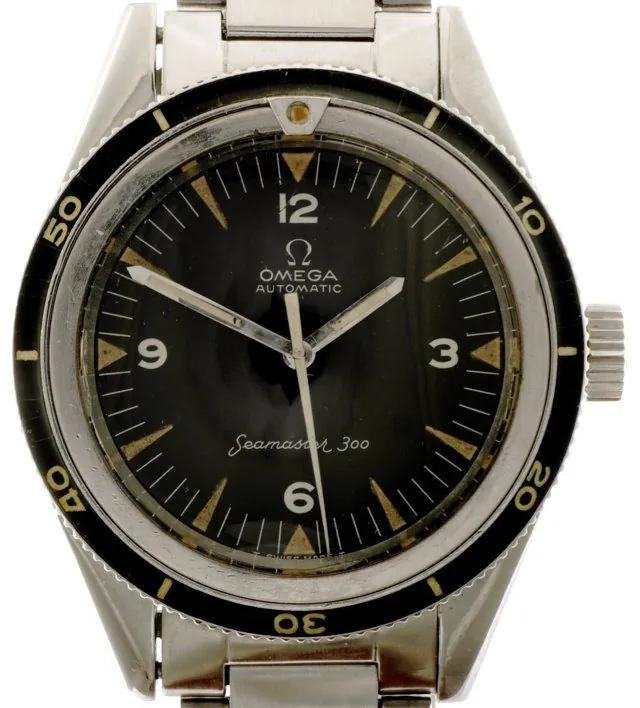 Seamaster 300 CK2913 (1957). The blueprint for every modern Omega diver.
Seamaster De Ville (1963-1967). The elegant transition: slim case, neat dial, calibre 562 or 565. Probably the best entry point into vintage Omega, priced between €900 and €1,800 for a nice example.
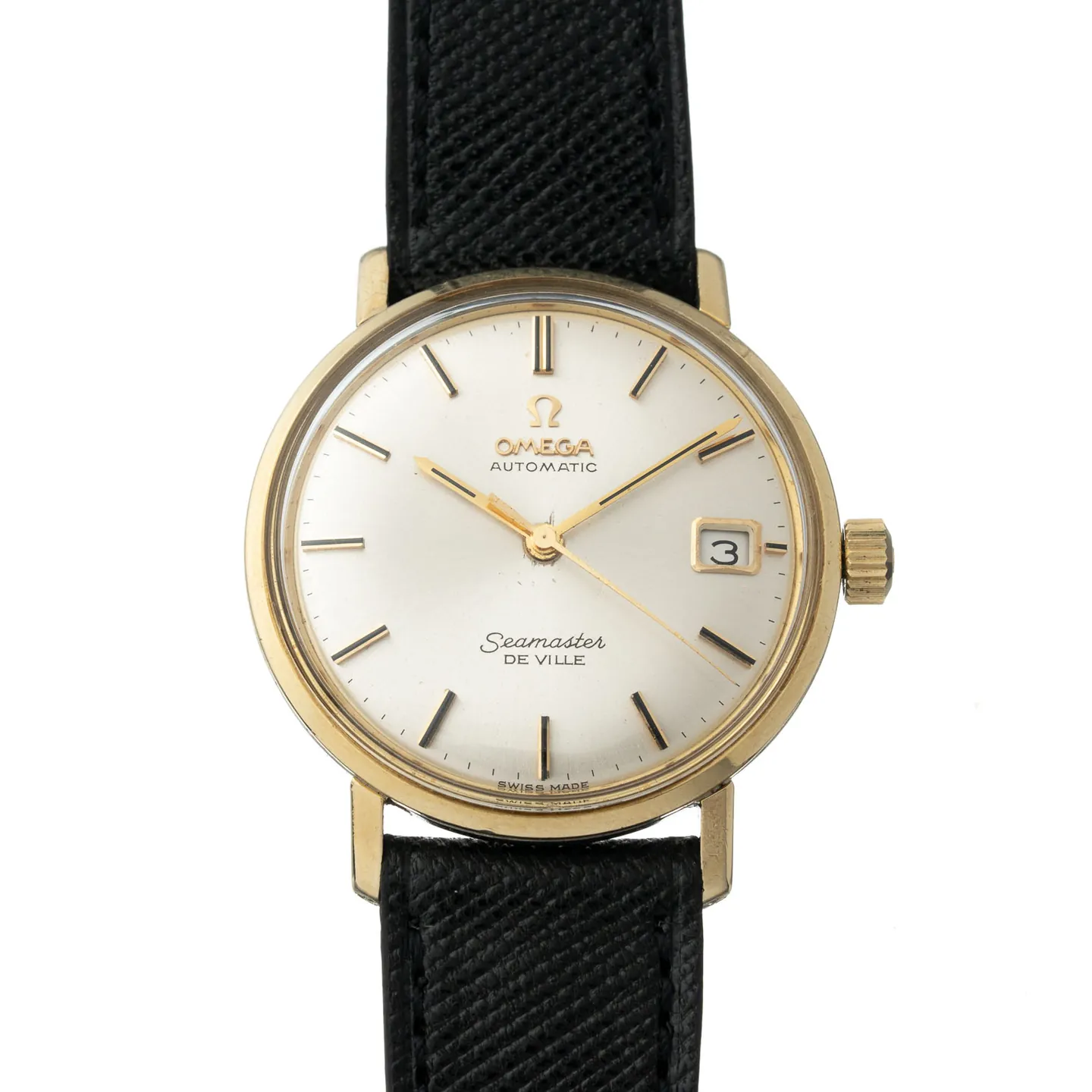 Seamaster De Ville (1963), automatic calibre 562 with date. The most accessible dress watch in vintage Omega.
Seamaster Cosmic 2000 (1970s). Monocoque case, unapologetic seventies look, calibre 1010 or 1012. Often overlooked by the market, and therefore affordable: €600 to €1,200.
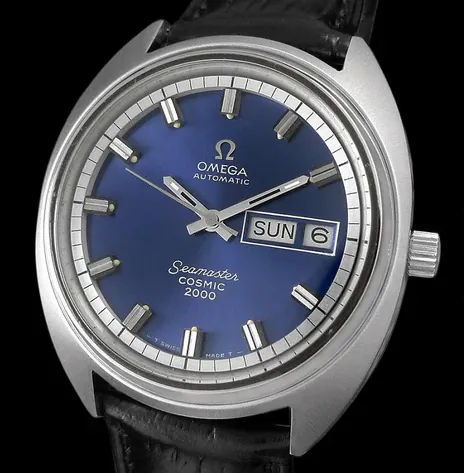 Seamaster Cosmic 2000 (1970). Smoked blue dial, cushion-shaped monocoque case and typically seventies day-date function.
Seamaster Chronometer (1968-1972). Chronometer-certified, calibre 564 (or 751 for the chronograph version). The quality-to-price sweet spot par excellence.
Seamaster calibres: what you need to know
The calibre 552 (1958-1969) is a 24-jewel automatic running at 19,800 beats per hour. Reliable as a tractor, simple to service.
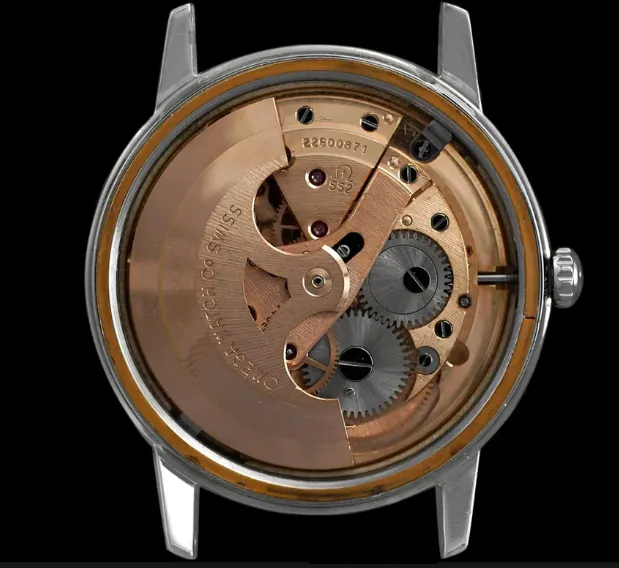 Omega calibre 552. Automatic, 24 jewels, centre rotor, one of the most reliable movements in vintage Omega.
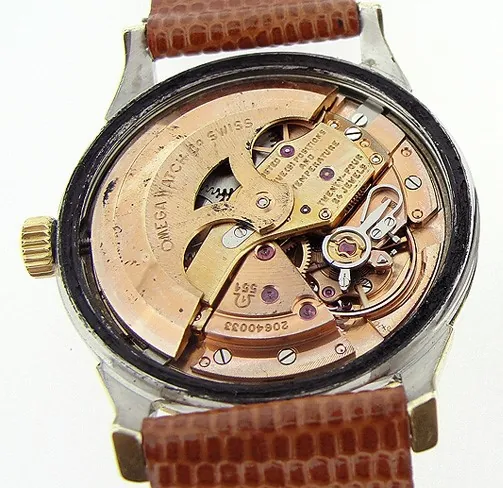 Omega calibre 551. Automatic, 24 jewels, no date, the mechanical base of the first-generation chronometer Constellation.
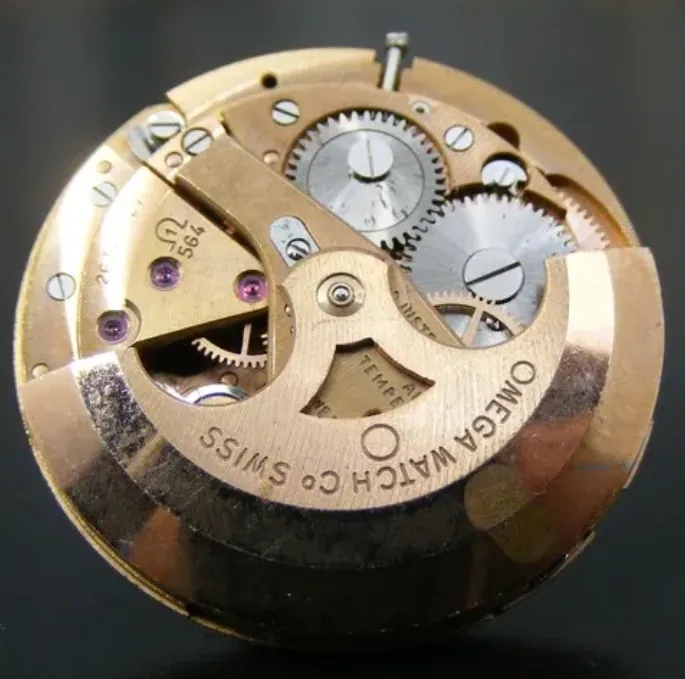 Omega calibre 564. Automatic, 24 jewels with date, gilt finishing and chronometer certification for 1960s Constellations.
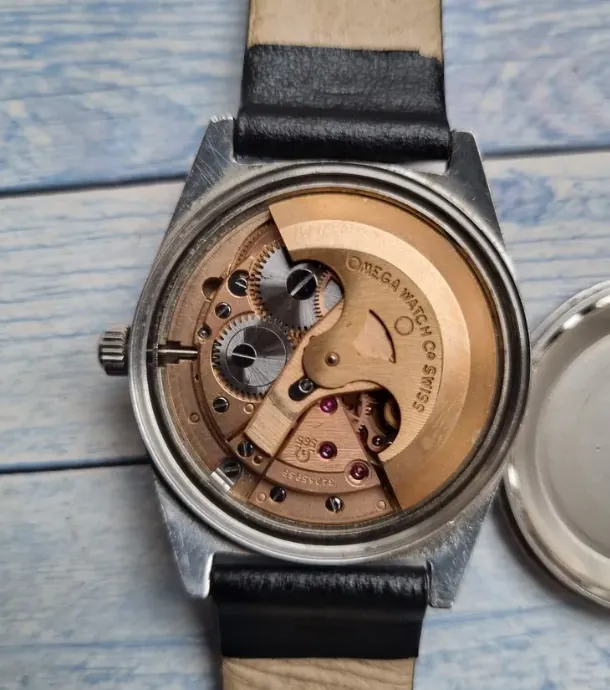 Omega calibre 565. Automatic, 24 jewels with instantaneous midnight date change, the most widespread engine in vintage Seamaster De Ville watches.
The 562 adds a date to the 552. The 565, later still, refines the instantaneous midnight date change and equips the majority of 1960s Seamaster De Ville watches. It's the one you see most often, and that's just as well: spare parts are available, watchmakers know it inside out, and it has a proven reliability record.
The Constellation, the obsession with precision
Launched in 1952 to mark Omega's centenary, the Constellation embodies the absolute pursuit of the wrist chronometer. Every 1950s and 1960s Constellation calibre was chronometer-certified by Swiss observatories, and Omega still holds the record for the highest number of chronometry prizes won during that period, ahead of every other manufacture.
Constellation references to know
Constellation "Pie-Pan" 168.005 (1962-1966). The twelve-facet raised dial that evokes a pie tin, hence the nickname. Calibre 561, chronometer certified. The collection's absolute reference, priced between €1,800 and €3,500 depending on condition and metal.
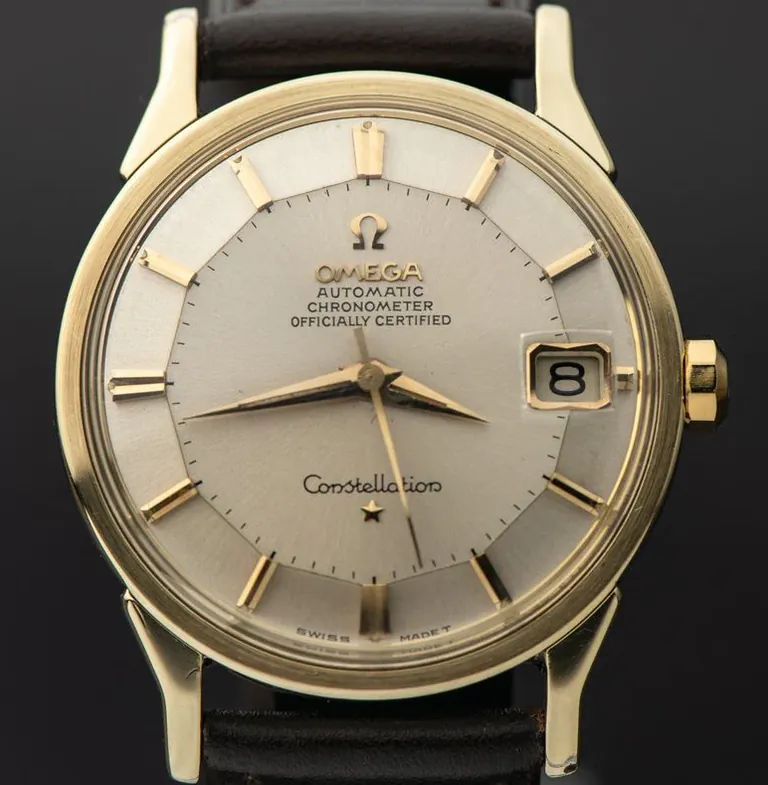 Constellation Pie-Pan 168.005. Twelve-facet dial, applied indices and chronometer certification: the collection's absolute reference.
Constellation C-Shape 168.009 (1967-1970). Case sculpted by Gérald Genta, future father of the Royal Oak, fitted with calibre 564 or 751 depending on the version. A seventies design ahead of its time, whose elegance hasn't aged a day.
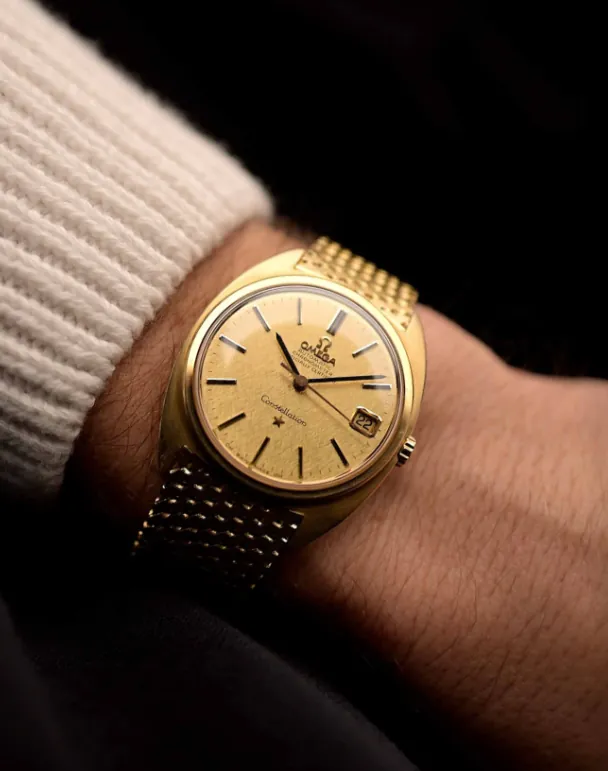 Constellation C-Shape 168.009. Monobloc case designed by Gérald Genta, ancestor of the Royal Oak design.
Constellation Day-Date 168.019. Day and date display, calibre 751. Rare on the market, sought after by knowledgeable enthusiasts.
Constellation Megaquartz 32 KHz (1974). Claimed accuracy of one second per month. A fascinating technical curiosity, worth acquiring first for its calibre 1510, then for its deliberately seventies aesthetic.
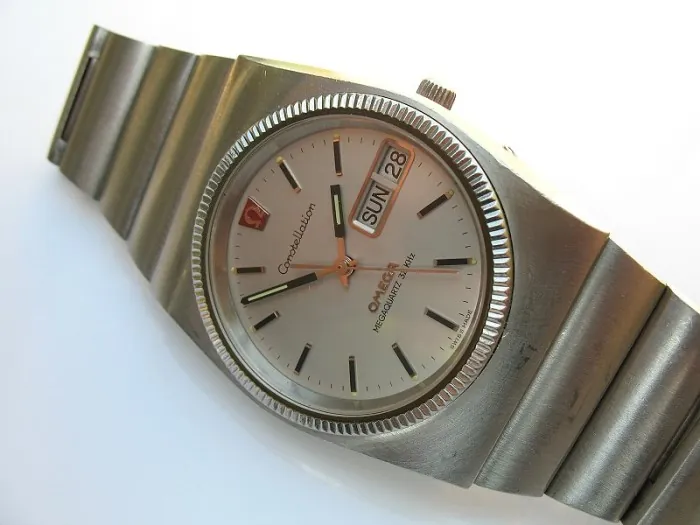 Constellation Megaquartz 32 KHz (1974). Calibre 1510, one second of drift per month, Omega's ultimate answer to the quartz crisis.
The pitfall to avoid on Constellations
Redialled dials remain the absolute scourge of the Constellation market. An original dial, even lightly patinated, is systematically worth more than a restored one. Look for the right signs: crisp printing on the indices, Omega logo in slight relief on applied dials, no halo around the Roman numerals or indices. When a seller mentions a "professionally restored dial", read that as "value halved".
Seamaster or Constellation: how to choose?
| Criterion | Seamaster | Constellation |
|---|---|---|
| DNA | Tool, sport, sea | Precision, prestige, dress watch |
| Typical diameter | 34 to 36 mm | 34 to 35 mm |
| Original water resistance | 60 to 200 m | 30 m (showcase) |
| 1960s-70s vintage budget | €900 to €2,500 | €1,500 to €3,500 |
| On the wrist | Casual, jeans, polo | Suit, shirt, evening wear |
| Parts availability | Excellent | Good |
For a single vintage watch for everyday wear, go for a Seamaster De Ville calibre 565. For the finest piece of watchmaking per euro spent, choose a Constellation Pie-Pan calibre 561 in steel. Yellow gold costs significantly more without adding much horologically.
The five points to check before buying
- The dial. Original, not redialled, even patina. Ask for macro photos in natural light.
- The movement. Omega serial number consistent with the case's production year (the Omega Vintage Database is free, online and reliable).
- The hands. Correct shape for the reference concerned. Baton and dauphine hands aren't interchangeable between models.
- The crown. Signed Ω. An unsigned crown isn't a dealbreaker but should weigh in the negotiation.
- The papers and original invoice. A welcome bonus; their absence is not disqualifying on vintage pieces over fifty years old.
Servicing: what to expect
A vintage Omega that hasn't been serviced in ten years must go through a watchmaker's hands before any daily wear. Budget €350 to €550 for a full service of a calibre 56X with a competent independent watchmaker, up to €900 at Omega Vintage Service in Biel. The difference lies in philosophy: Omega replaces parts with new originals, the independent most often repairs and cleans. Both approaches hold up. For a long-term collector's piece, the independent watchmaker who preserves original components is often preferable.
In and around Liège, get a recommendation for a watchmaker who has taken apart dozens of Omega calibres, not a generalist who only touches a Seamaster once a year.
Going further
Vintage Omega rewards patience. A fine piece found after six months of searching will always be worth more than a bargain struck in haste. If you're after a specific reference, personal sourcing remains the safest route. It's our job.
See our vintage Omega selection (Seamaster + Constellation) →
Filter the full catalogue by brand →
See our vintage Seiko divers →, the Japanese alternative for a first vintage watch.
Article written by the Charlemagne Bijouterie Horlogère team, Herstal. Updated June 2026.
Head-to-head: Omega Seamaster vs vintage Constellation, which model to choose? The technical table, decision tree and 2026 prices above make it possible to decide between the two Omega icons.
Vintage Omega prices 2026: reference-by-reference guide
The price of a vintage Omega depends on four variables: the rarity of the reference, the condition of the original dial, the presence of accessories (box, papers, bracelet) and the consistency between serial number and year. Here's the pricing observed on the European market in 2026.
- Seamaster Cosmic 166.022 (calibre 1010): €700 to €1,200.
- Seamaster De Ville 14770 (calibre 562): €1,200 to €1,800.
- Constellation hand-wound 14381 (calibre 551): €900 to €1,400.
- Constellation Pie-Pan 168.005 (calibre 561): €1,800 to €2,800, €3,800 in solid gold.
- Constellation C-Shape 168.009 (calibre 564): €2,800 to €4,500.
- Seamaster 300 CK2913 (calibre 501): €25,000 and upwards depending on condition.
A "restored" dial halves the value, sometimes cuts it to a third on collector pieces. Always favour an original, patinated dial over a redialled one.
Vintage Omega servicing: cost, frequency, where to get it done
A full vintage Omega service includes disassembling the calibre, ultrasonic bath cleaning, replacing water-resistance gaskets, fresh lubrication and a rate check over six positions across 48 hours.
- Independent Omega-trained watchmaker cost: €350 to €550 for a calibre 56X.
- Omega Vintage Service Biel cost: €700 to €900 with a 2-year warranty.
- Recommended frequency: every 5 to 7 years with daily wear, or before returning to use if the watch has been dormant for more than 10 years.
- Warning signs: rate deviation greater than 30 seconds a day, condensation under the crystal, a stiff crown or hands that stutter.
In Liège and Herstal, always have the service validated by a watchmaker trained on calibres 55X-56X. Most spare parts remain available, but some (mainspring 565, winding stem 561) can take several weeks to source.
Vintage Omega authenticity: 5 essential checks
Spotting a fake vintage Omega Seamaster or vintage Omega Constellation relies on five systematic checks before any purchase.
- Serial number / year consistency: cross-check the number engraved on the calibre's bridge against the Omega Vintage Database. A calibre 561 dated 1967 should match a 168.005 case produced between 1966 and 1969.
- Original dial: applied indices in slight relief, crisp Omega logo, no halo around the numerals. Ask for macro photos in natural light.
- Ω-signed crown: on 1960s-70s Seamaster and Constellation watches, the crown carries the Omega logo. A smooth crown is almost always a later replacement.
- Observatory medallion (Constellation only): engraved in relief on the caseback, it attests to chronometer certification. A blurred or too-regular medallion signals a replacement caseback.
- Correct hands: each reference has its own specific hands (dauphine, baton, alpha). Compare with period Omega catalogues or ask us for a free check.
If in doubt, seek an independent appraisal before the transaction. At the Charlemagne workshop, we take apart every vintage Omega in front of the client and provide a written certificate of authenticity with macro photographs of the calibre.
Related articles
- Vintage watches under €1,500: Omega, Longines, Universal Genève2026 buying guide to vintage Swiss watches under €1,500: Omega Genève, Dynamic, Seamaster and Constellation, Universal Genève Polerouter, Longines, Baume & Mercier, Tissot and Zenith. Calibres, references and real market values.
- Vintage Seiko Buying Guide: Seiko 5, King Seiko & Grand SeikoA complete overview of collectable vintage Seiko watches: Seiko 5, King Seiko and Grand Seiko. Calibres, references, authentication method and market prices.
- Top 5 Vintage Seiko Divers Under €500 in BelgiumThe best affordable vintage Seiko divers, with their history and why they remain a safe bet for Belgian collectors.