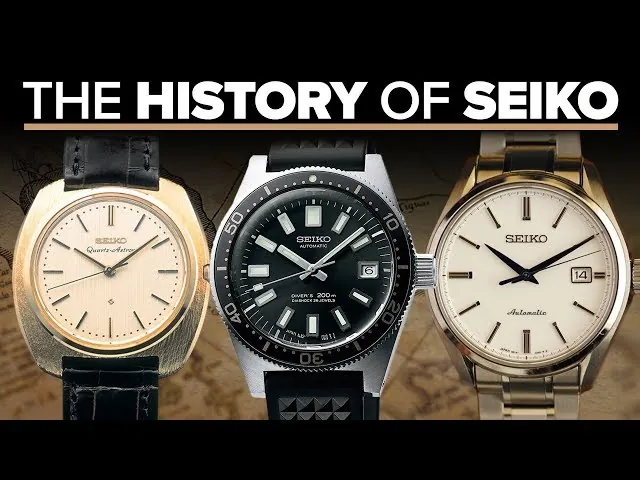
Vintage Seiko Buying Guide: Seiko 5, King Seiko & Grand Seiko
By Charlemagne Bijouterie HorlogèreUpdated on 16 min read
Why vintage Seiko today
Seiko embodies a paradox that fascinates collectors. The house from Ginza industrialised precision horology while Switzerland was still resting on its laurels, launched the first quartz wristwatch in December 1969 with the Seiko Quartz-Astron 35SQ, took top honours at the Neuchâtel Observatory chronometry trials, and yet, on the secondary market, a vintage Seiko still typically costs a fifth to a tenth of an equivalent Swiss watch. That gap, absurd from a horological standpoint, is the opportunity this guide sets out to explore.
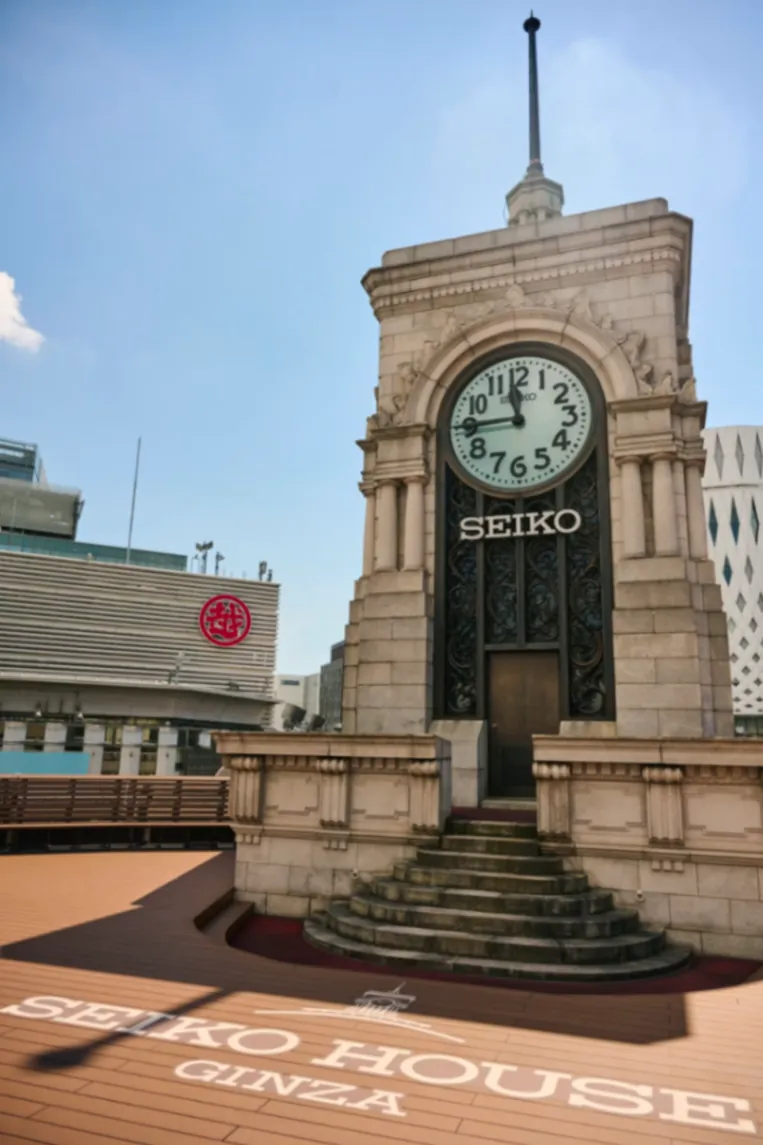 The Seiko House Ginza in Tokyo, the house's historic seat since 1881.
The Charlemagne selection focuses on three families that embody this contradiction: the Seiko 5, the automatic workhorse produced without interruption since 1963, the King Seiko, the forgotten cousin that rivalled the Grand Seiko in the 1960s, and of course the Grand Seiko itself, Japan's answer to the Swiss chronometer, designed to be the ideal watch.
Seiko 5: the democratic revolution of 1963
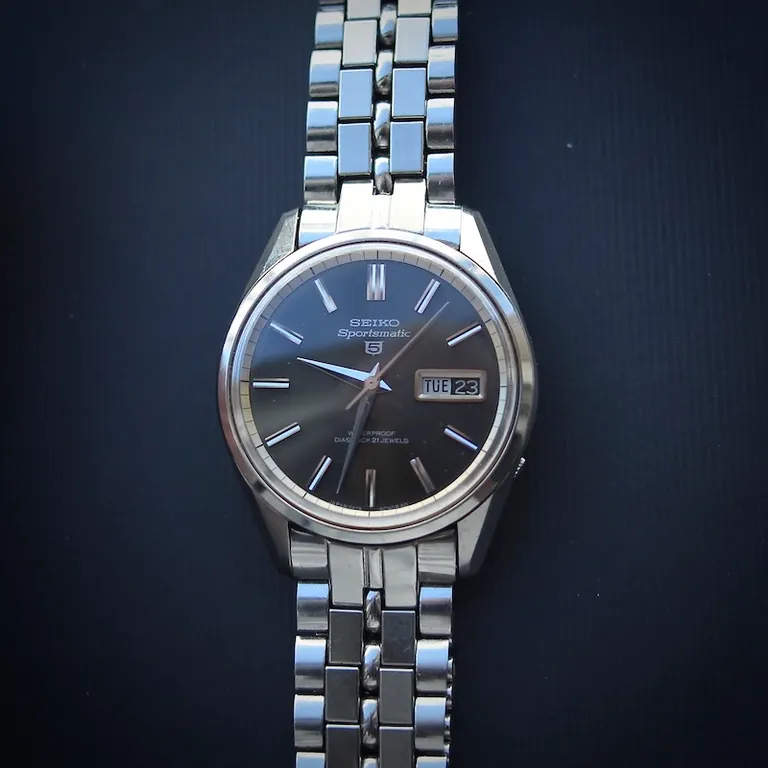 Seiko Sportsmatic 5, ref. 6619-8060 (1963) — the very first Seiko 5 in history.
When Seiko launched reference 6619-8060 in 1963, the brand set out five attributes that would become the signature of the line: automatic movement, day-date window, water resistance, crown at four o'clock, and reinforced case. Five features, one name: Seiko 5. The idea was to offer a robust, accurate, affordable watch for Japan's middle class during its post-war reconstruction. Sixty years on, the DNA hasn't shifted.
Calibres worth knowing
Among 1960s and 1970s Seiko 5s, two movement families dominate the collector market. The calibre 6119 equips the majority of 6119-XXXX references produced between 1968 and 1978, with 21 jewels and a frequency of 21,600 beats per hour. Reliable, and serviceable anywhere in the world, it withstands the decades better than many Swiss movements of the same era. The calibre 7009, introduced in 1977, gradually replaced the 6119, with bidirectional rotor winding and a power reserve extended to 42 hours.
Vintage references worth watching
Collectors chase the 6119-6023, the 6119-8460 and the 7009-8760 with graduated blue dial first, valued between 180 and 450 euros depending on condition. Japanese and South Korean military-issue versions, produced for the American armed forces during the Vietnam War, sometimes reach 800 euros when provenance is documented.
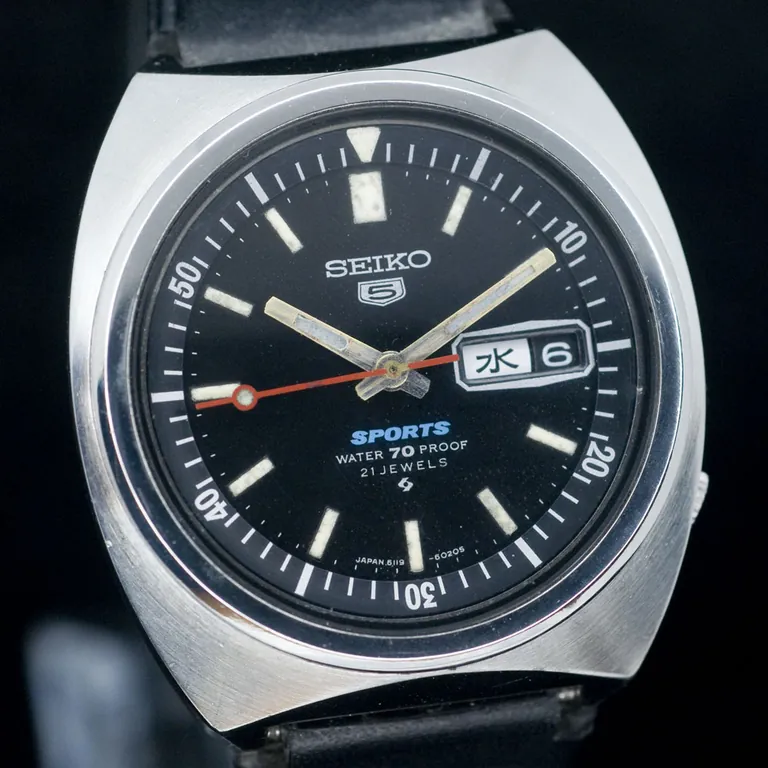 Seiko 5 Sports, ref. 6119-6023 — one of the most sought-after references in the 6119 line, here with its kanji day window.
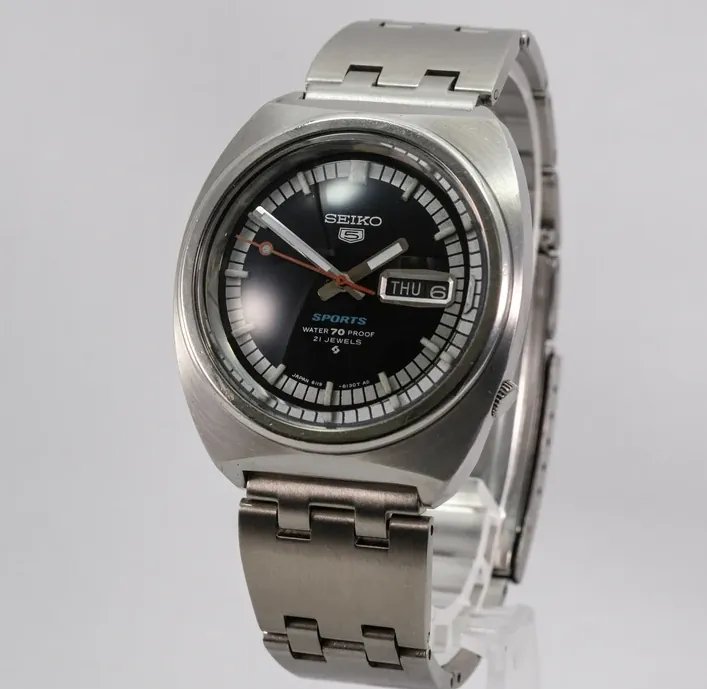 Seiko 5 Sports, ref. 6119-8131 (1968) — the tonneau case typical of the late 1960s, "Water 70 Proof" dial and crown at four o'clock.
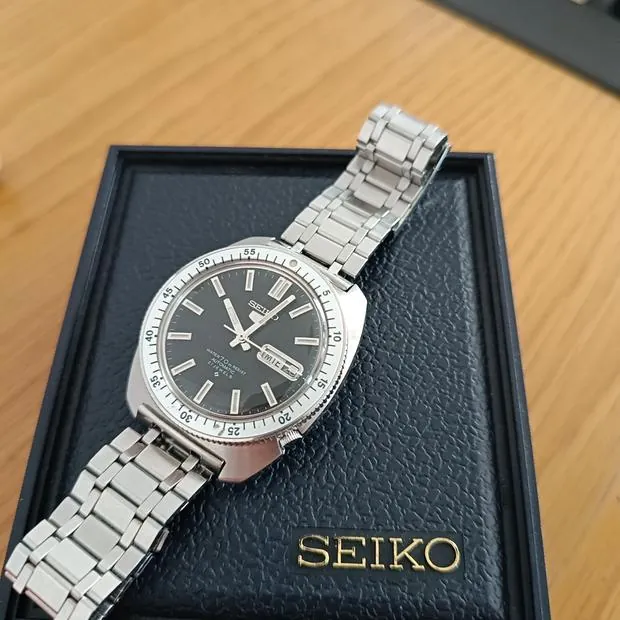 Seiko 5, ref. 6119-8460 — a clean profile, engraved bezel and steel bracelet signed Seiko.
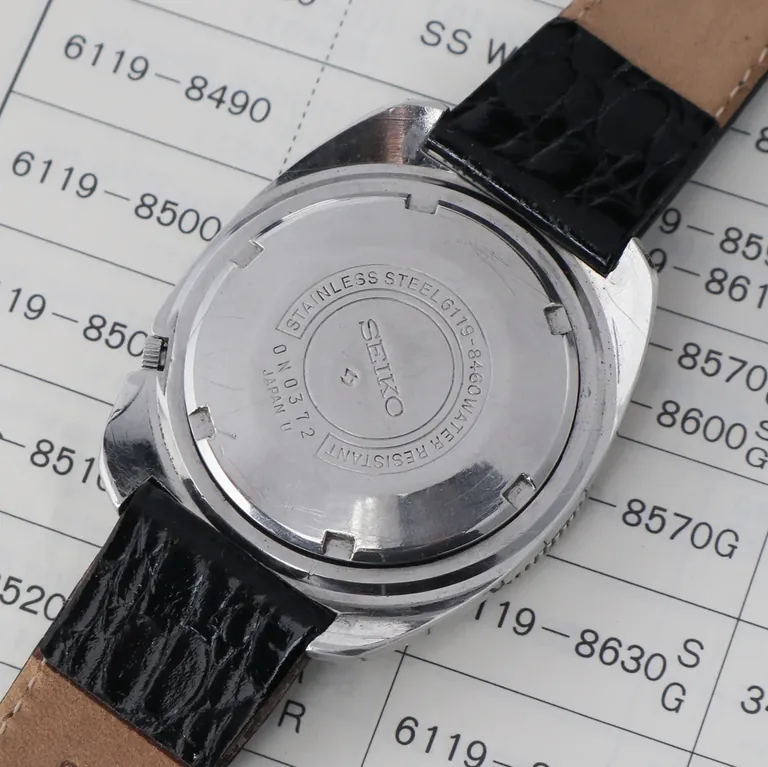 Caseback of the 6119-8460 — the engraved reference, the "Water Resistant" mark and the production code (here 0N0372, a March 1970 case) are the first points to check on an authentic piece.
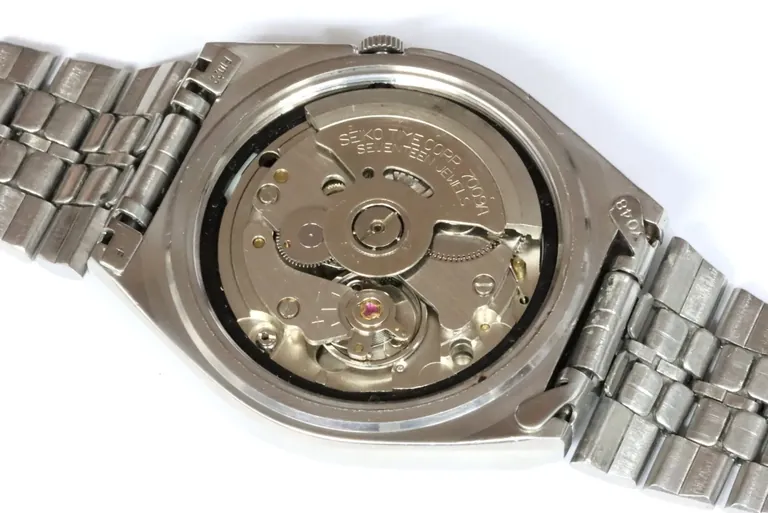 Calibre 7009, introduced in 1977: bidirectional winding, 17 jewels, 42 hours of power reserve.
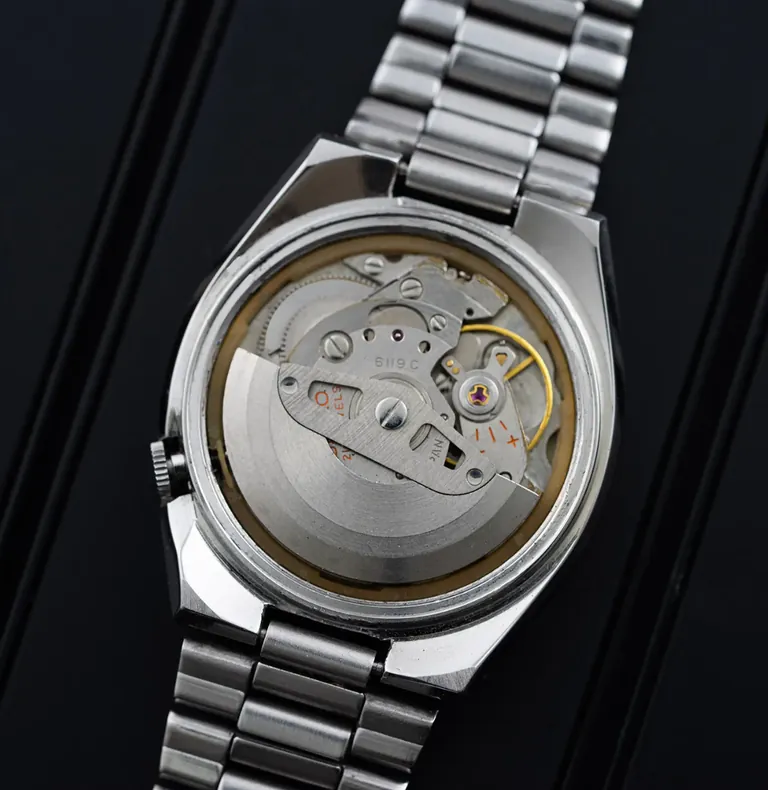 Calibre 6119C viewed through an open caseback — the "6119C" engraving on the rotor bridge and the consistency between the movement reference and the reference engraved on the caseback are two essential checks before any purchase.
King Seiko: the missing link
Created in 1961 by the Daini Seikosha manufacture in Suwa, the King Seiko was tasked with rivalling the Grand Seiko, produced at the same time by the competing Suwa Seikosha manufacture. Two factories, two high-end watches, one single brand. Seiko's internal strategy at the time, unique in the history of horology, produced a rivalry that pushed both lines to the level of the best Swiss chronometers.
The calibre 4402 and the KS spirit
The calibre 4402A, a hand-wound movement running at 18,000 beats per hour, equips the King Seiko KS 44 launched in 1964. Its average rate, measured against Neuchâtel Observatory standards, reached figures that embarrassed the Swiss establishment. Some certified pieces from this era, fitted with the famous engraved medallion caseback, are now sought by knowledgeable collectors for 900 to 1,800 euros.
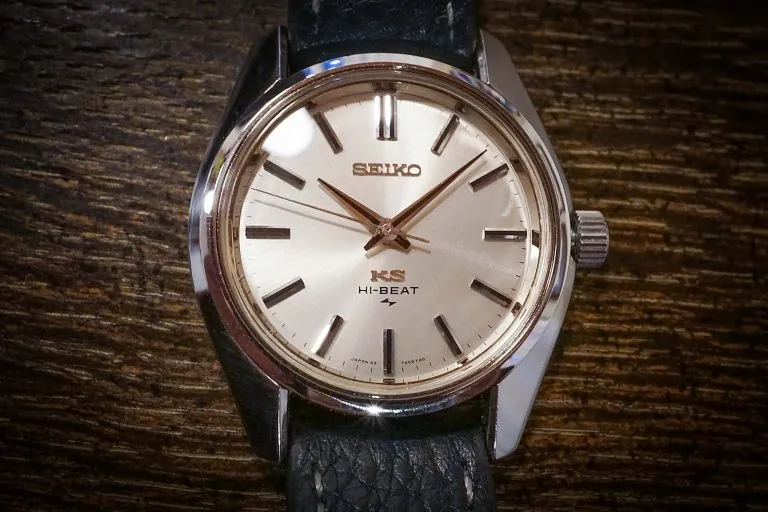 King Seiko 45KS Hi-Beat, produced by Daini Seikosha in the late 1960s — sunburst dial, hand-cut applied indices and the KS logo engraved beneath the Seiko name.
Identifying a genuine King Seiko
Fakes are rare, but reprinted dials exist. Three elements must be scrutinised: the fineness of the KS logo engraving on the dial (fakes show a thick, slightly crushed typeface), the presence of the gold medallion on the caseback with the lion sculpted in relief, and the consistency between the serial number engraved on the case middle and the production year according to Seiko's correspondence table.
Vintage Grand Seiko: the invisible chronometer
The first Grand Seiko, reference J14070, was released in December 1960. It was presented as the ideal watch, with a specification exceeding that of the Swiss COSC of the time. For two decades, the line produced hand-wound and automatic movements of a precision that quietly humbled the great Geneva names.
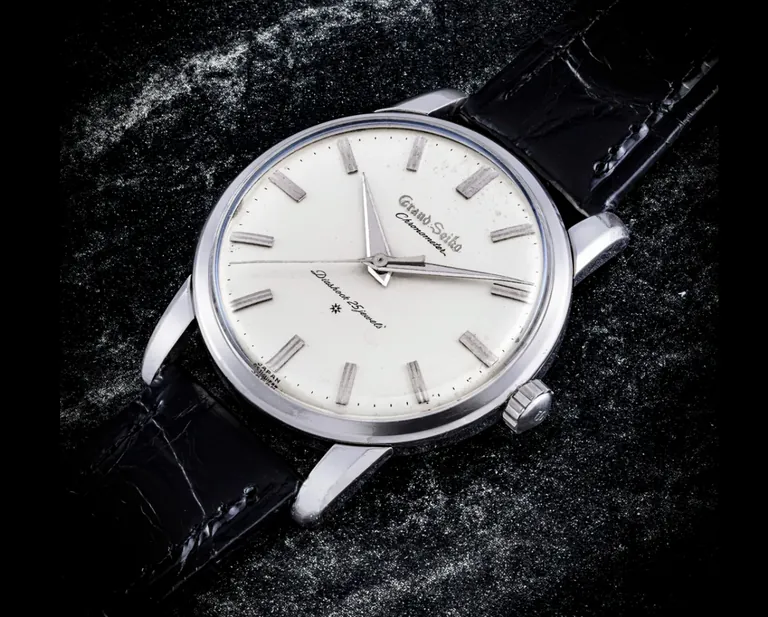 The very first Grand Seiko, ref. J14070 (1960) — dial signed "Chronometer Diashock 25 Jewels", presented as "the ideal watch".
Legendary calibres
The calibre 5722A, hand-wound, equips the Grand Seiko 57GS of 1964, considered the pinnacle of the first generation. The calibre 6146, a high-frequency automatic (36,000 beats per hour), equips the 61GS launched in 1968, still one of the most sought-after Grand Seikos on the vintage market. The calibre 4520, a high-frequency hand-wound movement in the 45GS of 1968, produced by Daini Seikosha, is perhaps the finest movement ever to leave a Japanese manufacture before the Spring Drive era.
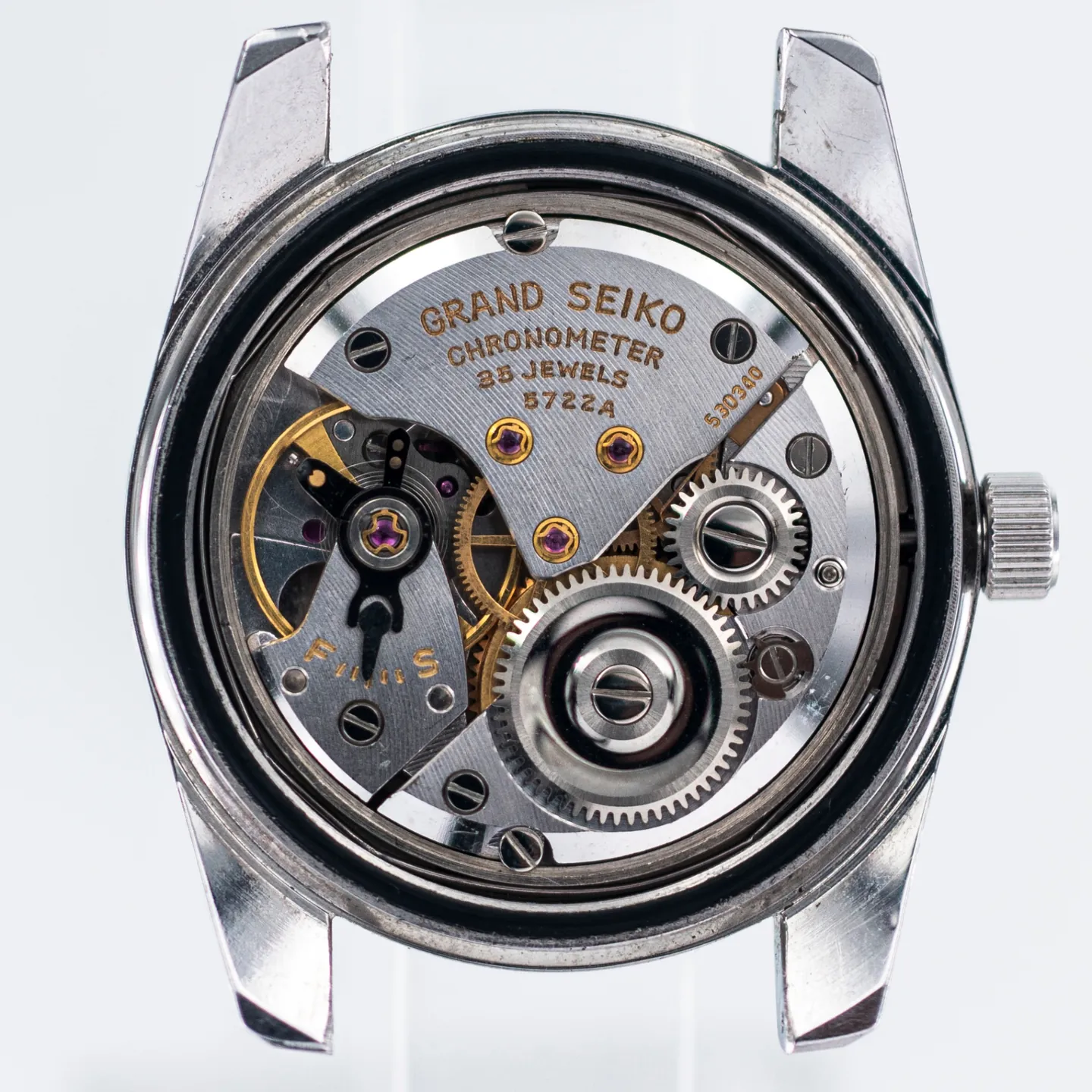 Calibre 5722A seen through the caseback: 25 jewels, hand-wound, certified chronometer — the movement fitted to the Grand Seiko 57GS of 1964.
Zaratsu finishing
What immediately distinguishes a genuine vintage Grand Seiko is the finish of the hands and applied indices. Zaratsu polishing, inherited from a samurai sword-polishing technique adapted to horology by master craftsman Susumu Kawanishi, produces a perfectly flat surface with no optical distortion. On a vintage piece, this finish survives intact after sixty years if the case has never been re-polished.
 Grand Seiko 6145 from 1968, case signed by Taro Tanaka: sharp edges, mirror-polished facets and a crisp break between polished and brushed surfaces, the signature of the "Grammar of Design". A Grand Seiko whose hands show slight ripples on the polished surface has probably undergone an intrusive service.
Daini versus Suwa: the real story behind the two manufactures
The official history often claims that Seiko split its production in 1959 to create healthy rivalry between two manufactures. It's a convenient shortcut, but historically false. The reality is denser, longer, and far more interesting for anyone trying to understand why 1960s vintage Seikos reached a quality Switzerland itself struggled to admit.
1942, the true origin of the rivalry
Before the war, what we now call Seiko did not exist under that name. The Hattori family owned two separate entities: K. Hattori & Co., a sales company and clockmaker based in Ginza with its famous Hattori Tokeiten shop, and Daini Seikosha, a wristwatch manufacture based in the Kameido district of Tokyo. The two were controlled separately.
In May 1942, Hisao Yamasaki, a former Hattori shop employee, founded his own watchmaking company, Daiwa Kogyo Ltd., in the Suwa region of Nagano. The following year, Daini Seikosha, seeking to move part of its production away from Tokyo under threat of bombing, partnered with Daiwa Kogyo. This joint venture, named Daini Seikosha (Suwa), would become the Suwa Seikosha manufacture. In other words, Suwa was not born of a split from Seiko, but from an emergency marriage between Daini and a small independent manufacture from Nagano.
Daini's Tokyo factory was indeed destroyed before the end of the war. When it reopened in 1949, Yamasaki persuaded the Hattoris to keep the Nagano site. Suwa then remained a subsidiary of Daini Seikosha, not of K. Hattori & Co. Suwa's true legal independence only arrived in 1959.
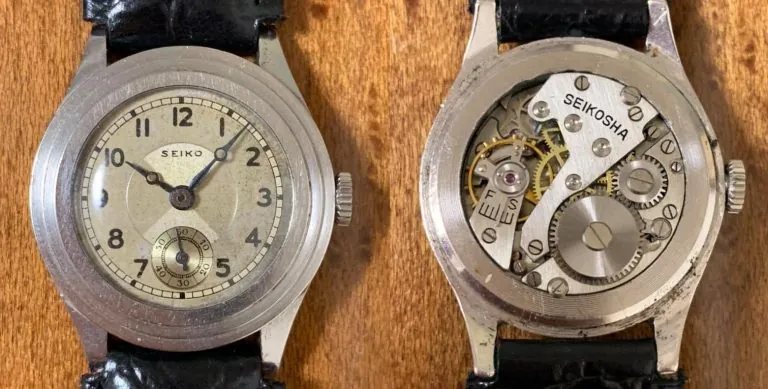 A pre-war Seikosha: a classic Arabic dial and a movement derived from the Swiss Moeris, evidence of the house's technical apprenticeship before genuine calibre autonomy.
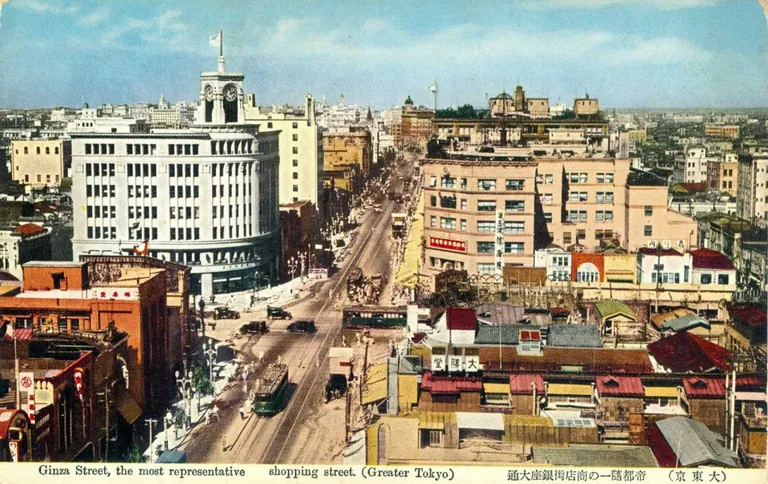 The Wako Clock Tower in Ginza, around 1940. On the ground floor, the Hattori Tokeiten shop, the commercial heart of the K. Hattori & Co. group.
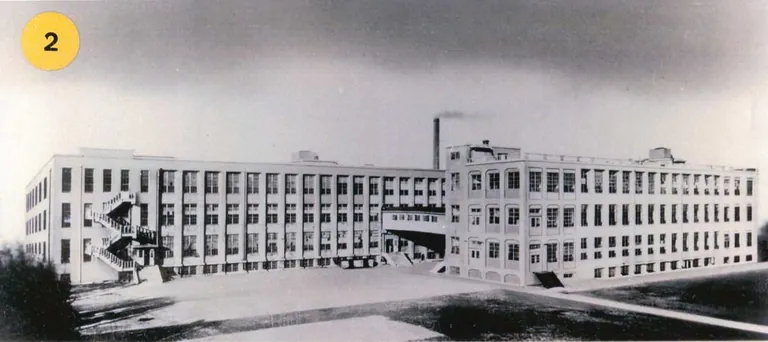 The Daini Seikosha manufacture in Kameido, Tokyo, around 1937 — the site would be destroyed during the war before reopening in 1949.
1953, the real turning point
The pivotal year was not 1959, but 1953. That year, Genzo Hattori, son of founder Kintaro, understood that the existing structure was stifling innovation. He imposed two separate directions and two independent research and development offices between Kameido (Daini) and Nagano (Suwa). This decision, six years before the famous 1959 date, truly triggered the race for calibres that would mark the following twenty years.
The first fruit came as early as 1956 with the Marvel calibre developed by Suwa, considered the line's first genuinely fully in-house (100%) movement. Two years later, Daini responded with the calibre 54A fitted in the Seiko Cronos of 1958, direct ancestor of the 4402 later found in the King Seiko. Each manufacturer set out to humiliate the other, almost every month, with a new reference, a new refinement.
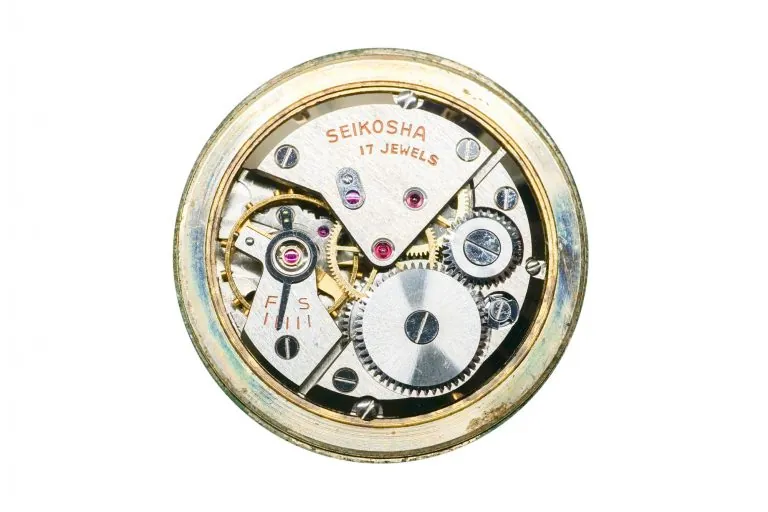 Suwa's Marvel calibre (1956) — the first movement fully designed and built in-house by the house, long considered the group's benchmark for robustness.
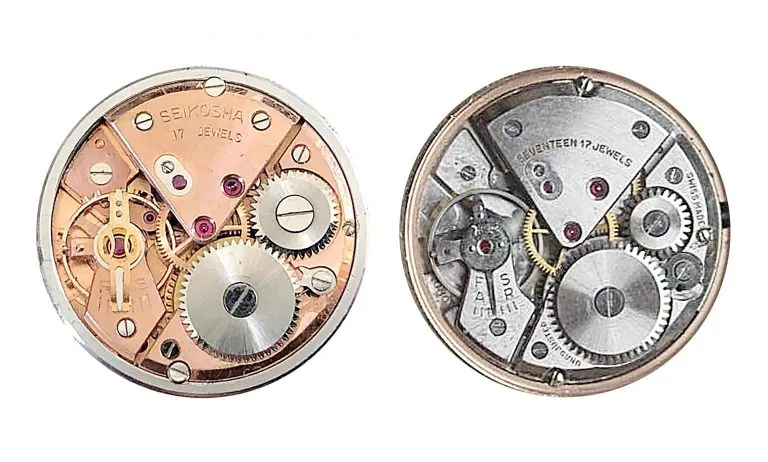 Seiko Super (left) alongside the ETA 1080 (right): the architectural kinship illustrates just how much Seiko learned from Switzerland before overtaking it.
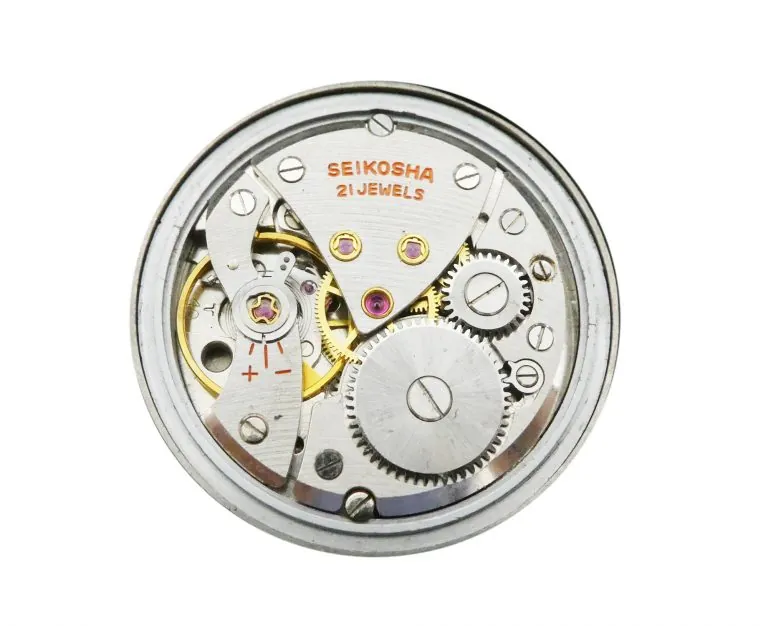 Daini's calibre 54 (1958) — 21 jewels, hand-wound, direct ancestor of the 4402 that would equip the King Seiko in the 1960s.
Neuchâtel 1964-1968: the end of Swiss hegemony
In the 1960s, Daini and Suwa entered their calibres in the Neuchâtel Observatory trials in Switzerland. Two legends circulate about this, and they need correcting.
Firstly, the two manufactures were not entirely rivals on this ground. According to Hirokazu Imai, a historic representative of Seiko Epson (the modern heir to Suwa), movements were indeed entered separately, but the teams shared the best available components and lent each other a hand with regulation. A little-known detail: during all the Neuchâtel trials, every movement entered, including Suwa's, contained Daini mainsprings, unanimously acknowledged as superior.
Secondly, the poor results of the early years were not down to the intrinsic quality of the calibres, but to damage suffered during the Tokyo-Neuchâtel air freight. The movements arrived magnetised. Japanese engineers spent several years developing anti-magnetic alloys and optimising the transport cases before the results reflected the true technical level of the calibres.
Thirdly, and most importantly, legend has it that the Neuchâtel trials were suspended in 1968 to prevent a humiliating Japanese victory. The truth is more prosaic: from 1968, the Swiss manufactures began entering quartz prototypes in the wristwatch category, completely distorting the mechanical competition. The observatory suspended the trials because they no longer made sense, not to save Swiss honour. Seiko then sent its calibres to Geneva, where the Daini movements outperformed every Swiss mechanical entry, before themselves yielding to the quartz prototypes — exactly the scenario Neuchâtel had wanted to avoid.
The Hattori family: three brothers, not two rivals
The word competition, often used to describe the Daini-Suwa relationship, deserves nuance. According to Imai, the Hattori family always presented the group's entities as a family: K. Hattori & Co. as the eldest son, Daini as the second, Suwa as the youngest. Rivalry between brothers was natural, encouraged, but was never meant to turn hostile. This philosophy of fraternal rivalry explains why certain key technologies, such as the Diashock shock-protection system or the famous Magic Lever automatic winding system, developed by Suwa, were immediately passed on to Daini without negotiation or royalties.
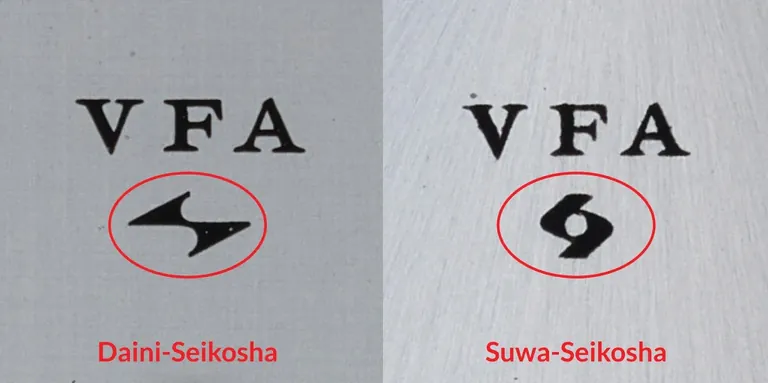 The two manufacture hallmarks, engraved beneath the "VFA" (Very Fine Adjusted) mark: the stylised lightning bolt identifies Daini-Seikosha, the whirlwind identifies Suwa-Seikosha. Spotting this symbol on a vintage movement or dial immediately attributes a piece to its manufacture of origin.
Grand Seiko and King Seiko: two summits, not an imposed hierarchy
The hierarchy between Grand Seiko and King Seiko was likewise no accident. In 1960, Suwa presented K. Hattori with a high-precision movement project, billed as an answer to the Swiss chronometer. The product manager of the time, Ren Tanaka (mentor, with no family link, to designer Taro Tanaka, of "Grammar of Design" fame), named the project Grand Seiko, with the aim of catching up with, then overtaking, Switzerland.
A little later, Daini submitted an equivalent project of its own. Ren Tanaka first considered the name Champion Seiko, then, formalising the internal hierarchy, reserved the summit for Suwa's Grand Seiko and positioned the Daini line as the king, the King Seiko. This was not an admission of technical inferiority, it was a structured marketing decision.
Technically, the difference came down to one crucial detail: Suwa had, from 1960, developed its own in-house test bench, modelled on Swiss protocols, with chronometric requirements Daini did not apply as systematically. The Grand Seiko passed this test. The King Seiko did not — often by positioning choice, to keep a coherent price gap with the top of the range.
The hidden collaboration: when Daini made Grand Seikos
One last point, and no small one for collectors: from the mid-1960s, the Hattori family put in place a brand-sharing strategy. To avoid fragmenting the market, K. Hattori took over centralised management of the lines and allocated certain references to either Daini or Suwa indifferently.
This is how the Daini calibre 4402, a direct development of the 1958 calibre 54, became so excellent that Daini was entrusted with producing a Grand Seiko, the 44GS, today considered one of the finest vintage Grand Seikos ever produced. Conversely, examples exist of the calibre 6139, an automatic chronograph movement historically associated with Suwa, with components stamped Daini, produced to absorb demand. On Lord Marvel watches fitted with the high-frequency calibre 5740C, there are even known movements clearly manufactured by Daini from a Suwa design, adjusted with more care than standard production.
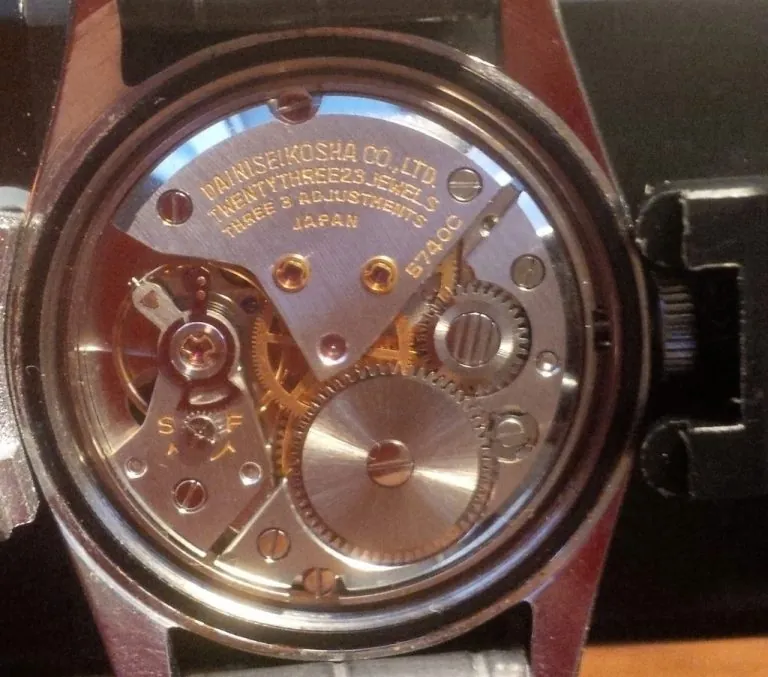 Lord Marvel calibre 5740C produced by Daini Seikosha, 23 jewels and high-frequency — one of the house's most finely adjusted movements, often reserved for the most carefully finished series.
For a collector inspecting a King Seiko 44KS or a Grand Seiko 44GS today, this history is not incidental. It explains why the calibre 4402 and its derivatives are considered among the most reliable ever produced by Seiko, and why a hand-wound King Seiko from the second half of the 1960s remains, at under 2,000 euros, one of the last genuine bargains in the vintage watch market.
Authenticating a vintage Seiko: the five checks
Authenticating a vintage Seiko relies on a methodical reading of the case, dial and movement. Five points must be checked systematically before any purchase.
1. The serial number
Every Seiko carries, on the caseback, a seven-digit serial number. The first digit indicates the production year (the last digit of the year for pre-1980 pieces), the second digit indicates the month (1 to 9, then O for October, N for November, D for December). A Seiko 6119-6023 with a serial number starting with 8O2 was produced in October 1968 or 1978. The context of the reference, dial and crown allows the matter to be settled.
2. Dial markings
Genuine period Seiko dials carry, at six o'clock, two lines of text: the model reference (for example 6119-8460) and the Water Resist or Waterproof stamp depending on the date. Reprinted dials from the 1990s, produced in Thailand for the replacement market, show a slightly thicker typeface and a manufacturing stamp on the back that is often absent.
3. The caseback
The caseback of vintage Seikos carries four pieces of information that must be consistent with one another: the full reference (for example 6119-8460), the serial number, the jewel count of the movement and, on some pieces, the medallion logo of the King Seiko or Grand Seiko. A piece whose caseback bears a GS logo but whose dial is ordinary is almost always a rebuild.
4. The movement
Opening the caseback is a job for the watchmaker, but some sellers provide macro photos of the movement. The calibre should carry, on the barrel bridge, the manufacture's name (Suwa Seikosha, Daini Seikosha) and the calibre reference. A genuine 6119 carries the mark SEIKO 6119 engraved on the rotor and bridge, with a rotor decorated with a barley-grain finish. Replacement movements produced after 1985 use a coarser, circular-grained decoration, easily recognisable.
5. The bracelet
Vintage Seikos were supplied with signed steel bracelets, often JB (Japan Beads-of-Rice) types or unsigned Oyster-style bracelets made by Seiko's subcontractors. Replacement with a modern leather strap is not disqualifying, but must be disclosed. A modern steel bracelet fitted to a vintage piece must be clearly identified as non-period in the description.
Reliability and servicing
Vintage Seiko movements are among the easiest in the world to have serviced. A general watchmaker, in Belgium as elsewhere, can open and service a 6119, a 7009 or a 4402 without particular difficulty. Spare parts, produced in very large series over several decades, are easy to find for 20 to 80 euros a piece. A complete service, full disassembly and reseal, costs between 180 and 350 euros depending on the calibre.
Vintage Grand Seikos, on the other hand, require specialised attention. High-frequency calibres (36,000 beats per hour) are more sensitive to lubricant quality and regulation. Seiko offers a Grand Seiko Vintage Restoration service reserved for authenticated pieces, with an average turnaround of six months and a cost of between 800 and 2,200 euros depending on condition.
What Charlemagne offers in Seiko
The Charlemagne house's Seiko selection focuses on three profiles: the 1970s Seiko 5 in original condition, as a serious entry point for a first vintage purchase, the hand-wound King Seiko of the 1960s for the collector seeking a discreet and undervalued piece, and the Grand Seiko 57GS or 61GS for the discerning enthusiast who prefers Japanese precision to Swiss renown. Every piece is inspected against the five authentication points described above, serviced where necessary by an independent watchmaker, and delivered with a written description that explicitly distinguishes what is original from what has been replaced.
To discover the pieces available or to entrust us with a personal search for a specific reference, the contact page remains the best starting point. The house also offers a sourcing service for rare Grand Seikos, with an average turnaround of three to six months depending on the reference sought.
Related articles
- Vintage watches under €1,500: Omega, Longines, Universal Genève2026 buying guide to vintage Swiss watches under €1,500: Omega Genève, Dynamic, Seamaster and Constellation, Universal Genève Polerouter, Longines, Baume & Mercier, Tissot and Zenith. Calibres, references and real market values.
- Vintage Omega Buying Guide: Seamaster and ConstellationThe complete guide to choosing a vintage Omega Seamaster or Constellation: history, iconic references, calibres and practical advice for discerning collectors.
- Top 5 Vintage Seiko Divers Under €500 in BelgiumThe best affordable vintage Seiko divers, with their history and why they remain a safe bet for Belgian collectors.