
Must de Cartier: Chronicle of a Watchmaking Revolution (1973-2004)
By CharlemagneUpdated on 11 min read
Must de Cartier: Chronicle of a Velvet Revolution (1973-2004 and beyond)
It is worth remembering what the world looked like at the start of the 1970s. For the watch world, it was a dark, anxious period. Across Europe, the first echoes of the tsunami were already being felt: small, precise, cold quartz watches from Japan, costing next to nothing, sweeping away everything in their path. Fine Swiss watchmaking, and with it the French houses, seemed doomed, a relic of a bygone world. Cartier, the jeweller of kings, was little more than a ghost, an entity split in three (Paris, London, New York) after the death of the Cartier heirs. It was the end of an era.
And then, the miracle. Or rather, a conjunction of daring, vision, and a certain flair for the moment. In 1972, a group of investors led by financier Joseph Kanoui and visionary industrialist Robert Hocq bought Cartier Paris. Their idea was bold: reunify the legendary name and restore its shine. To steer the ship, they hired a brilliant 27-year-old graduate of HEC, Alain-Dominique Perrin. He was the true architect of what followed. Faced with the crisis, he did not try to copy the old world, but to invent a new one. His diagnosis, which he would later put into words, was bluntly clear:

Luxury didn't exist for young people. Everything was conventional, boring. Cartier was a sleeping old lady. I wanted to create products that were luxurious, cultured, and accessible all at once.
The word was out. Accessible. A blasphemy in the temple of exclusivity. And yet, the seed of the greatest revolution in second-half-of-the-twentieth-century watchmaking had been planted. Its name: Must de Cartier.
The Birth of a Concept: "Les Must" (1973-1977)
Perrin's idea, endorsed by Hocq, went beyond watchmaking from the very start — it was a total concept. The "Les Must de Cartier" concept was officially launched in September 1973. It was a "diffusion line", as fashion would call it today, though the concept did not yet exist. The first "Must" object was not a watch, but a lighter. An oval gas lighter, gold-plated, whose design would become iconic. Pens, leather goods, scarves, perfumes would follow... a whole universe of "things one must have" (It's a must!), as the advertising of the day hammered home. The success was immediate.
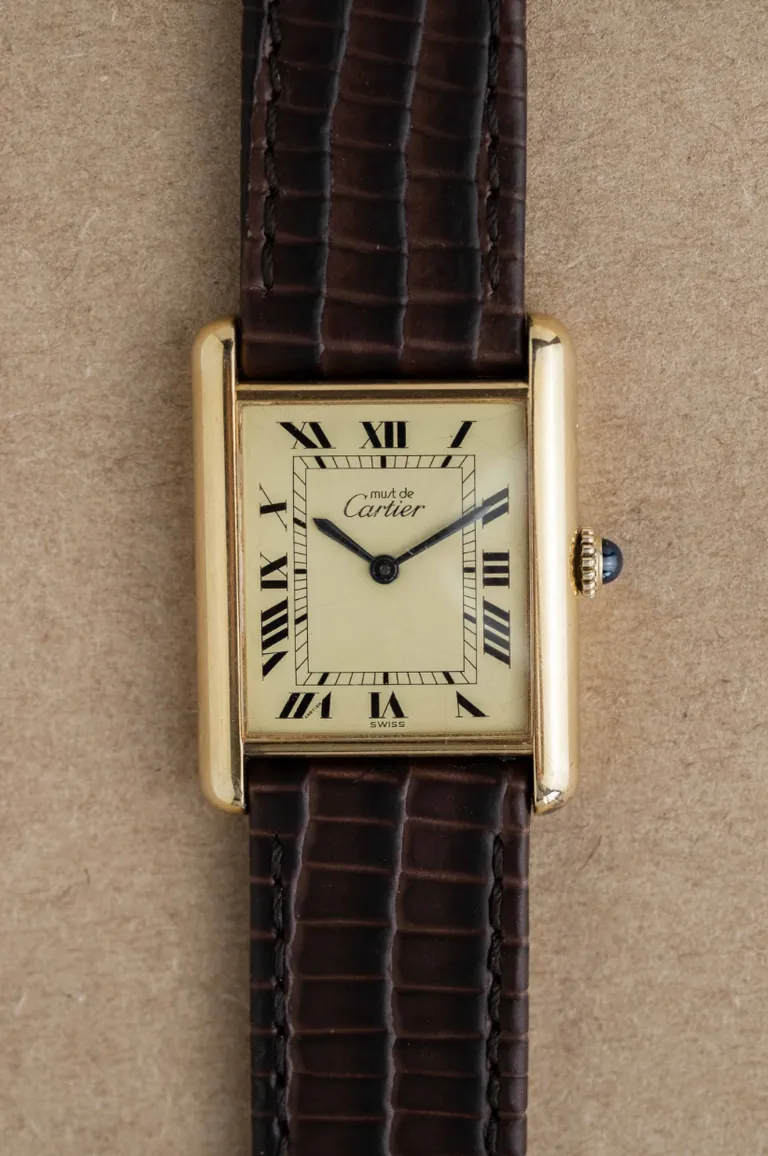
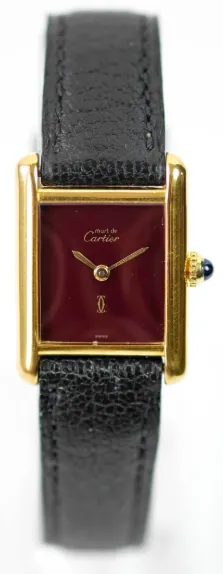
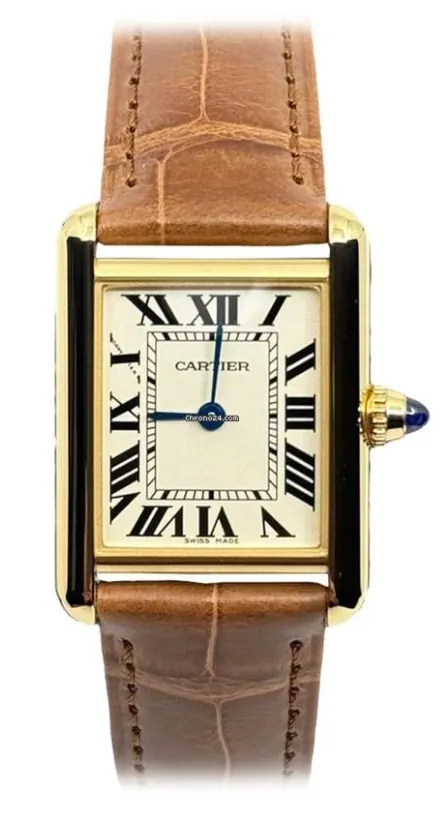
It would take until 1977 for the revolution to reach watchmaking. And what an entrance! Cartier did not settle for a cheaper watch. No. The house took its most absolute, most sacred icon, the Tank designed by Louis Cartier in 1917, and reinvented it. The first Tank Must de Cartier was born. Its case was not solid gold, but vermeil (925 silver gilded with gold), a technique both noble and economical. Its movement was not mechanical, but quartz (or sometimes hand-wound ETA mechanical), in keeping with the times. But above all, its dial became a blank canvas for boldness.
A History of Leaders and Vision
The Must saga is inseparable from the men and women behind it. Robert Hocq, the visionary who believed in it from the very first moment, died tragically in an accident in 1979. Alain-Dominique Perrin then took sole operational control and became the Pope of "accessible luxury". He structured, developed and marketed with a genius that would leave its mark on the whole industry.
Behind the scenes, one woman was essential: Micheline Kanoui (wife of Joseph Kanoui). It was she, with her infallible taste, who oversaw much of the design of the Must collections in the 1970s and 1980s. She is largely responsible for that distinctive aesthetic, that blend of classical rigour and chromatic exuberance.
The company's structure, meanwhile, evolved. Cartier was reunified. In 1988, the company was absorbed into the Vendôme Luxury Group, a conglomerate created to house luxury brands (alongside Piaget, Baume & Mercier...). This group would itself be bought by South African giant Richemont in 1993, which took full control in 1998. This change of scale gradually sounded the death knell for the "Must" line as a separate entity. Under the leadership of Bernard Fornas (2002-2013), Cartier undertook a drastic repositioning towards the very top end, abandoning the diffusion strategy. The Must line quietly faded out around 2004, its models either discontinued or folded back into the main collections.
The keeper of the flame, Pierre Rainero, Director of Image, Style and Heritage since 1984, made sure the Must heritage was never disowned, but understood as an essential stage in the House's history. And he was right. Because in 2021, under new CEO Cyrille Vigneron, Cartier made a spectacular gesture: the relaunch of the Tank Must, reviving the codes, the spirit and even the colours of the originals. The circle was complete.
The Vendôme Must
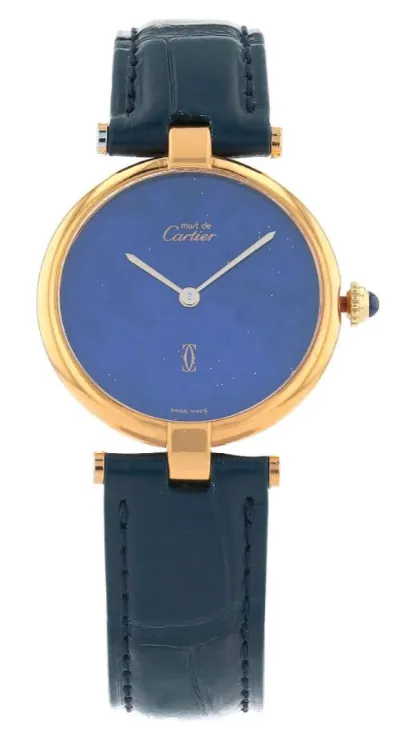
With its round case and distinctive "godron" centre lugs, the Vendôme is the archetype of Parisian chic. The Must version, often on a leather strap, was a phenomenal success, particularly with a female clientele. It had a rare simplicity and elegance.
The Must 21 (1996)
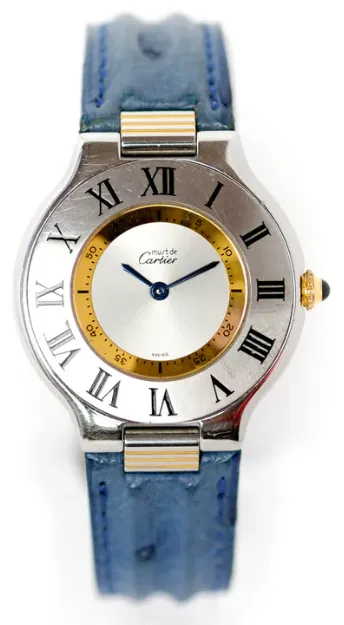
Ah, the Must 21... a child of the '90s! With its steel case, bezel engraved with Roman numerals and "roulette" bracelet, it was an aesthetic break. Modern, a touch flashy, it targeted a new generation. The Chronoscaph version, with its dial stamped with the double C and its mixed rubber/steel bracelet, was an absolute best-seller by the end of the decade.
Other iconic models
The list is long... The Panthère had its Must version, smaller, in steel. The Trinity, with its case inspired by the famous ring, mounted on a coloured silk cord, was the height of relaxed refinement. The Pasha, too, was released in a Must C version, in steel, to make it more affordable. Every icon of the house had its "Must" double.
Treasures and Rare Pieces: The Collectors' Pantheon
Beyond the best-sellers, the Must period produced its share of gems, limited series and prototypes that collectors chase today.
- The Tank Must "Mustline" or "Opaline": these versions of the early Tank Musts pushed minimalism to its limit. The dial was nothing but a field of solid colour, without even the "Must de Cartier" logo at the centre, discreetly relegated to 6 o'clock. Of incredible purity.
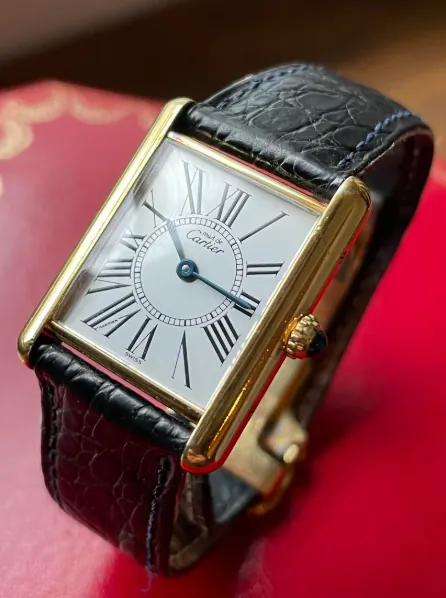
Tank Must "Opaline", an immaculate white dial, signature relegated to 6 o'clock for absolute purity. - The "Three Color" series: Tank Musts playing with the colours of gold: bands of yellow, pink and white gold (or sometimes steel) on the dial. A nod to the Trinity ring, of great rarity.
- The Tank Must Skeleton: skeletonised Tank Must prototypes exist from the late '70s. An incredible stylistic exercise showing that even within the "diffusion" line, horological excellence was never far away.
- Certain editions co-signed Tiffany & Co.: before Cartier fully controlled its own distribution, a few rare Musts were sold at the great New York jeweller and carry the double signature. Grails.
- The first Musts fitted with an ultra-thin Frédéric Piguet movement: while quartz dominated, Cartier also used superb mechanical calibres, including the famous Piguet 21, in some of its finest Musts. A surprise for anyone who opens the case.
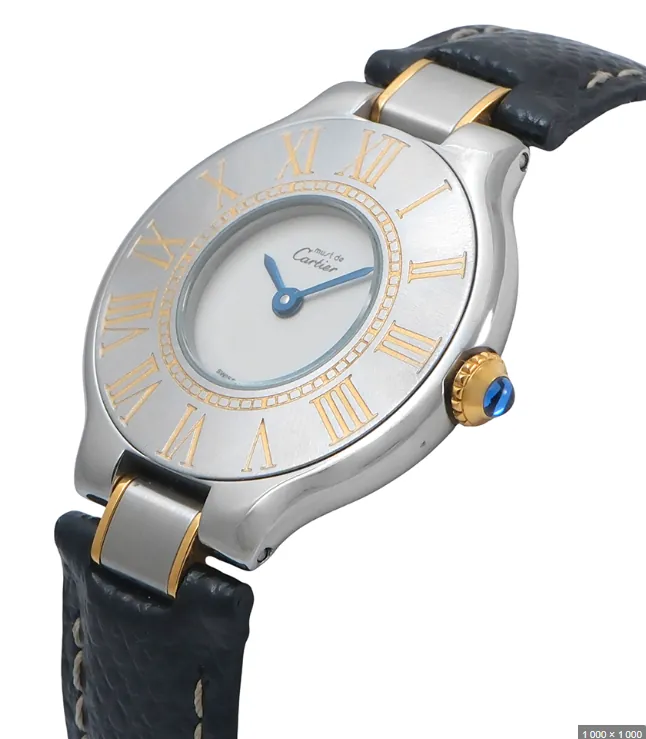
A Must 21 housing the famous ultra-thin mechanical Frédéric Piguet calibre, horological excellence hidden beneath the "diffusion" line. - The Tank Must SolarBeat (2021) reissues: a masterful nod to history. A watch that looks almost identical to the mechanical Tank of 1917, but whose movement is... photovoltaic. A tribute both to Louis Cartier and to the spirit of practical innovation of the Must period. It's all there.
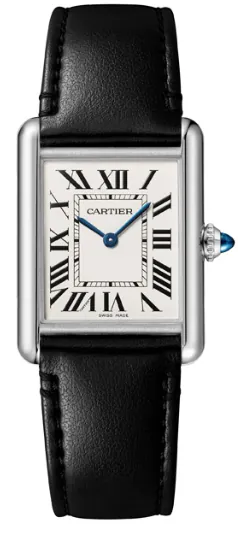
Tank Must SolarBeat (2021), a 1917 silhouette, photovoltaic movement concealed beneath the dial.
The Watch of Cultural Icons
A watch is nothing without the wrists it dresses. And the Musts dressed the greatest. If Andy Warhol is famous for the classic Tank he "didn't even wind", he was photographed on multiple occasions wearing a vermeil Tank Must. It perfectly matched the spirit of Studio 54: luxury, yes, but demystified, worn with a certain irony and detachment. Yves Saint Laurent, another icon of taste, wore a Tank Must, a gift from Pierre Bergé. Catherine Deneuve, Alain Delon... the whole of 1980s French elegance seemed to have made a pact to wear one.
Later, Madonna at the height of her fame was seen wearing Must 21s. The line stood the test of time. And today, its comeback is complete, with figures such as Timothée Chalamet or Bella Hadid proudly sporting the new Tank Musts, bridging the heritage of the '70s with the aesthetic of 2020. More than anything, Must embodied the first democratisation of luxury watchmaking. It was the first "branded" watch one could afford for an achievement, a birthday, without being an oligarch. It marked a rite of passage for an entire generation.
An Immense and Underrated Legacy
Why does the Must saga matter so much? Because it invented, without anyone realising it at the time, a business model that would save part of the luxury industry. By creating the concept of a diffusion line in watchmaking, Cartier showed the way. It proved that a house could maintain an image of absolute prestige with high jewellery and collector's watches, while reaching a wider public with smart, desirable and perfectly executed products.
This strategy would be copied, with varying degrees of success, by almost every major house in the following decades, from Chanel to Hermès to Dior. Must proved that desirability did not come solely from inaccessibility, but also from strong design and cultural belonging. It was a marketing lesson, but one built on products of undeniable aesthetic quality.
Conclusion: The Patina of Daring
Today, when an old vermeil Tank Must resurfaces in a collector's hands, it is not merely a watch one looks at: it is an object charged with history. The vermeil may have gained some patina, the gilding has lived, the strap bears the marks of time. But these "imperfections" tell a story. They tell of the daring of an era, the conviction that a great idea, even a simple one, can change the world. They tell of the courage of a house that, on the brink of collapse, chose not to die gracefully, but to live by opening itself to the world. These small watches carry within them a share of the optimism of the 1980s, a belief in beauty, style and intelligence. A story no contemporary watch, perfect, clinical, unchanging, will ever truly be able to tell.
Related articles
- Vintage watches under €1,500: Omega, Longines, Universal Genève2026 buying guide to vintage Swiss watches under €1,500: Omega Genève, Dynamic, Seamaster and Constellation, Universal Genève Polerouter, Longines, Baume & Mercier, Tissot and Zenith. Calibres, references and real market values.
- Vintage Seiko Buying Guide: Seiko 5, King Seiko & Grand SeikoA complete overview of collectable vintage Seiko watches: Seiko 5, King Seiko and Grand Seiko. Calibres, references, authentication method and market prices.
- How to Spot a Fake Omega: A Complete Guide for CollectorsA workshop method for spotting a fake vintage Omega Seamaster, Constellation or Speedmaster: dial, calibre, crown, observatory medallion and pitfalls to avoid.